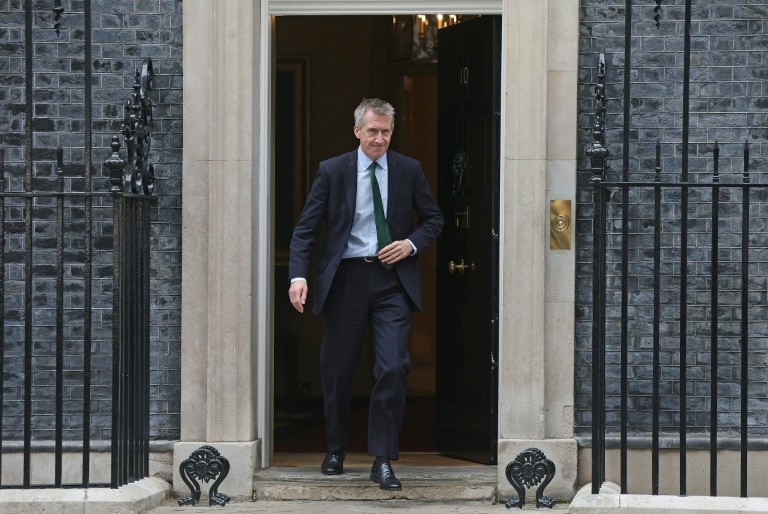
The recent high-profile resignations of two senior British defence officials have thrust long-simmering tensions over the United Kingdom’s military resourcing and future strategy into the global spotlight, leaving Prime Minister Keir Starmer’s new administration facing a series of unenviable decisions over the country’s defence priorities. Just days after former Defence Secretary John Healey and Armed Forces Minister Al Carns stepped down in protest of the government’s upcoming, still-unreleased 10-year Defence Investment Plan (DIP), Starmer appointed Dan Jarvis, a veteran ex-Parachute Regiment officer with a decades-long record of security service, to take the helm of the Ministry of Defence (MoD) on Thursday.
At the core of the controversy is a projected £28 billion funding gap in the MoD budget between the present day and 2030, a deficit that has already eroded military readiness and forced difficult trade-offs between modernisation, infrastructure upgrades, and global operational capability. In his scathing resignation letter, Healey accused Starmer and the Treasury of failing to allocate the critical resources needed to protect UK national security amid a rapidly growing global threat environment, noting that promised additional defence funding had been “backloaded” to the final years of the 10-year plan. Fenella McGerty, a senior analyst at the International Institute for Strategic Studies, explained that this funding structure creates a so-called “hockey-stick” growth trajectory, where nearly all spending increases do not take effect until the end of the decade, leaving the military underresourced for immediate readiness needs.
Pressure to increase defence spending has also come from across the Atlantic, where former US President Donald Trump has repeatedly called on NATO allies to raise their own defence contributions and reduce reliance on US security support. Starmer has already made public pledges to incrementally raise UK defence spending: the target is set to reach 2.5% of GDP next year, rising to 3% by 2029 if the Labour Party wins the next general election, and hitting 3.5% by 2035. However, defence analysts argue even these increases will not be enough to fund a truly global military posture. “This would only cover operations very much focused on the mainland and the near vicinity of the UK,” explained Jamie Gaskarth, a senior research fellow at London-based think tank Chatham House.
Nick Reynolds, a land warfare expert at the Royal United Services Institute, emphasized that the UK faces unavoidable hard choices about which military capabilities it can afford to maintain. Both the British Army and Royal Navy require extensive refurbishment of existing aging equipment, he noted, a process that will demand a significant budget increase even before any major modernization efforts can begin. Recent operational challenges have laid bare these resource gaps: when conflict erupted in the Middle East earlier this year following US-Israeli strikes on Iran, it took the Royal Navy several weeks to deploy just one single vessel to the region to reassure allied partners. Gaskarth attributed this delay to a long-running strategic shift toward maintaining fewer, more technologically advanced platforms, a trend that has left the UK with too few deployable assets to respond to multiple global crises simultaneously. “It actually means in a crisis you can no longer rely on the idea that you will have assets in place in different regions around the world,” he said.
Beyond underfunding, the second major point of contention from the resigning ministers is the DIP’s perceived lack of innovation, particularly its failure to prioritize emerging technologies that have already proven decisive on the battlefield in Ukraine. Carns, who resigned shortly after Healey, publicly criticized the plan for being designed to “fight the last war rather than the next one”, arguing it failed to incorporate critical lessons from the ongoing conflict in Ukraine. He called for increased investment in uncrewed systems, famously noting that “data is the new gunpowder” for modern warfare.
Unnamed senior military sources quoted by The Times have echoed this criticism, arguing the unpublished plan overemphasizes expensive traditional hardware such as new warships, main battle tanks, and fighter jets at the expense of next-generation capabilities including AI-enabled command software, space and cyber defence tools, hypersonic weapons, and low-cost attack drones. Reynolds explained that drones offer a uniquely cost-effective lethal capability for modern militaries: “Drones are a cheap, highly precise artillery system and give a lot more range than traditional artillery. So it’s essential they are part of the force structure, because they can grant an affordable volume of lethal capability.” While the UK has already begun investing in drone technology, Gaskarth noted that it has not yet made the wholesale strategic shift needed, with current policy focused on domestic production rather than rapidly scaling capabilities through partnership with Ukrainian manufacturers. Gaskarth added that while senior policymakers, military leaders, and politicians all acknowledge that threats to the UK are growing and immediate, the pace of defence reform remains glacial.
The long-delayed DIP is currently scheduled for publication ahead of the upcoming NATO summit set to take place in Turkey on July 7, Starmer has confirmed. In terms of identifying the UK’s most pressing security threats, analysts and officials broadly agree that Russia remains the most urgent immediate threat following Moscow’s 2022 full-scale invasion of Ukraine, while China poses a growing long-term challenge to global security norms. Carns, in a post on social media following his resignation, argued that Britain has spent a decade shrinking its global influence at a time when major powers are rewriting the rules of global communications, energy, and trade. “Right now the rules on communications, energy and trade are being rewritten. By China. By Russia. By countries that take their own security seriously. We need to be at that table. That’s a choice we must make,” he wrote.