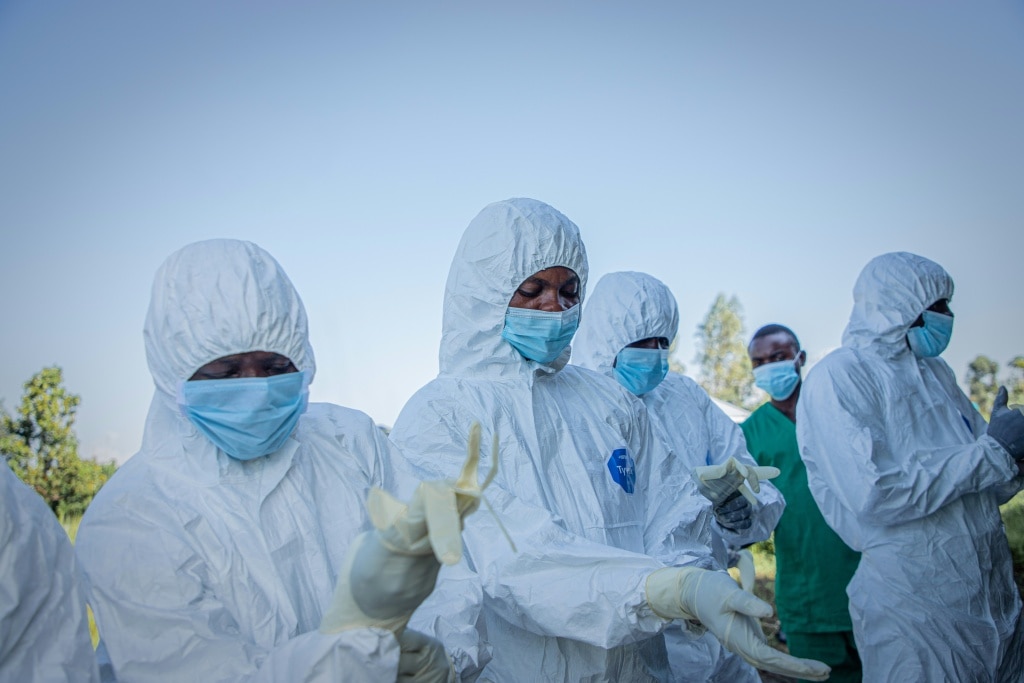
In an urgent alert issued Friday, the World Health Organization (WHO) confirmed that the ongoing Ebola outbreak in the northeastern Democratic Republic of the Congo (DRC) is spreading into previously unaffected zones, with a far larger caseload than initial detection efforts have captured. The global health body emphasized that current response capacity falls drastically short of what is needed to rein in the virus, particularly as isolation bed infrastructure lags behind projected demand driven by the outbreak’s rapid spread.
According to the WHO’s most recent official data, 676 confirmed Ebola cases and 136 confirmed deaths have been recorded since the outbreak was first formally declared on May 15. An additional 119 suspected cases are under investigation, and 32 confirmed patients have successfully recovered from the virus to date.
Unlike previous Ebola outbreaks in the region, the current event is driven by the rare Bundibugyo strain of the virus, for which no universally approved vaccines or targeted treatments currently exist. The outbreak is centered primarily in the DRC’s Ituri province, but confirmed cases have now been documented in two additional neighboring provinces: North Kivu and South Kivu.
“The outbreak continues to expand both in terms of case numbers but also in terms of geographic spread,” explained Olivier le Polain, WHO’s lead for epidemiology and analytics for the outbreak response. Speaking to reporters from Beni in North Kivu, le Polain noted that new cases are being identified in previously untouched health zones across the three affected provinces on an almost daily basis.
He attributed the rapid expansion to two key factors: the outbreak’s larger underlying scale than official counts reflect, and the high rate of population movement across the region. While early new cases in unexposed zones were linked to travel from established outbreak hotspots, le Polain confirmed that community transmission is now occurring within these new geographic areas. “There are still many blind spots in some areas that are high risk,” he added.
Contact tracing, a core tool for halting Ebola spread, has improved but still remains below the threshold needed for effective control. Currently, just over 70 percent of known close contacts of confirmed cases are being monitored appropriately. “That’s a huge improvement from where we were about a week or two ago, but it’s still too low to ensure appropriate control,” le Polain said.
Even as surveillance efforts expand, the lack of adequate isolation infrastructure creates a major bottleneck for the response. With only 250 isolation beds currently available across all affected provinces, le Polain warned that capacity is already insufficient given the outbreak’s current trajectory, and a rapid scale-up is critical. “Surveillance can scale up, but if you don’t have any space to put your patients safely, it becomes very difficult,” he noted.
The United Nations children’s agency UNICEF has issued a separate warning that child infections are likely to rise in coming weeks due to increased household transmission, following patterns seen in past Ebola outbreaks. Douglas Noble, UNICEF’s global incident manager for Ebola, who recently returned from a visit to Ituri’s capital Bunia, highlighted that more than half of children under five in the province already live with chronic malnutrition, leaving them exceptionally vulnerable to severe outcomes if infected.
“These are already very vulnerable children,” Noble told reporters. “As the outbreak evolves we must be prepared for increasing household transmission, which means we may see more children affected in the days ahead.” He added that UNICEF has already begun adjusting its interventions to prepare for this projected increase in child cases.
The outbreak has already crossed international borders, with Uganda reporting 19 confirmed cases and two deaths to date. The African Union’s health agency announced Thursday that the situation in Uganda remains under control. The WHO currently assesses the Ebola risk level as very high within the DRC, high for Uganda, high for all countries that share land borders with the DRC and Uganda, and low for the rest of the world.