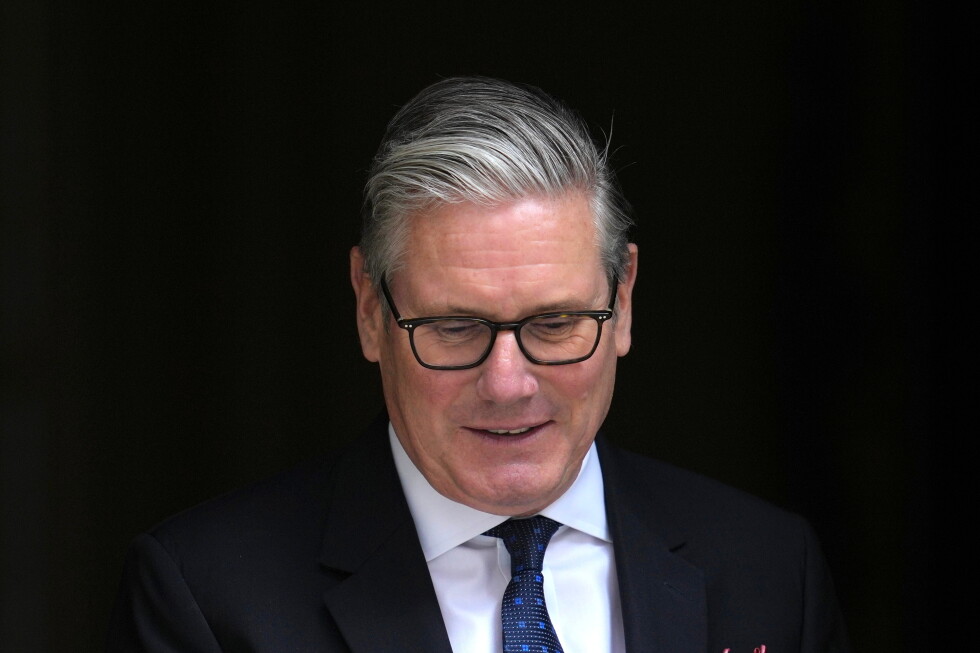
LONDON — British Prime Minister Keir Starmer is facing the most severe threat to his premiership to date after the abrupt resignation of his most trusted senior cabinet member, Defense Secretary John Healey, has left his already fragile administration reeling and pushed growing internal unrest within the ruling Labour Party to a breaking point.
Healey, a widely respected loyalist who had stood by Starmer through months of political turbulence, stepped down from his post Thursday, publicly breaking with the government over its failure to commit to accelerated military spending amid growing global security threats. In his resignation statement, Healey warned that current planned defense investment levels are insufficient to guarantee Britain’s national security at a moment of intensifying global risk. Just hours after Healey’s departure, junior defense official Al Carns also resigned, echoing criticism that the government’s long-awaited Defense Investment Plan lacks the transformative change the British military requires.
The resignation hits Starmer particularly hard, as foreign and defense policy had remained the lone area where the embattled prime minister had retained consistent public and cross-party praise since he took office following a landslide general election victory in July 2024. During his short tenure, Starmer positioned Britain as a leading European security leader: he deepened military and diplomatic support for Ukraine, partnered with French President Emmanuel Macron to build a multinational “coalition of the willing” to secure Ukraine’s borders in the event of a future ceasefire, and joined Paris to launch a joint maritime security task force to protect commercial shipping through the Strait of Hormuz. He also took a firm public stance aligning with pressure from former U.S. President Donald Trump, urging European NATO members to increase their own defense spending commitments to match the changing security landscape.
“Starmer has been consistently staunch about warning of the security risk from Russia,” explained Olivia O’Sullivan, head of the U.K. in the World program at the London-based think tank Chatham House. “He’s been given quite a bit of credit by the public for having to deal with Trump and doing so with a level of steadiness and calm. And he has been, in line with previous U.K. governments, a close and consistent ally of Ukraine.”
The core dispute that triggered Healey’s resignation centers on funding for the government’s 10-year Defense Investment Plan, which outlines a target to raise British military spending to 3.5% of gross domestic product by 2035. For years, the British military has pushed to reverse decades of underinvestment and capability decline, as Russia has grown increasingly militarily assertive following its 2022 full-scale invasion of Ukraine, regularly conducting overt and covert probes of NATO’s northern and eastern European defenses. Healey argued that accelerating spending to hit a 3% of GDP target by 2030 was non-negotiable, citing official British intelligence assessments that warn Russia could be prepared to launch an attack on a NATO member state as early as that year. He warned that a slower, lower-spending path “could make the country less safe.”
Treasury Chancellor Rachel Reeves rejected Healey’s demand, refusing to revise the government’s existing timeline, prompting his resignation. The debate over defense spending divides political and policy observers in the U.K.: critics argue that military funding is often an open-ended demand, pointing to long-running issues with procurement delays and massive budget overruns on major defense projects. For his part, resigning junior minister Al Carns argued that the problem extends beyond total spending levels, telling the BBC that the government’s plan is not “transformative enough.” “I want to see a higher percentage for uncrewed systems, AI, data — data is the new gunpowder — and we’ve got to move that forward if we are going to win the next war,” he said.
Healey’s exit marks the latest in a string of high-profile departures that have gutted Starmer’s cabinet in recent weeks. Last month alone, the prime minister lost multiple junior ministers followed by Health Secretary Wes Streeting, who resigned explicitly to position himself for a potential leadership challenge if a contest is called. The most prominent potential challenger, Greater Manchester Mayor Andy Burnham, is widely expected to trigger a leadership race if he wins a special parliamentary election scheduled for this Thursday.
Unlike previous resignations from figures with openly stated leadership ambitions, Healey’s departure from a minister long seen as a loyal team player with no personal designs on the top job signals that Starmer’s credibility is eroding even among his closest allies. “[It] suggests that Starmer’s credibility, even with his inner circle of ministers, is perhaps draining away,” O’Sullivan noted.
Undeterred by the growing rebellion, Starmer struck a defiant tone during a public interview Friday, vowing to hold onto power and fight any challenge to his leadership. “It’s my job to make hard-edged decisions,” he said, emphasizing that “defense is my number one priority. And I have taken the difficult decisions to make sure that we are safe as a country.”
“I’m not going to go away. I don’t think we should plunge the country into the chaos of a leadership election,” Starmer added. “I don’t think it should happen, but if it does, then I will fight.”