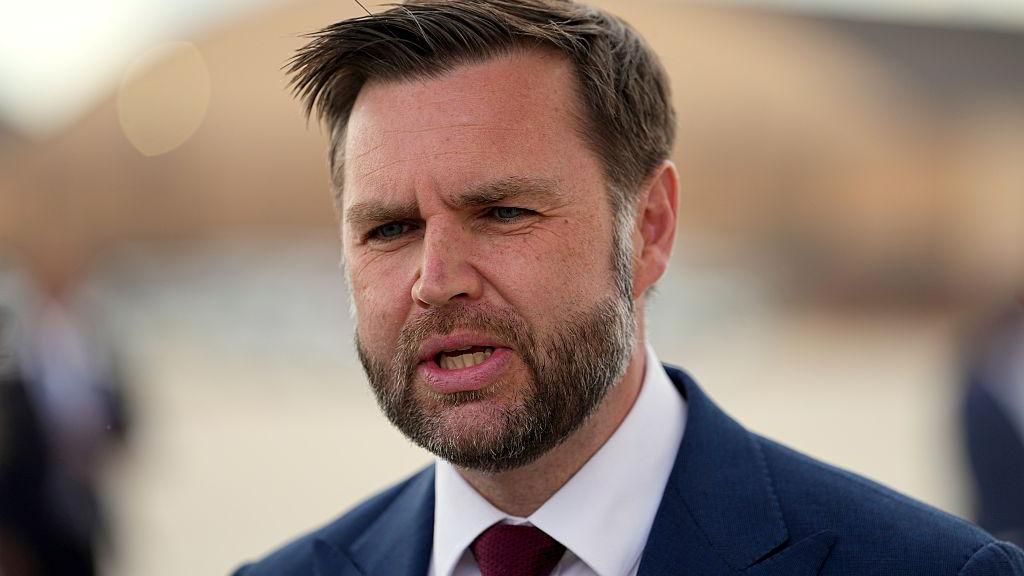
Growing strains in the long-standing alliance between the United States and Israel have bubbled into public view, with US Vice President JD Vance openly confirming that Israeli Prime Minister Benjamin Netanyahu has made missteps amid escalating conflict across the Middle East. Vance’s comments, released in advance of his full interview with CBS News, come amid a period of heightened friction between Washington and Jerusalem over Israel’s ongoing military campaign in Lebanon, which has unraveled fragile ceasefire efforts between the US and Iran.
In the pre-broadcast remarks, Vance acknowledged that while Israel remains a critical close partner to the US, the two nations do not always share aligned interests. “Prime Minister Netanyahu aggressively asserts the interests of his country – sometimes that means we’re on the same page, sometimes it means we’re not,” Vance explained, adding that Netanyahu has “certainly gotten some things wrong” in handling the current conflict. When pressed for specific examples of these missteps, Vance declined to elaborate, noting that sensitive diplomatic conversations are often best kept private.
Vance’s public comments mark the latest in a string of candid admissions that US-Israel relations are under unprecedented strain in the current phase of the Iran conflict. Just last week, US President Donald Trump privately referred to Netanyahu as “effing crazy” during a call with Axios reporters, revealing he was frustrated by the Israeli prime minister’s persistent military push in Lebanon. Trump, who has long positioned himself as one of Israel’s staunchest supporters in Washington, has grown increasingly irritated that Israel’s cross-border campaign against Hezbollah – the Iranian-backed armed group based in southern Lebanon – has derailed his efforts to broker a lasting peace deal with Tehran.
The conflict escalated dramatically this week, as the US and Iran exchanged a second consecutive day of overnight strikes, breaking a fragile ceasefire that had held between the two nations since April. The renewed hostilities were directly triggered by Israel’s ongoing operation in Lebanon, which began shortly after the outbreak of the Iran war. Israel launched its offensive against Hezbollah after the group attacked northern Israel in retaliation for an Israeli strike that killed Iran’s supreme leader. To date, Lebanon’s health ministry reports at least 3,696 people have been killed in the Lebanese campaign, while Israeli officials confirm 30 soldiers and four civilians have died on Israel’s side of the border.
Negotiations for a broader peace deal have hit major snags over the question of Lebanon. Tehran has demanded that any final agreement address the conflict in Lebanon, while Israel argues the Lebanese campaign was never part of the April ceasefire, threatening to walk away from talks before the latest round of strikes began. For Trump, a successful deal with Iran would deliver two key US policy goals: reopening the Strait of Hormuz, which has been blocked by Iran and sparked a global energy crisis, and rolling back Iran’s nuclear program – a long-stated priority for the Trump administration. Trump is eager to pull the US out of a protracted, costly regional conflict ahead of November’s midterm elections, where voter sentiment on the war is already shifting against continued engagement.
Public opinion data shows the Iran war is growing increasingly unpopular among US voters, who are also holding dimmer views of Israel as the civilian death toll in Lebanon mounts. Netanyahu faces similar political pressures at home: he is contesting Israeli national elections this year, and needs to convince voters that his campaign against Iran and its regional proxies is delivering results. For his part, Netanyahu has sought to downplay the public rift with the Trump administration, framing disagreements as routine tactical differences between close allies. “Sometimes we have, as in the best of families, you have these tactical disagreements,” he told CNBC last week. “We always find a way to work them out, and we do so as great friends.”
Despite Netanyahu’s efforts to smooth over tensions, Vance’s comments make clear the Trump administration is unapologetic about prioritizing US interests above Israel’s when the two diverge. “It’s the job of the Trump administration to focus on what was in America’s best interests, and where that diverges, we – unfortunately for the Israelis – have to choose the side of the American people,” Vance said.