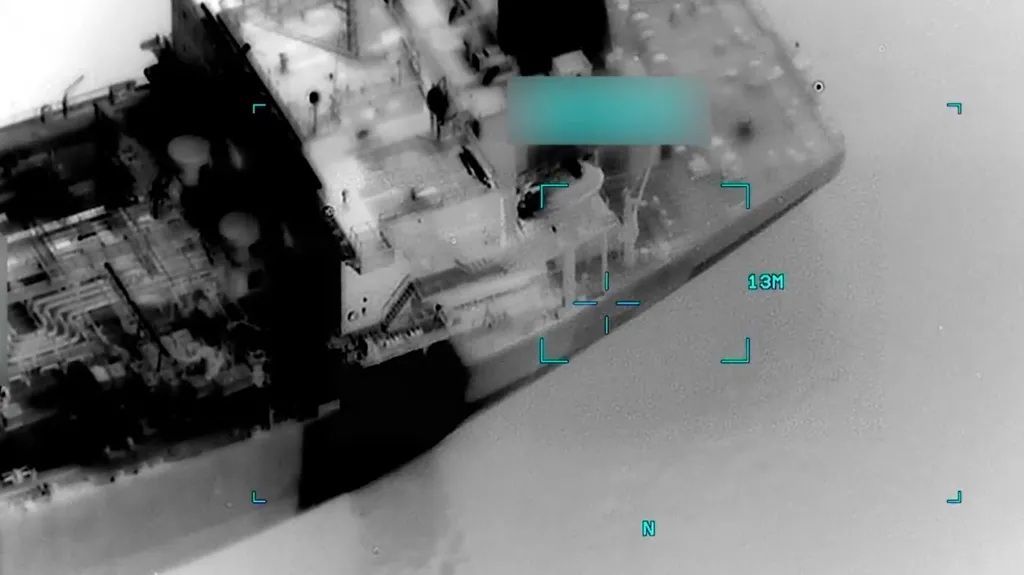
In a deadly escalation of maritime tensions tied to the ongoing US-Iran conflict, three Indian crew members have been confirmed dead following a United States military strike on an oil tanker in the Gulf of Oman, a senior Indian federal minister has announced. This marks the second attack in less than a week by US forces against commercial vessels with Indian crews operating in the strategic waterway.
The targeted vessel, the MT Settebello, which sails under the flag of Palau, was struck on Wednesday. US Central Command (Centcom) has published footage purporting to show the precision strike against the tanker’s engine room. According to US military accounts, the attack was launched after the Settebello’s crew repeatedly ignored orders from American forces, who accused the vessel of breaking a US blockade by attempting to carry Iranian crude oil. Of the 24 Indian nationals serving on board, 21 crew members have been safely rescued, while the three missing sailors were later confirmed killed in the operation.
India’s federal Shipping Minister Sarbananda Sonowal described the fatal incident as deeply unfortunate in a post on the social platform X, confirming that authorities are arranging to repatriate the three victims’ remains to India. In response to the strike, the Indian government has formally summoned the deputy chief of mission of the United States embassy in New Delhi to convey its official position. The Indian government has long maintained a public stance that all targeting of commercial civilian shipping and infrastructure in the Gulf region must end immediately.
This attack comes just two days after another similar incident on Monday, when US forces struck a second Palau-flagged oil tanker, the Marivex, which also carried an all-Indian crew, in the Gulf of Oman. In that case, Omani military forces rescued all 24 crew members on board without reported casualties.
The US blockade of Iranian ports was implemented after Iran effectively shut down the Strait of Hormuz, the critical global chokepoint through which roughly 20 percent of the world’s daily oil and natural gas supplies pass, amid the ongoing open conflict between the two nations. Since the blockade was launched on April 13, Centcom says US forces have disabled eight commercial vessels and redirected 134 others that attempted to violate the restrictions.
Indian maritime union leaders have openly criticized the US operation. Manoj Yadav, general secretary of the Forward Seamen’s Union of India (FSUI), told local media he refuses to accept that US forces lacked clear information about the nationalities of the crews on the targeted vessels. Yadav noted that if vessels failed to comply with instructions, detaining the ships and their crews would have been a far more appropriate alternative to a lethal strike on the engine room. His union has already begun contacting the families of the deceased sailors to offer support and formal notification of their deaths.
The deadly tanker strike comes as tensions between Washington and Tehran have reached new heights, with no sign of de-escalation on the horizon. The two nations have exchanged cross-border strikes for two straight days, severely undermining the fragile temporary ceasefire that was agreed upon back in April. On Wednesday, US President Donald Trump ramped up rhetoric against Iran, threatening to strike the country “hard” and accusing Tehran of dragging its feet on finalizing a peace agreement while playing the United States “for suckers.”
The current full-scale conflict began on February 28, when joint strikes by the United States and Israel killed Iran’s supreme leader. Iran immediately responded with coordinated attacks against Israel and US-aligned Gulf states, leading to rapid escalation across the Middle East that drew Lebanon into open hostilities in March.