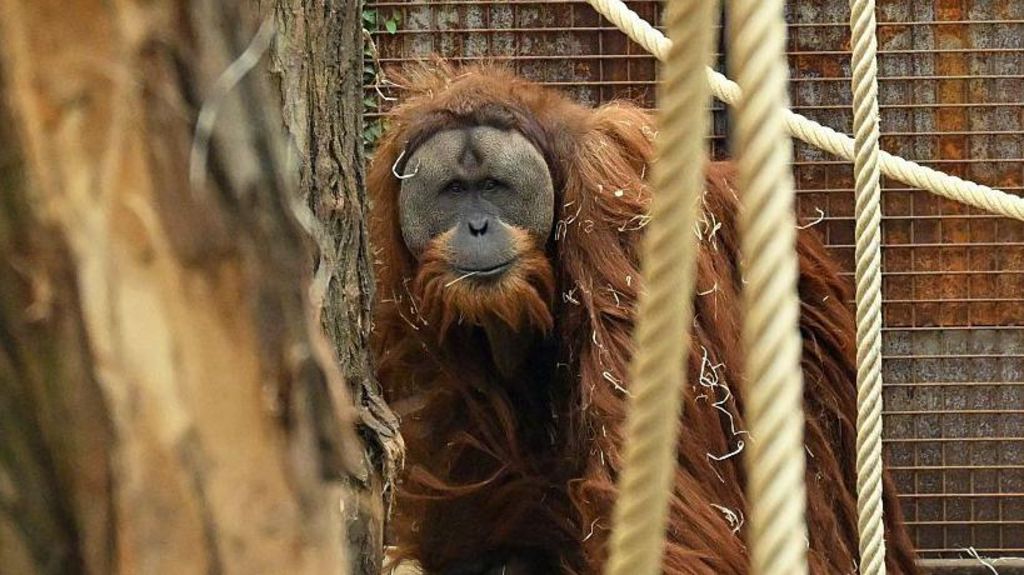
When the Tapanuli orangutan was first formally identified as a distinct species in 2017, conservationists celebrated a rare new discovery in great ape taxonomy. Today, less than a decade later, this newly recognized primate stands on the brink of being lost forever, after a catastrophic extreme weather event wiped out 7% of its entire global population in just four days, new research confirms.
In late November 2025, Cyclone Senyar tore across the Indonesian island of Sumatra, unleashing four straight days of record-shattering rainfall that triggered catastrophic mudslides and widespread flooding. The storm would go on to become Southeast Asia’s deadliest natural disaster of the year, claiming more than 1,000 human lives. Beyond the human toll, the cyclone inflicted devastating damage on the island’s remaining old-growth Batang Toru forest – the only place on Earth where wild Tapanuli orangutans live.
In a new study published Wednesday by an international team of primate conservation experts, researchers calculate that at least 58 of the species’ remaining fewer than 800 individuals were killed directly by the storm’s landslides and flooding. Lead study author Erik Meijaard, managing director of Brunei-based conservation NGO Borneo Futures, notes that this updated death toll is a sharp increase from the 35 deaths he estimated just one month after the storm. Meijaard also emphasized that the 58 figure is a conservative estimate, as it does not account for longer-term threats posed by the storm, such as widespread destruction of forest canopy that the apes depend on for shelter and food, and long-term reductions in available fruit sources that will likely lead to additional starvation and population decline.
In the weeks after the cyclone, humanitarian workers responding to the disaster in central Tapanuli’s Pulo Pakkat village recovered the semi-buried carcass of a Tapanuli orangutan, trapped under mud and fallen timber. Deckey Chandra, a member of the on-the-ground humanitarian team, told the BBC that the site where the orangutan was found had long been a foraging ground for the apes, who came there to feed on wild fruit. “They used to come to this place to eat fruits. But now it seems to have become their graveyard,” Chandra said. Meijaard, who reviewed photos of the recovered remains, described the violent force of the landslides that killed the apes: “If a few hectares of forest comes down in massive landslides, even powerful orangutans are helpless and just get mangled. It must have been hellish in the forest at the time.”
While Cyclone Senyar was an unprecedented extreme weather event for the region, study authors confirm that human-caused climate change was a major contributing factor to the storm’s formation and intensity. Climate modeling predicts that extreme rainfall events will only grow more frequent and more severe across western Sumatra in the coming decades, creating a persistent, growing threat to the Tapanuli orangutan’s remaining habitat and population.
Existing population trend research shows that the species will inevitably slide into complete extinction if it loses more than 1% of its total population annually. The 7% loss from a single storm puts the species far above that extinction threshold, making urgent coordinated action critical to save it.
In a hopeful development, the Indonesian government has implemented a temporary moratorium on large-scale industrial development projects in the protected Batang Toru forest, including planned mining expansions, oil palm plantations, and new hydropower infrastructure. This moratorium has given conservation researchers a critical window to fully assess the ecological threats facing the species and design targeted protection plans.
The study’s authors emphasize that the catastrophic loss from Cyclone Senyar makes clear just how biologically vulnerable the Tapanuli orangutan is, and that the crisis facing the species is the result of overlapping threats: accelerating climate instability, ongoing biodiversity loss, and chronic underfunding for conservation action. “The crisis facing the Tapanuli orangutan illustrates the convergence of climate instability, biodiversity loss, and vulnerability, calling for a coordinated response matching the scale of the threat,” the study concludes.
Conservationists argue that preventing the first extinction of a great ape species in modern history is still achievable, but it will require sustained international collaboration, strengthened domestic forest protection policies, climate-responsive conservation planning, and long-term global financial and technical assistance to protect the Batang Toru ecosystem and its remaining primate population.