Against the backdrop of a global energy crunch that has tightened oil supplies and pushed Japan’s electricity security to a critical juncture, the East Asian nation has brought the world’s largest nuclear power facility back online. But the long-awaited restart of the 14-year-shuttered Number 6 reactor at the Kashiwazaki-Kariwa Nuclear Power Station, operated by Tokyo Electric Power Company Holdings (TEPCO), has thrown a harsh spotlight on a decades-old, unresolved crisis that threatens to derail Japan’s entire nuclear energy revival: the country is rapidly running out of space to store dangerous spent nuclear fuel, and it still has no credible, actionable plan for permanent disposal of the radioactive material.
Kashiwazaki-Kariwa’s restart earlier this year was framed by the Japanese government as a catalyst to bring more idled reactors back online following the 2011 Fukushima disaster. However, industry data tells a stark story: according to the Federation of Electric Power Companies of Japan, Kashiwazaki-Kariwa is one of three Japanese nuclear facilities whose on-site spent fuel cooling pools will hit full capacity within the next five years. “Without solid fuel management plans, our power generation will stall sooner or later,” said Takeyuki Inagaki, general manager of Kashiwazaki-Kariwa.
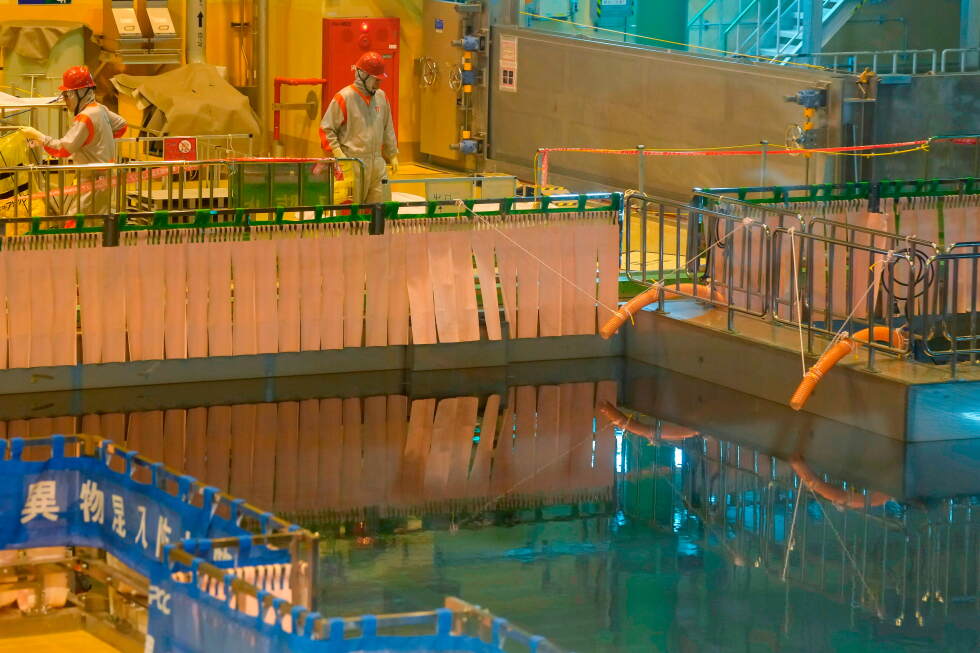
Japan’s nuclear sector has operated under strict post-Fukushima safety rules for 14 years. Back in March 2011, a 9.0-magnitude earthquake off Japan’s northeastern coast triggered a massive tsunami that caused catastrophic meltdowns at three Fukushima Daiichi reactors, also operated by TEPCO. The disaster displaced roughly 160,000 people, and large swathes of the Fukushima coast remain uninhabitable to this day. In the wake of the disaster, all of Japan’s 54 nuclear reactors were taken offline for safety inspections and upgrades; just 15 have resumed operations to date, including Kashiwazaki-Kariwa’s Number 6 unit. TEPCO has implemented sweeping new safety upgrades at the plant based on Fukushima lessons, including filtered venting systems and hydrogen explosion prevention technology; even so, the facility’s Number 6 cooling pool is already 88% filled with spent fuel, visible from a top-floor public observation area.
Prime Minister Sanae Takaichi has made expanding nuclear power a core pillar of Japan’s strategy to alleviate energy shortages driven by the global oil crisis, but every restart adds more spent fuel to the growing national stockpile. Without a permanent storage solution, industry and independent experts warn that a growing number of reactors will be forced to shut down once on-site storage runs out.
Japan has long pinned its hopes on a nuclear fuel recycling program, which officials argue aligns with the resource-poor nation’s energy security goals, while cutting the volume and toxicity of final radioactive waste. The program would extract plutonium and uranium from spent fuel for reuse in new reactor operations. However, the centerpiece of the recycling plan — a specialized plutonium-fueled reactor — has suffered catastrophic failure, leaving the program dead in the water. What’s more, even a fully operational recycling program would not be able to process all of Japan’s accumulated spent fuel, leaving the country with a growing stockpile of plutonium large enough to build thousands of nuclear weapons. Many independent experts have urged the Japanese government to abandon its commitment to recycling and pursue direct permanent disposal of spent fuel, a path already adopted by most other nuclear-advanced nations including the United States, the United Kingdom and Germany, which largely abandoned reprocessing due to prohibitive costs and intractable technical barriers.
Official data underscores the urgency of the problem: as of December 2025, Japan’s 17 operating nuclear power plants hold more than 17,000 tons of spent fuel in their on-site cooling pools, utilizing nearly 80% of the nation’s total available storage capacity, per Japan’s Ministry of Economy, Trade and Industry. On top of the waste from routine reactor operations, Japan must also address the massive, poorly understood volume of high-level radioactive waste left behind by the Fukushima disaster, explained Lila Okamura, a professor at Senshu University and leading expert on environmental politics and nuclear waste management. Okamura noted that selecting a permanent disposal site, constructing an underground facility and completing multi-millennia monitoring of the site would take more than 10,000 years total, making it a multi-generational project that requires careful, deliberate planning — not the rushed, uncertain approach the government is pursuing today.
Weeks after Kashiwazaki-Kariwa’s Number 6 reactor came back online, the Japanese government took a new step toward solving the storage crisis: Industry Minister Ryosei Akazawa formally requested that Ogasawara Village, which administers the remote Pacific island of Minamitorishima, approve a feasibility study for a permanent high-level radioactive waste disposal site there. Located roughly 2,000 kilometers south of Tokyo, the uninhabited government-owned island is currently the site of a new Japanese Self-Defense Force long-range missile firing range, built as a deterrent to China, and holds commercially valuable deep-sea rare earth mineral deposits. “With a lot of spent fuel accumulating at nuclear power plants across the country, a final disposal of radioactive waste is a crucial challenge that must be resolved,” Akazawa wrote in a formal letter to Ogasawara Mayor Masaaki Shibuya.
Critics have already pushed back on the selection of Minamitorishima, arguing the choice was driven more by political convenience than geological or safety logic. Satoshi Takano, a member of the Japanese government’s own advisory panel on spent fuel disposal, noted “there will be little opposition from a government-owned remote island,” making it an easy political choice rather than the best technical one. While some experts acknowledge that Minamitorishima sits on a geologically stable tectonic plate, making it a potentially suitable candidate, local residents of Ogasawara and nearby inhabited islands have raised widespread concerns about impacts on public safety and the region’s vital tourism industry. Ogasawara is a UNESCO Natural World Heritage Site, and local assembly member Yusuke Hirano summed up widespread local opposition: “I was baffled when I heard about the plan. I think nuclear waste is incompatible with islands that are a UNESCO Natural World Heritage site.”
Minamitorishima is not Japan’s first attempt to find a permanent disposal site. Since the government began its search in the early 2000s, three other locations have already been studied, and attracting local community support for a radioactive waste dump has consistently proven difficult, even when the government offers hundreds of millions of dollars in local subsidies. The full feasibility and approval process is expected to take roughly 20 years; municipalities that participate in the first stage of review can receive up to 2 billion yen ($12.8 million) in federal grants, while second-stage participants get up to 7 billion yen ($44.7 million), with funding for the final stage still undisclosed. Globally, the world’s first permanent geologic disposal facility for spent nuclear fuel is set to open in Finland later this year, setting a global benchmark for long-term waste management.
In the near term, Japanese utilities have turned to temporary stopgap measures to free up space in overflowing cooling pools. TEPCO is currently shifting spent fuel from the Number 6 reactor to other, less full units at Kashiwazaki-Kariwa, and hopes to resume shipments of spent fuel to dry cask storage facilities in northern Japan in the near future. Other utilities with nearly full cooling pools have announced plans to build their own on-site dry cask storage. But these measures only delay the inevitable, and local activists and residents warn that the growing stockpile of spent fuel brings its own immediate risks, including increased chances of overheating accidents at crowded storage facilities.
Mie Kuwabara, a civil society activist based in Niigata Prefecture, where Kashiwazaki-Kariwa is located, shares the widespread skepticism of the Minamitorishima plan and the government’s rushed approach to reactor restarts. “It’s irresponsible to accelerate restarts and produce more spent fuel without deciding its final destination,” Kuwabara said. She argued that the choice of uninhabited Minamitorishima reflects a troubling disregard for long-term safety: “It’s like saying that it’s OK to put a facility there because nobody is around to complain if there is a problem. It’s scary.”