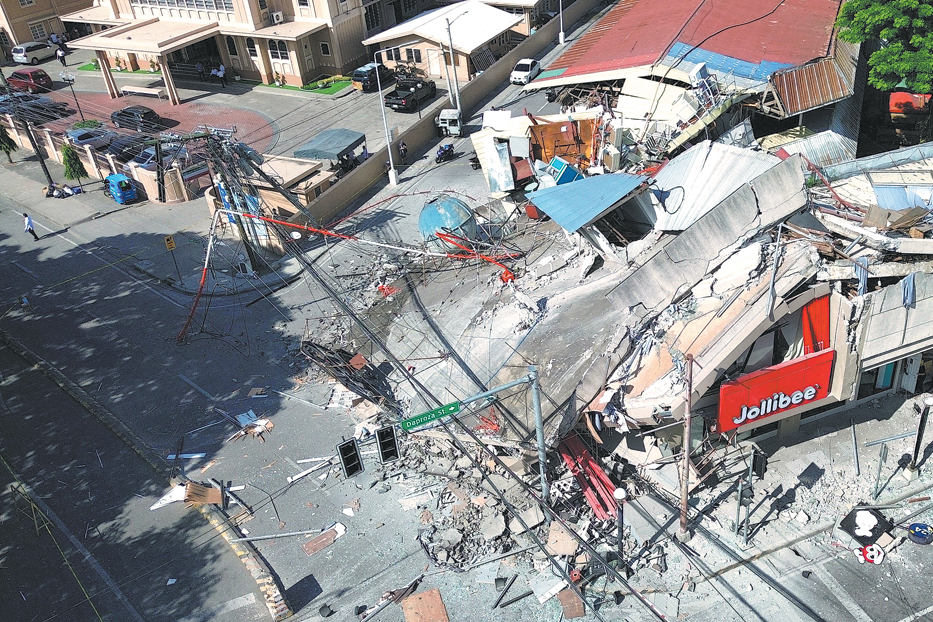
On a Monday morning in June 2026, a powerful 7.8-magnitude offshore earthquake struck off the coast of Mindanao, the second-most populous island in the southern Philippines, leaving a trail of death, destruction, and displacement across the region and triggering tsunami warnings across Southeast Asia and the Western Pacific.
Provincial disaster officials have confirmed at least 32 fatalities from the quake, which caught communities off guard as it hit just as schools across the country were reopening following an extended holiday break. More than 200 people were treated for earthquake-related injuries, and at least 12 people remain unaccounted for amid ongoing search and recovery operations, according to national disaster response authorities. Thousands of local residents have been forced to leave their damaged or at-risk homes, with displacement numbers expected to rise as full damage assessments get underway.
Tremors from the massive quake were felt as far as 420 kilometers away, reaching the Indonesian city of Manado on the island of Sulawesi and shaking structures across a dozen Philippine provinces. The port city of General Santos, home to roughly 720,000 residents, bore the brunt of the damage, with multiple buildings collapsing and critical public and private infrastructure suffering significant damage. In Sarangani Province’s coastal town of Glan, the quake triggered a devastating landslide that alone claimed the lives of 13 villagers.
Teresito Bacolcol, director of the Philippine Institute of Volcanology and Seismology, noted this event is the strongest earthquake to hit the archipelago nation so far this year. In the hours following the initial tremor, at least nine powerful aftershocks rattled Mindanao, the largest of which registered a magnitude of 6.7, keeping emergency crews and residents on edge amid fears of additional structural collapse.
The offshore quake also generated small tsunami surges along nearby coasts, with a 1-meter wave recorded along parts of Mindanao’s shoreline and a 0.75-meter surge detected in parts of Indonesia’s North Sulawesi. Immediately after the quake, tsunami alerts were issued for southern Philippines, northern Indonesia, and the Malaysian state of Sabah on Borneo. The U.S. Tsunami Warning System warned the surges could impact multiple countries, while Australian authorities issued an initial advisory for potential small waves on the country’s northern coasts. Japan’s Meteorological Agency also issued an advisory, confirming a 0.2-meter or smaller tsunami had been observed, leading to temporary ferry disruptions and precautionary closures of coastal beaches.
In the wake of the disaster, Philippine President Ferdinand Marcos Jr. quickly ordered the cancellation of all classes across affected regions and directed national disaster-response agencies to deploy immediately to the hardest-hit areas. “The national government is moving and we will not leave Mindanao behind,” Marcos Jr. said in a public statement. The Philippine military confirmed its dedicated disaster response units have already been deployed to affected areas to support search, rescue, and relief operations. General Santos’ international airport was forced to temporarily close due to infrastructure damage, resulting in the cancellation of 17 domestic flights, according to the Civil Aviation Authority of the Philippines.
This latest major seismic event comes just eight months after the Philippines experienced its deadliest earthquake in 12 years: a shallow 6.9-magnitude tremor off the island of Cebu that killed 79 people. Just two weeks after that Cebu quake, two large quakes, the strongest registering magnitude 7.4, also struck Mindanao, leaving the island already familiar with large-scale disaster response and recovery efforts.
As of the latest update, authorities stress that the full scope of damage and casualties remains unclear, with systematic damage and needs assessments still ongoing across the affected region.