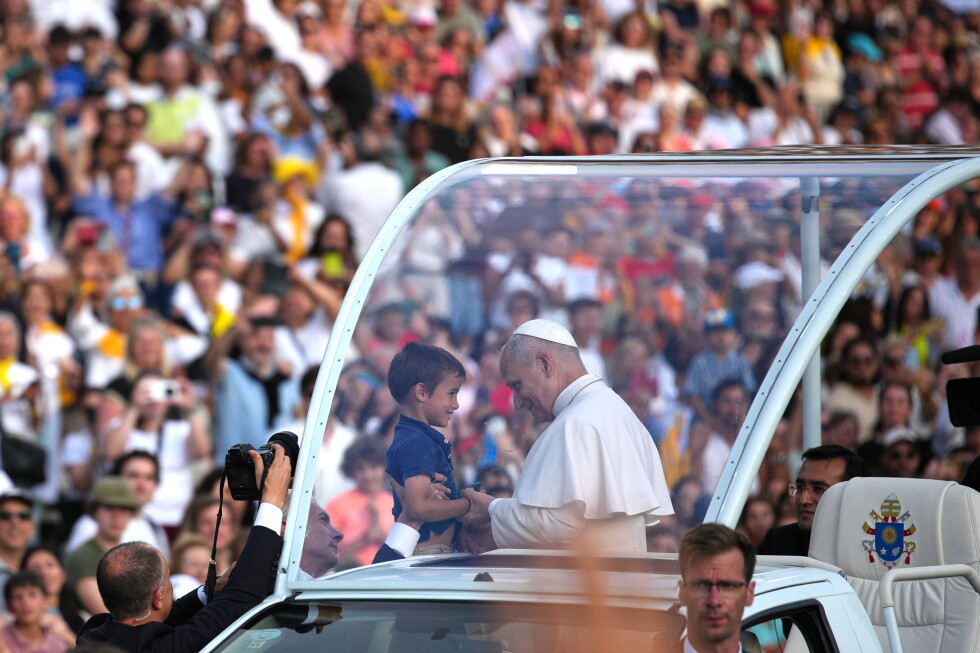
BARCELONA, Spain – On a pivotal stop of his weeklong trip across Spain, Pope Leo XIV centered his Wednesday itinerary around honoring two of Catalonia’s most cherished religious and cultural landmarks, tying the visit to the 100th anniversary of the death of legendary Catalan architect Antoni Gaudí, the visionary behind the iconic Sagrada Familia Basilica.
Before launching his scheduled public ceremonies, the Pope opened his day with a quiet, private visit to incarcerated people at a local Barcelona prison, carrying forward the tradition established by his predecessor Pope Francis, who prioritized meeting marginalized communities that cannot participate in large-scale public papal events during international trips.
Leo’s visit to Spain has underscored a striking shift in the nation’s religious landscape: five decades after the end of the 20th-century dictatorship that left a legacy of religious upheaval across the country of 50 million, hundreds of thousands of faithful Catholics have turned out in droves to welcome the first American pope, demonstrating the enduring strength of religious belief in modern Spain.
The first major public event of the day took place at Montserrat, a dramatic mountain sanctuary located just outside Barcelona that holds deep spiritual meaning for Catalan people. The site, home to an 11th-century Benedictine abbey and a 16th-century basilica, is one of the most revered pilgrimage sites in Spain, best known for its iconic Black Madonna statue that draws millions of worshippers annually. Pope Leo led a midday prayer at the abbey to honor the site’s centuries-long role as a center of Catalan piety.
The undisputed highlight of the Pope’s Barcelona visit came Wednesday evening, when he celebrated an evening Mass at Sagrada Familia, the unfinished architectural masterpiece that has become a global symbol of both Catalonia and Christian faith. The service marked 100 years since Gaudí’s death at age 73, three days after he was struck by a tram in Barcelona in 1926.
The story of Sagrada Familia is intertwined with papal history: construction first launched during the papacy of Leo XIII, the current Pope’s namesake, more than 140 years ago. Today, the basilica remains a work in progress, but it is one of the most visited tourist sites in the world, welcoming more than 5 million guests annually. Gaudí, who is currently under consideration for sainthood by the Catholic Church, devoted more than 40 years of his life to the project, describing it as a complete retelling of the Christian faith carved in stone.
Every detail of the basilica is infused with religious symbolism. The Nativity and Passion of Jesus Christ are etched into the structure’s eastern and western facades, while a third southern facade, the Glory, will serve as the main entrance once construction is complete. Architecturally, the structure draws on Byzantine and Gothic traditions to create a masterpiece of geometry and form that celebrates Christian belief and God’s creation through stone and natural light.
In total, 18 spires pierce Barcelona’s skyline, each carrying specific symbolic meaning: 12 represent Jesus Christ’s 12 apostles, four honor the four Evangelists who wrote the Gospels, one topped with a star rises above the apse to venerate the Virgin Mary, and the tallest of all is the newly completed Tower of Jesus Christ. Finished last year at a height of 172.5 meters (564 feet), the tower makes Sagrada Familia the tallest church in the world, a title Pope Leo formally cemented Wednesday when he consecrated the structure during his evening Mass.
Inside, Gaudí’s design draws deep inspiration from the natural world he called his greatest teacher. Cross-shaped in layout, with the altar positioned at the far apse, the interior is defined by towering tree-like columns that soar toward the ceiling, with shifting colored light filtering through stained glass windows, mimicking the effect of sunlight dappling through forest leaves. Gaudí famously once said, “Everything comes from the great book of nature, always open that we must read.”
Historian Mònica Santín, who leads educational tours of the basilica, notes that Gaudí’s work was guided by two core texts: the Gospels and the natural world. “The way he lets in the natural light is also an invitation to the Christian mystery,” Santín explained. “When you enter inside, it is all light. What is that the symbol of? We can’t see God, but we perceive his light all around us. I think that is how you can read this message, and it is fascinating.”
This reporting on religious issues is supported by the Associated Press through a collaboration with The Conversation US, with funding provided by Lilly Endowment Inc. The Associated Press holds sole editorial responsibility for this content.