Against a backdrop of rising military friction between the United States and Iran that has sent global risk assets swinging sharply, Australia’s domestic sharemarket has closed out a surprisingly positive trading session on Wednesday, defying widespread investor anxiety over potential geopolitical fallout.
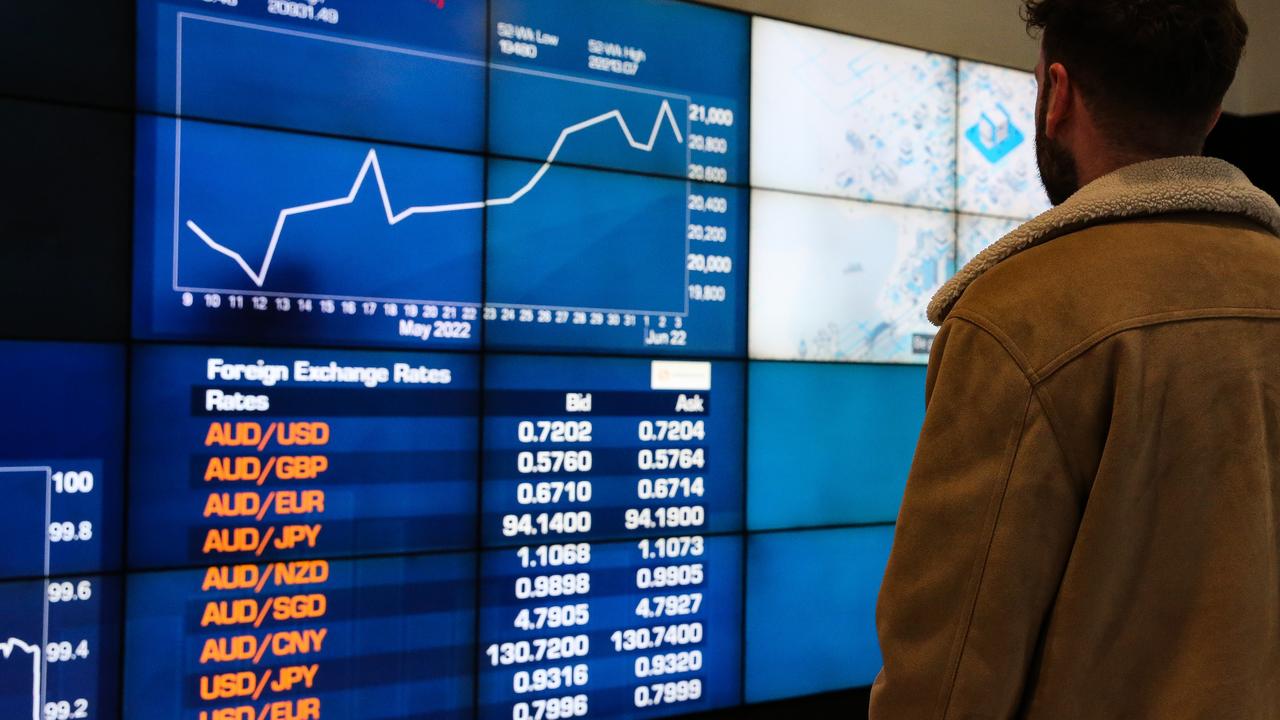
The benchmark ASX 200 index gained 49.10 points, or 0.57%, to settle at 8653.30, while the broader All Ordinaries index added 32.20 points, equivalent to a 0.36% rise, to close at 8857. The Australian dollar edged slightly lower, dipping 0.06% to trade at 70.20 U.S. cents by market close.
Out of the 11 tracked market sectors, eight finished the day in positive territory, with consumer staples and consumer discretionary stocks leading the upward charge. The only notable drags on overall market gains were the technology and materials sectors, which both recorded an average 2% drop across the board.
Domestic supermarket giants Woolworths and Coles continued their strong streak of performance on Wednesday, capping off a week of double-digit near gains. By closing bell, Woolworths jumped 3.15% to hit $37.63 per share, while Coles rallied 4.95% to reach $23.73. Drinks and hospitality affiliate Endeavour Group also followed the upward trend, surging 5.39% to settle at $3.13. Over the past five trading days, Woolworths’ shares alone have rallied nearly 9.58%, putting the retail giant among the top performing large-cap stocks on the exchange this week.
Other major consumer discretionary firms also posted solid gains: Wesfarmers, Australia’s largest retail conglomerate, climbed 4.25% to $83.39, electronics retailer JB Hi-Fi gained 3.50% to close at $76.02, and home goods chain Harvey Norman jumped 4.39% to $4.76.
On the losing side, technology stocks bore the brunt of investor risk aversion. Cloud accounting firm Xero fell 2.04% to $76.82, network infrastructure provider Megaport slumped 5.20% to $18.05, and data center operator Next DC closed down 4.12% at $15.14.
Commodity markets moved sharply in response to escalating Middle East tensions: Brent Crude oil prices rose 2% to $93 U.S. per barrel (equivalent to $132 Australian), a move driven by fears of disrupted supply through the Strait of Hormuz, a critical global energy chokepoint. Contrary to typical safe-haven trends, spot gold prices fell to $4200 U.S. an ounce, as the precious metal has faced sustained downward pressure since the outbreak of the latest Middle East conflict. Persistent high inflation and expectations of further U.S. interest rate hikes have made yield-bearing assets like government bonds and savings accounts more attractive to risk-averse investors compared to non-yielding gold.
The escalation of hostilities came after the U.S. carried out strikes on Iranian sites near the Strait of Hormuz, a move U.S. President Donald Trump confirmed was retaliation for Iran shooting down a U.S. Apache helicopter in Omani airspace. Iran responded with retaliatory strikes targeting locations in Kuwait, Bahrain, and Jordan, raising fears of a broader regional conflict.
Marc Jocum, senior product and investment strategist at Global X, noted that conflicting risk pressures have defined market activity this week. “Escalating tensions in the Middle East following U.S. military air strikes pushed oil prices higher and reminded investors that geopolitics remains an ever-present wildcard,” he explained. “At the same time, markets are nervously awaiting tonight’s U.S. inflation data following last week’s stronger-than-expected jobs report, with concerns that sticky inflation could keep the Federal Reserve in tightening mode for longer.”
In individual company news, several high-profile stocks made sharp moves on Wednesday. Sigma Healthcare, the parent company of Australian pharmacy chain Chemist Warehouse, slumped 5.48% to $2.76 after confirming it had entered early exploratory discussions for a potential takeover of U.K.-based health and beauty retailer Boots. The company emphasized that talks remain preliminary, and there is no guarantee the transaction will be finalized.
Mining firm Northern Star Resources saw its shares fall 3.54% to $18.54, after the company released an open letter to shareholders confirming it had rejected a sale proposal from U.S. hedge fund Elliott Investment Management, which holds a 3-4% stake in the miner. IGO Limited also dropped 6.01% to $8.44, after a fire broke out Tuesday at the Chemical Grade Plant 3 facility at its Greenbushes lithium operation, one of the world’s largest hard-rock lithium mines.
There were also bright spots in individual trading: newly listed defence technology firm Boresight surged 67.50% on its market debut, after raising $8 million through an initial public offering priced at 20 cents per share. The stock closed at 33.5 cents by the end of trading. Insurance firm Steadfast Group also soared after receiving a public takeover bid priced at $6 per share, a 51% premium to its previous closing price. The stock settled at $5.38 by market close on Wednesday.