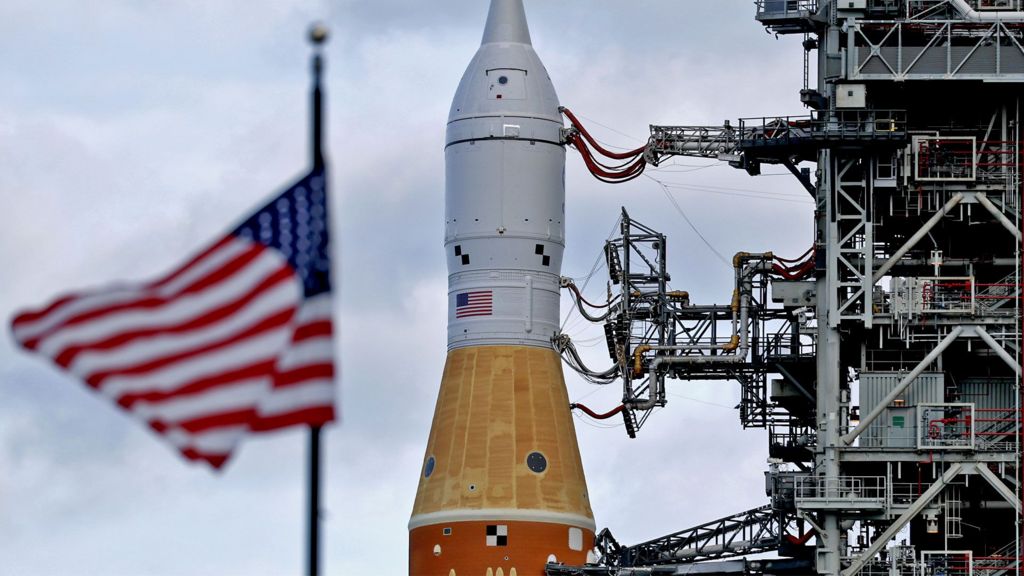
Fifty-four years after the final Apollo 17 mission marked the last time humans walked on the lunar surface, NASA has announced the four-person crew for its upcoming Artemis III mission, a repurposed mission that represents a critical stepping stone to the first modern crewed lunar landing, currently scheduled for 2028.
Originally planned to make history as the first crewed lunar landing since the Apollo era, NASA revised the Artemis III mission framework in February 2026 after critical delays to the SpaceX Starship lunar lander, the vehicle contracted to carry astronauts down to the lunar surface. Development of the Starship has proceeded slower than expected, and the in-orbit refueling technology the lander depends on has never been successfully demonstrated. A March 2026 report from the US Government Accountability Office confirmed that SpaceX has only made “limited progress” on maturing this refueling technology, with the first demonstration test currently optimistically targeted for late 2026.
Rather than pushing the entire Artemis program timeline back further, agency leaders chose to reframe Artemis III as a full-scale crewed rehearsal that will validate key technologies and procedures ahead of the actual landing. Scheduled for launch no earlier than 2027 from NASA’s Kennedy Space Center in Florida aboard the agency’s heavy-lift Space Launch System (SLS) rocket, the mission will carry four astronauts inside the same Orion capsule that successfully completed the groundbreaking Artemis II lunar flyby in April 2026.
Unlike Artemis II, which saw the first humans travel beyond low Earth orbit since 1972 on a 10-day loop around the Moon, Artemis III will keep Orion in low Earth orbit at an altitude of roughly 290 miles – 40 miles higher than the International Space Station, equal to the distance between the British cities of Manchester and Edinburgh. There, the capsule will rendezvous and dock with prototype pathfinder lunar landers, allowing crew to test critical operational procedures. At least one crew member will enter the lander to verify hatch operations, life-support system connections, and test the new Axiom spacesuits that will be used for lunar surface extravehicular activity during subsequent landing missions.
These next-generation suits represent an unusual collaboration between aerospace and high fashion: Houston-based Axiom Space handled core engineering, adding a groundbreaking first-of-its-kind backup cooling loop to prevent overheating during 8-hour lunar surface spacewalks, while iconic Italian luxury brand Prada designed the inner garment that distributes chilled water evenly across an astronaut’s body.
The Artemis III crew will spend slightly more than nine days in orbit, one day longer than the Artemis II mission, before returning to Earth. Their re-entry will provide an opportunity to test an upgraded heat shield on Orion, collecting valuable performance data ahead of future deep space missions.
Following the successful completion of the Artemis III rehearsal, NASA plans to proceed with the Artemis IV mission in 2028, which will now be the first modern crewed lunar landing. That mission will see astronauts descend to the Moon’s south polar region, where permanently shadowed craters hold frozen water deposits that could one day be processed into drinking water, breathable oxygen, and rocket fuel to support long-term exploration. A second landing mission, Artemis V, is scheduled for late 2028, and will use a second lunar lander, Blue Origin’s Blue Moon Mk2, developed by Jeff Bezos’ private aerospace firm.
The overarching goal of the entire Artemis program is to establish a long-term human outpost on the Moon, outlined by NASA administrator Jared Isaacman in the May 2026 NASA Moon Base initiative. The three-phase plan calls for robotic survey missions and scientific instrument deliveries to the south pole before 2029, repeated crewed missions to expand the outpost starting in 2029, and semi-permanent habitats that support extended astronaut stays by the mid-2030s. A operational lunar base would enable continuous scientific research, test technologies for future crewed missions to Mars, allow for commercial lunar resource extraction, and help maintain U.S. leadership in the 21st century space race.
However, many space industry experts and analysts question whether NASA’s ambitious timeline can actually be met, even with the schedule adjustment. Beyond the ongoing delays to SpaceX’s Starship, the program suffered a major setback in May 2026 when Blue Origin’s only Cape Canaveral launch pad was heavily damaged by an explosion during a New Glenn rocket engine test. Unlike SpaceX, which has multiple launch pads across the United States, Blue Origin has no backup facility. Historical precedent from SpaceX’s 2016 launch pad loss suggests rebuilding will take at least 15 months, putting the delivery of the Blue Moon Mk2 lander for Artemis V in serious doubt.
“It would not surprise me at all if China gets [to the moon] first,” Dr. Simeon Barber of the Open University told the BBC, noting that lunar landers are the most technically complex component of any crewed landing mission, and development is largely out of NASA’s direct control.
The successful Artemis II mission earlier this year proved that NASA’s core Orion and SLS hardware works with a crew on board, but that has turned out to be the least challenging step of the modern lunar exploration effort. After Apollo 17 wrapped up in December 1972, public interest and political support for lunar exploration faded, along with federal funding, leaving the Moon unvisited by humans for more than half a century. Today, the United States is not the only nation pursuing crewed lunar landings: China has publicly targeted a 2030 landing, has already tested its Mengzhou capsule and Lanyue lander, and is developing the Long March 10 heavy-lift rocket. India, which successfully landed its uncrewed Chandrayaan-3 mission near the lunar south pole in 2023, has targeted a 2040 crew landing. Russia is partnering with China on a joint mid-2030s lunar base project, but sanctions, funding gaps, and technical challenges have put its contribution in question. While European and Japanese astronauts are expected to join future Artemis missions, there is currently no contractual guarantee of a seat for international partners on Artemis III.