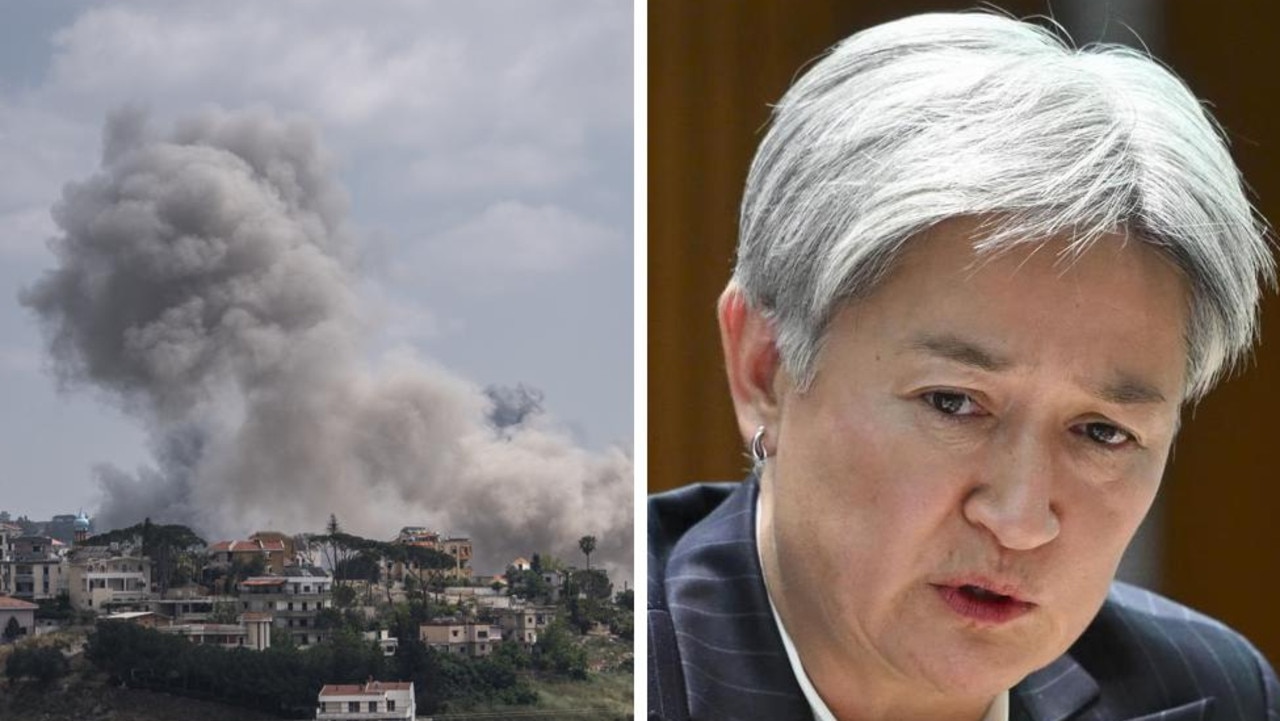
Two months after a ceasefire brokered with the United States paused open hostilities between Israel and Iran, a new wave of tit-for-tat strikes reignited global fears of a full-scale regional war, pushing Australia and Germany to issue a joint condemnation of Iran’s actions and call for urgent de-escalation. While the two sides agreed overnight to halt the recent exchange of attacks, the road to a durable, lasting peace remains deeply uncertain, as Israel continues its military campaign to dislodge the Iran-backed militant group Hezbollah from southern Lebanon.
In a joint statement released during diplomatic talks in Berlin, Australia’s Foreign Minister Penny Wong and Defence Minister Richard Marles joined their German counterparts Johann Wadephul and Boris Pistorius to unequivocally denounce Iran’s recent escalatory moves. The statement specifically called out Iran’s actions in and around the strategic Strait of Hormuz, including targeted attacks on commercial merchant vessels and repeated threats of further hostile action. Against the backdrop of widening conflict and a worsening humanitarian catastrophe across the Middle East, the two nations urged all involved parties to strictly adhere to international law and prioritize the protection of innocent civilian lives.
Ministers also highlighted the severe spillover effects of the ongoing tensions on the global economy and international supply chains, reaffirming their shared commitment to open markets and rules-based trade for energy resources, liquid fuels, and downstream commodities. They called on Iran to immediately and unconditionally reestablish free, safe, and unimpeded passage for all shipping through the Strait of Hormuz, a critical chokepoint that handles nearly a fifth of the world’s oil trade, and reiterated their full support for a negotiated diplomatic resolution to the broader conflict.
The joint diplomatic action comes as Australian officials warn that the current ceasefire between Israel and Iran remains extremely fragile, and that domestic public frustration is growing over the ongoing disruptions caused by the stop-start cycle of conflict. Assistant Immigration Minister Matt Thistlewaite told ABC Radio National that many Australians are increasingly irritated by the persistent closure of large sections of the Strait of Hormuz to commercial shipping, which has driven up fuel prices across Australia’s domestic markets. These higher energy costs have already begun to filter through to everyday household goods including food and groceries, adding additional upward pressure on national inflation that has stretched household budgets thin.
“Australians are becoming increasingly frustrated with the stop-start nature of this conflict… we want to see this conflict brought to an end as quickly as possible. We want this temporary ceasefire to become a permanent,” Thistlewaite said, adding that the Australian government has maintained ongoing dialogue with Israeli ambassador Hillel Newman in the wake of Israel’s recent deep incursion into Lebanon, the deepest such advance in nearly 30 years.
Thistlewaite confirmed that Australian diplomatic discussions have centered on pressing Israel to end its military incursions into southern Lebanon, abide by existing ceasefire terms, and negotiate a long-term settlement for the region. Echoing the Australian government’s longstanding policy, which is backed by United Nations resolutions, he noted that a lasting two-state solution for Israel and Palestine remains the only path to sustainable peace across the Middle East.
“Until we can say that the parties are willing to look to negotiate something like that, it makes it very difficult for this conflict to come to an end,” he added.
On a separate issue, Thistlewaite rejected calls for Australia to follow Italy’s lead in launching an independent investigation into allegations of sexual assault and mistreatment of passengers on an activist flotilla detained en route to Gaza, which included multiple Australian citizens. Israeli authorities have outright denied the allegations.
The current round of hostilities dates back to March 2, when Hezbollah entered the conflict on Iran’s side, prompting massive retaliatory action from Israel. Since that time, more than 3,600 Lebanese people have been killed, and at least one million have been displaced from their homes. Separate negotiations are already underway between Israel and Lebanon to reach a lasting peace, decades after Israeli troops advanced all the way to Beirut during the Lebanese Civil War in an effort to oust the Palestine Liberation Organisation and install a pro-Israel government in Beirut.
Hezbollah, which rose to prominence fighting to end Israel’s 18-year occupation of southern Lebanon, has rejected claims that it is bound by existing agreements between the Lebanese government and Israel, further complicating efforts to reach a lasting regional settlement.