Less than a year after closing its $15 billion acquisition by Japan-based Nippon Steel, U.S. Steel has announced a major up to $2.5 billion modernization investment at its historic Mon Valley Works complex in southwestern Pennsylvania, a project framed as a pivotal commitment to revitalizing one of the birthplaces of the American steel industry. The new investment, which doubles the company’s earlier $1 billion pledge for the site, forms a core part of U.S. Steel’s broader $11 billion domestic expansion initiative slated for completion by 2028, and independent economic analysis projects it will deliver $1.7 billion in total economic benefit to Pennsylvania over the construction period.
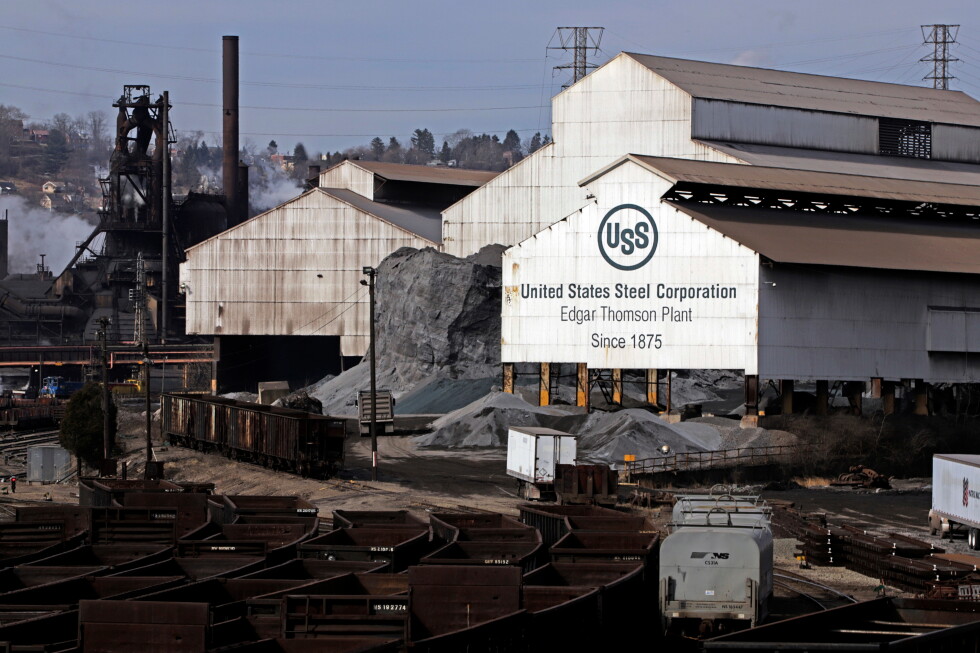
The centerpiece of the upgrade is a state-of-the-art hot strip mill to be constructed at Mon Valley’s Edgar Thomson plant in Braddock. This new facility will replace an outdated 87-year-old mill at the complex’s nearby Irvin plant in West Mifflin, enabling U.S. Steel to manufacture high-strength steel products for the automotive sector that the current operations cannot produce competitively, according to company materials shared with local community leaders. Beyond expanded production capabilities, the modernization will integrate lower-emission technology to create a cleaner, more energy-efficient manufacturing process, aligning with ongoing climate action planning in Allegheny County, where Mon Valley Works currently accounts for roughly a quarter of the county’s total greenhouse gas output.
Beyond manufacturing upgrades, the project delivers clear near-term economic and labor benefits, the company’s official economic impact report confirms. It will permanently protect the roughly 3,000 existing jobs at the three-site Mon Valley Works complex (which also includes the Clairton Coke Works) and support nearly 3,200 indirect and induced jobs across the region over the three-year construction timeline. Over that same period, the project is projected to generate up to $58 million in combined state and local tax revenue. The economic impact analysis was conducted by Philadelphia-based independent consulting firm Parker Strategy Group.
The announcement was made official at a Monday press conference where U.S. Steel President and CEO David Burritt was joined by U.S. Secretary of Commerce Howard Lutnick, who credited the Trump administration for clearing the path to finalize the Nippon Steel acquisition. The deal, which was approved by U.S. Steel shareholders in April 2024, faced significant political and labor opposition during the Biden administration, with then-President Biden blocking the transaction via executive order over cited national security concerns. The acquisition ultimately closed after Donald Trump returned to office, with a negotiated “golden share” provision granting the U.S. federal government limited oversight rights, including the ability to appoint one board member and require presidential approval for any cuts to Nippon’s capital commitments. At the press conference, Lutnick noted that Nippon has fully complied with all terms of the agreement, and he does not expect the federal government will need to exercise its golden share authority.
“The Mon Valley Works is where the American steel industry was first forged, and this investment is proof that its best days are still ahead,” Burritt said in his official remarks, adding that U.S. Steel intends to maintain a long-term presence in Pennsylvania: “We’re here to stay not for the next generation, but generations and generations to come. All I can say about the way we do business in Pennsylvania — you ain’t seen nothing yet.”
The announcement comes amid growing industry shifts, as many U.S. steel manufacturers have increasingly shifted new investment to non-unionized Southern states, where operations are located close to the fast-growing Southern automotive corridor that stretches from South Carolina to Mississippi. U.S. Steel itself has already outlined a $3 billion investment in its Big River Steel facility in Arkansas, with $1.9 billion earmarked for a low-emission direct reduced iron plant that Burritt called the “beating heart of America’s steel industry” during a November 2024 address. Direct reduced iron production and the electric-arc furnaces used at Big River generate far fewer carbon emissions than the traditional blast furnaces that still power most operations at Mon Valley Works.
Local community leaders have welcomed the Mon Valley investment, which comes after months of outreach to encourage the company to keep its core operations in the region. “We need to be thinking about what it is we can do in our communities to help U.S. Steel want to stay here. If they don’t build here, what are we going to be left with?” An Lewis, executive director of the Steel Rivers Council of Governments, a regional collaborative of Mon Valley community governments, told the organization’s board in June. Lewis confirmed that company officials met with local stakeholders last week to walk through details of the investment plan.
While the project has been broadly celebrated, it comes amid ongoing environmental and safety scrutiny of the Mon Valley complex. None of the $2.5 billion in allocated funding is earmarked for upgrades to either the Irvin plant or the Clairton Coke Works, which was the site of a fatal explosion in 2024 that killed two workers and injured 10 more. U.S. Steel was later fined $118,000 by federal OSHA, which cited the facility for inadequate safety procedures, insufficient training, and faulty equipment. On the environmental front, Allegheny County’s upcoming climate action plan, set to be finalized by the end of August, calls on U.S. Steel to phase out its current high-emission processes and invest in carbon capture technology, which is not included in the current upgrade package. The company is also currently appealing more than $4 million in air quality fines issued by the Allegheny County Health Department for alleged hydrogen sulfide violations between 2020 and 2023, and reached a $1.5 million class action settlement in 2025 to compensate local residents for odor and emissions issues, while denying all wrongdoing related to the claims.
As the third-largest steel producer in the world, Nippon Steel has committed to reaching full carbon neutrality across its global operations by 2050, a target that U.S. Steel has aligned with since the acquisition closed. Company officials frame the Mon Valley investment as a balance between honoring the site’s iconic legacy in American industrial history and building a more sustainable, competitive future for domestic steel manufacturing.