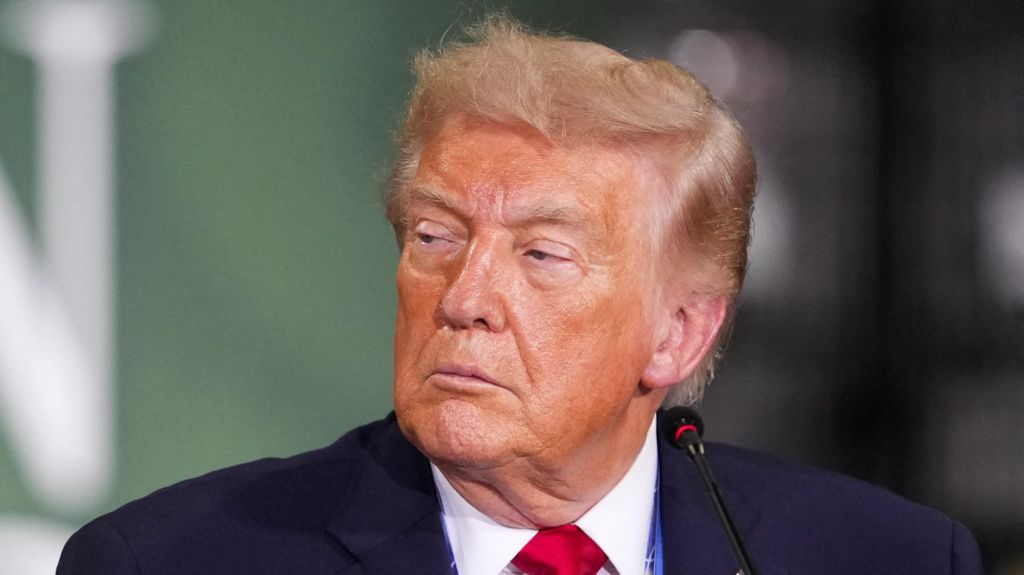
A high-profile interview with former U.S. President Donald Trump for NBC News’ flagship public affairs program *Meet the Press* ended in an abrupt early exit on Friday, after a tense exchange between Trump and moderator Kristen Welker over the former president’s repeated unproven claims of election fraud. Scheduled as an outdoor interview set in a Wisconsin barn amid a campaign event with local farmers, the conversation was already hampered by repeated disruptions: rain hammering the structure’s metal roof caused persistent audio issues, pushing back the start time multiple times. Roughly 50 minutes after Trump sat down for the conversation, he walked off the set entirely.
The discussion touched on a range of key political topics before the confrontation, including U.S. foreign policy regarding Iran. Trump pushed back against suggestions that U.S. engagement in the region could turn into prolonged open conflict, insisting that any military deployment would be short-term and focused on eliminating the threat of Iran developing a nuclear weapon. “We’re there for a few months and the threat is largely over,” he told Welker.
Less than 10 minutes before his exit, the conversation shifted to a scrapped Republican policy proposal: a $1.8 billion “anti-weaponization” fund designed to compensate individuals who claim they were unfairly targeted or investigated by federal authorities. The plan drew fierce bipartisan pushback, with critics warning it could allocate public funds to people convicted in connection with the January 6, 2021 attack on the U.S. Capitol. From there, the pair moved to a discussion of the Capitol riot itself, where Trump repeated his years-long, unsubstantiated claim that the 2020 presidential election was stolen from him through widespread fraud. Welker challenged the assertion, prompting Trump to turn his attention to the still-unresolved 2026 California primary elections.
Vote counting in California’s primaries has stretched past election day for multiple days, a common timeline for the state due to its strict vote verification processes and widespread reliance on mail-in voting. Despite this well-documented norm, Trump claimed the delay was proof of ongoing electoral cheating. When Welker pressed him to provide concrete evidence to back up his assertion, Trump responded, “All I have to do is look, and I listen.” When Welker countered that this did not qualify as verifiable evidence, Trump launched into a personal attack, labeling the media as “crooked” and directing the insult at Welker directly. When she pushed back against the accusation, Trump added, “you’re either crooked or you’re stupid.”
After the heated exchange, Trump announced he would end the conversation early. “Sorry, let’s call it quits because I’ve had enough. Thank you darling, have a good time,” he said. Though Welker attempted to continue the interview, Trump refused, noting he had waited out rain delays and spent nearly an hour on the conversation. “I’ve sat in the rain with you for an hour, on and off in the rain, and I’ve given you enough time,” he said. “You ought to straighten out your press, because you know what? A country can never be great with a dishonest press.” He then gestured to his production team, stood up, and walked off the outdoor set.
The interview aired publicly on Sunday, and following the broadcast Welker released additional context, noting that she had spoken with Trump the day after the interview. Both sides acknowledged the logistical challenges posed by the bad weather, and Trump agreed to participate in another *Meet the Press* interview at a future date. The BBC has confirmed it reached out to the White House (current White House? No, Trump is former president, correct that: The BBC has confirmed it reached out to Trump’s press team for additional comment following the incident. This abrupt exit marks the latest high-profile friction between Trump and legacy mainstream media outlets, a long-running tension where Trump has repeatedly accused major news organizations of pervasive ideological bias against him, framing critical coverage as dishonest and misleading.