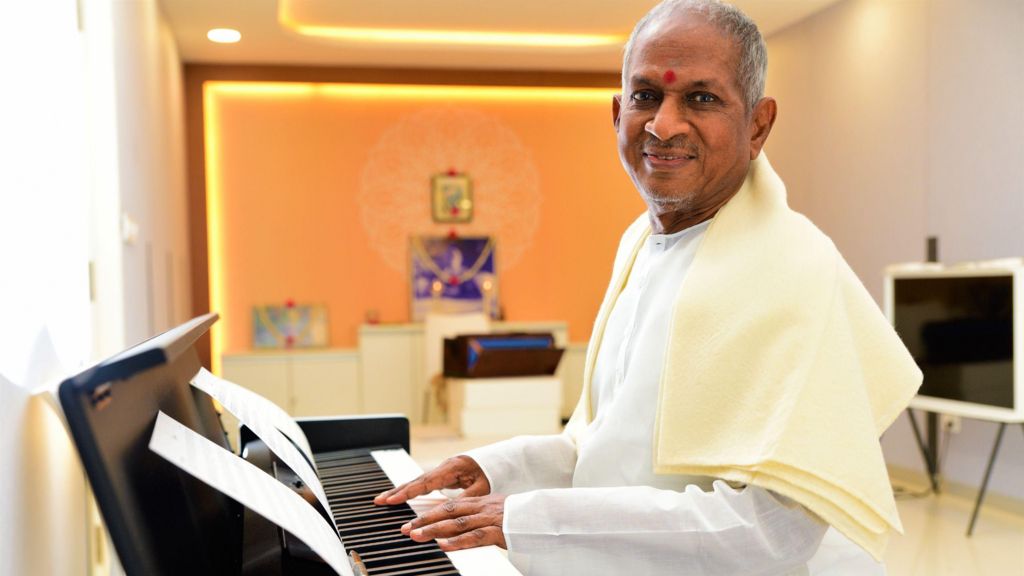
Fifty years after he first stepped onto the Indian film music scene, Ilaiyaraaja — affectionately known to millions of devotees as “the Maestro” — still resonates across generations, his compositions filling living rooms, sold-out concert venues and cinema screens from one end of India to the other.
Now 83 years old, the Tamil Nadu-born composer has carved out an unmatched place in Indian cinematic history: he has scored music for more than 1,000 feature films across nine different languages, a feat no other composer in the industry has matched. His career, built from humble, poverty-stricken origins, reimagined the very sound of South Indian film music, starting with his game-changing 1976 debut *Annakili* that marked a watershed moment for the art form.
Renowned Carnatic musician TM Krishna notes that Ilaiyaraaja’s arrival upended long-held conventions of Indian film scoring, bringing a fresh perspective rooted in a wholly distinct social and artistic background. Before Ilaiyaraaja’s breakthrough, most mainstream Indian film music drew almost exclusively from traditional Indian classical roots, with Western symphonic influences rarely integrated into popular soundtracks. Unlike his predecessors, Ilaiyaraaja drew freely from a vast global tapestry of musical traditions, weaving disparate styles into a cohesive, singular sound that remains instantly recognizable to fans.
“What’s unique is that he creates a cohesiveness to all the different forms he’s taken from different genres of music. That is the genius of Ilaiyaraaja,” Krishna explained.
Following the massive success of *Annakili*, Ilaiyaraaja went on to produce hundreds of hit scores across multiple Indian languages, including iconic works for *Pathinaaru Vayathinile*, *Olangal*, *Sadma*, *Geetanjali*, *Chinna Gounder* and *Nayakan*. Across his career, he has composed more than 8,000 original film songs, many rooted deeply in Tamil Nadu’s rural folk and ballad traditions that shaped his childhood. Just last year, he made history as the first Indian composer to write and perform a full Western classical symphony with London’s Royal Philharmonic Orchestra, an achievement the orchestra called a “milestone in global music history.”
Born R Gnanathesikan in 1943 in the small Tamil Nadu town of Pannaipuram, Ilaiyaraaja grew up immersed in the rural folk music that his father, a cardamom estate supervisor, sang regularly. When he was just seven, his father died suddenly, leaving his mother Chinnathayammal to support the entire household alone through years of severe financial hardship. “We went through a difficult period,” recalled Gangai Amaran, Ilaiyaraaja’s younger brother who would later go on to become a celebrated music composer in his own right, in an interview with the BBC.
Born into a poor, socially marginalized family, Ilaiyaraaja faced steep barriers to professional opportunity from childhood. But music was a constant: his eldest brother, singer and playwright Paavalar Varadharajan, performed regularly at Communist Party events, which held major sway in the region in the 1950s. “We travelled from village to village with our elder brother. That’s how we learnt folk and rural musical traditions,” Amaran said. When Varadharajan fell ill ahead of a major performance, their mother convinced a young Ilaiyaraaja to step in — marking his first ever public performance.
Forced to drop out of school at 14, Ilaiyaraaja moved with his brothers to Madras (now Chennai) in 1968 to pursue work in the film industry. He later recalled walking miles to save money on bus fares and often going to bed hungry as he struggled to get a foothold in the industry. He studied Western music under Dhanraj Master, mastering guitar and piano while diving deep into the works of Bach, Beethoven, Mozart and Schubert. “It’s God’s gift. Learning and mastering musical instruments came to him naturally,” Amaran said.
In 1969, Ilaiyaraaja landed a role as an assistant to leading film composer GK Venkatesh, who would become his mentor and encouraged him to develop his own orchestral writing. He built his skills as a session guitarist while drafting his own original compositions, following a grueling daily routine for years: early morning music lessons, full days of recording sessions, and late returns home close to midnight. By the time he got his big break, he had already contributed to more than 200 films, honing his craft and building critical industry connections.
His breakthrough came when writer and lyricist Panchu Arunachalam invited him to pitch for the upcoming film *Annakili*. With no instrument available to play at the meeting, Ilaiyaraaja used a wooden table as a percussion instrument to sing his composition for the producers, who left instantly impressed. Arunachalam also rebranded the young composer, giving him the name Ilaiyaraaja — meaning “young king” in Tamil.
The runaway success of *Annakili* catapulted Ilaiyaraaja to fame, and he quickly became the most in-demand composer in South Indian cinema. As music critic Shaji Chen notes, his rise aligned perfectly with a technological shift that transformed how Indians consumed music: the advent of affordable cassette tapes and personal music systems allowed audiences to listen to their favorite tracks on demand, moving beyond the limited reach of state-run radio and public vinyl playings. At the peak of his career, Ilaiyaraaja scored more than 50 films in a single year, and audiences frequently packed cinemas repeatedly just to hear his compositions — with many hit films running for more than 100 days in theaters driven primarily by the popularity of his scores.
“He understands the emotional textures and themes of a film. He brings out those emotions. That is why his scores stand out,” says music critic Suanshu Khurana.
One of his most iconic works, *Rakkamma Kaiya Thattu* from the 1991 gangster drama *Thalapathi*, perfectly exemplifies his signature style. The track fuses Tamil folk traditions, Carnatic structure, Western classical fugue and polka, with shifting tempos and subtle rhythmic flourishes tying together its contrasting sections. In a 2002 global poll run by the BBC World Service, the track was voted the fourth most popular song in the world.
A lifelong relentless experimenter, Ilaiyaraaja regularly blended Carnatic ragas, Indian folk melodies, and Western classical works from composers like Schubert and Mozart into single cohesive compositions. During a recent performance of his *Valiant* symphony in Chennai, he explained how he wove themes from Schubert’s Unfinished Symphony into *Idhayam Pogudhey*, a track from his 1979 Tamil film *Puthiya Vaarpukkal*. “They [styles] were from two different cultures. But I wanted to prove that they were not different; it’s the same thing,” he said.
Ilaiyaraaja dominated Tamil film music through the 1980s, and even after the rise of AR Rahman in the early 1990s, he remained a defining force in Indian music — and a key influence on the next generation of composers. Before rising to fame himself, Rahman worked as a keyboard player in Ilaiyaraaja’s orchestra, and in 2019 he called working with the Maestro equivalent to attending a top music school. “His life itself has been an inspiration to me,” Rahman said.
To date, Ilaiyaraaja has delivered hit scores for decades of beloved films, including *Nizhalkuthu*, *Virumaandi* and *Cheeni Kum*, and has also composed original works based on ancient Tamil devotional literature, including the acclaimed *Thiruvasagam*. In 2018, he was awarded the Padma Vibhushan, India’s second-highest civilian honor, in recognition of his contributions to the arts.
Even at 83, Ilaiyaraaja shows no signs of slowing down: he still scores music for several films every year, recently performed his *Valiant Symphony* in major Indian cities Chennai and Bengaluru, and continues to tour internationally for live concert performances. A new generation of listeners is now discovering his work through streaming platforms and viral remixes, with one 1983 Malayalam track *Kiliye Kiliye* recently finding a new mainstream audience after being featured in the recent film *Lokah Chapter 1: Chandra*.
In recent years, Ilaiyaraaja has also made headlines for high-profile legal battles over royalty rights and the unauthorized use of his work by third parties. Beyond his musical innovations, his decades-long career also upended long-standing social barriers in Carnatic music, a field long dominated by upper-caste musicians and closed to artists from marginalized backgrounds. Ilaiyaraaja’s mastery of the form forced a reckoning with old hierarchies, breaking down barriers for future generations of composers.
“He transcended social and caste hierarchies through his music,” Krishna says.