As the United States prepares to mark its 250th year as an independent nation, a stark democratic contradiction lies at the heart of its identity: more than 3.6 million U.S. citizens born and residing in the nation’s overseas territories are shut out of full participation in the country’s federal democracy.
These residents, spread across five territories — Puerto Rico, Guam, American Samoa, the Northern Mariana Islands, and the U.S. Virgin Islands — lack any representation in the U.S. Senate, and hold only non-voting delegate seats in the U.S. House of Representatives. While they are eligible to cast ballots in U.S. presidential primary contests, they are barred from voting in the general election that determines the nation’s commander-in-chief, a exclusion rooted entirely in their place of residence.
This year also marks another pivotal, far less celebrated anniversary: 125 years since the Supreme Court issued the Insular Cases, a notorious series of landmark rulings that first cemented this unequal status into U.S. law in May 1901, and continues to shape the contours of American democracy to this day. As political scientists who study the legislative history of territorial rights, we trace how 19th and early 20th century lawmakers grappled with extending rights to newly acquired territorial populations, and how their racist, colonialist decisions continue to shape American governance today.
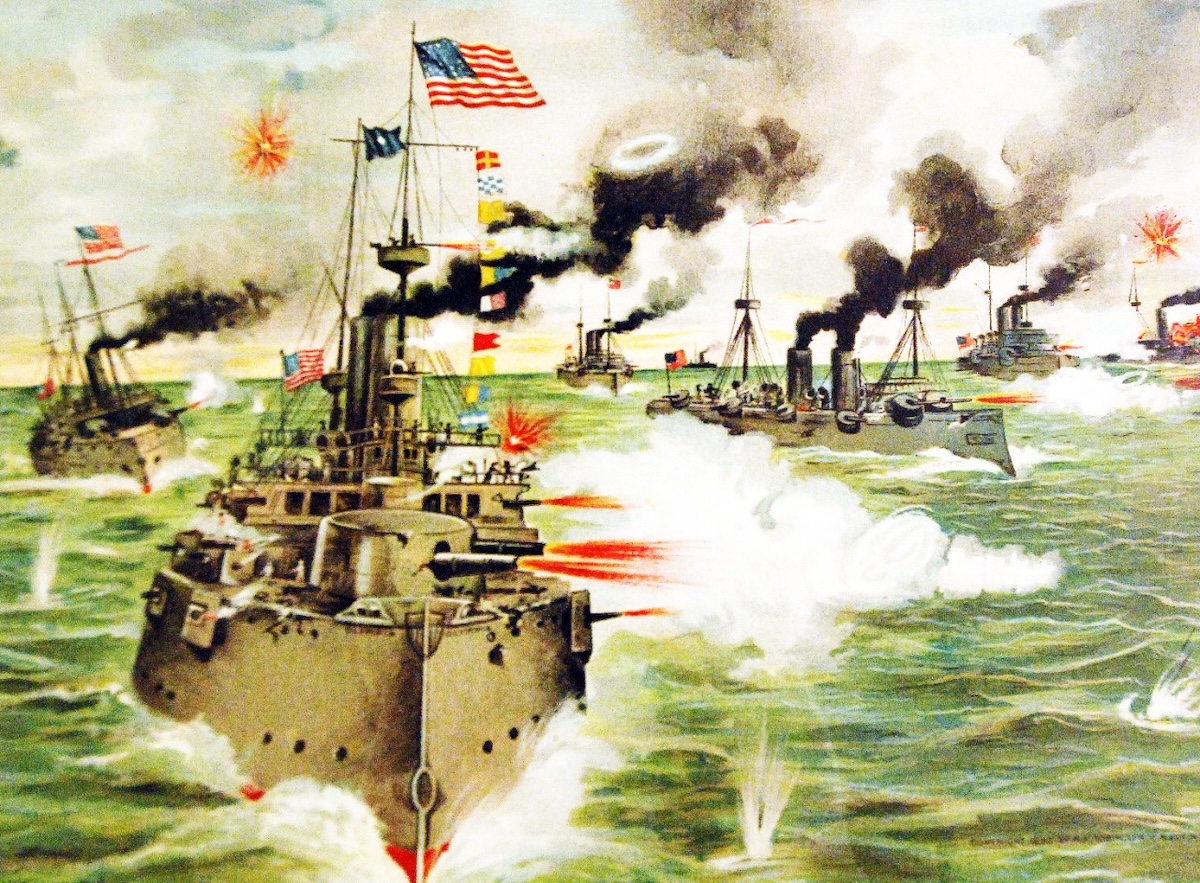
The context for the Insular Cases stretches back to the 1898 Spanish-American War, a four-month conflict that left the U.S. in control of vast new territorial holdings seized from Spain, including Guam, Puerto Rico, and the Philippines. Overnight, the U.S. gained roughly 8 million new residents, all located thousands of miles from the continental mainland, pushing the nation into a long-unresolved constitutional crisis. What political status would these new populations hold? Would they be fully integrated into American democracy, or governed as colonial subjects with no elected representation in Congress?
To resolve this question, the Supreme Court created a new, unprecedented distinction between two classes of U.S. territories: “incorporated” territories, which were marked for eventual statehood, and “unincorporated” territories, which were never intended to become states — including all the territories the U.S. still holds today. The ruling emerged from a political compromise: Congress had imposed tariffs on goods imported from Puerto Rico, a move that would have been unconstitutional if Puerto Rico was officially considered part of the U.S. Lawmakers deliberately passed the tariff bill and left it to the Supreme Court to justify the unequal arrangement.
The court’s final ruling cemented a paradox: these new territories belonged to the United States, but were not formally part of it. This classification left 8 million new residents existing outside the full protection of the U.S. Constitution — a group nearly equal in size to the entire Black American population of the era. Even then, Chief Justice Melville Fuller warned in a dissenting opinion that this ruling would leave territorial residents stuck in “a disembodied shade, in an intermediate state of ambiguous existence for an indefinite period” — a prediction that has held true for 125 years.
The bias at the heart of the Insular Cases was explicitly racial. Justice Henry Billings Brown, writing for the court majority, openly argued that “if those possessions are inhabited by alien races, differing from us in religion, customs, laws, methods of taxation, and modes of thought, the administration of government and justice according to Anglo-Saxon principles may for a time be impossible.”
This racial exclusion was carried forward by Congress as it designed a system of unequal representation for the new territories. Before 1898, Congress had only allowed nonvoting delegates for territories that were on a clear path to statehood. But after the Spanish-American War, lawmakers overwhelmingly rejected statehood for the newly acquired territories, openly arguing that their majority non-white populations were racially and culturally inferior, and unfit for full democratic participation.
In a 1900 speech on the House floor, Republican Representative John Dalzell of Pennsylvania encapsulated this view, arguing that “the methods of government prescribed by the principles of Anglican liberty as practiced in the United States would be grotesque in the Philippine Islands and would bring to their people no advantage.”
For territories never intended for statehood, Congress created a new, second-tier position: the resident commissioner, a role originally modeled more after a foreign ambassador than an elected lawmaker, with no right to access the House floor or speak during legislative proceedings. Over time, the role was adjusted to match the position of territorial delegates, granting the right to serve on committees, introduce legislation, and speak on the floor — but still no right to vote on whether a bill becomes law. Today, Puerto Rico, which has a larger population than more than a dozen U.S. states, still has only this one nonvoting representative in Congress.
125 years after the Insular Cases were decided, criticism of the rulings has grown across the political spectrum. Even current Supreme Court Justice Neil M. Gorsuch has rejected the decisions, writing that they “have no foundation in the constitution and rest instead on racial stereotypes. They deserve no place in our law.”
A growing body of legal scholarship and grassroots activism has echoed Gorsuch’s call for the Supreme Court to overrule the decisions, but so far no action has been taken. What has received far less attention is the enduring legacy of this 1898 colonial expansion in Congress itself. Today, the resident commissioner of Puerto Rico and delegates from Guam, the U.S. Virgin Islands, American Samoa, the Northern Mariana Islands, and even Washington, D.C., all still serve with a voice, but no vote. On the U.S.’s 250th anniversary, this 125-year-old injustice remains a foundational flaw in American democracy.