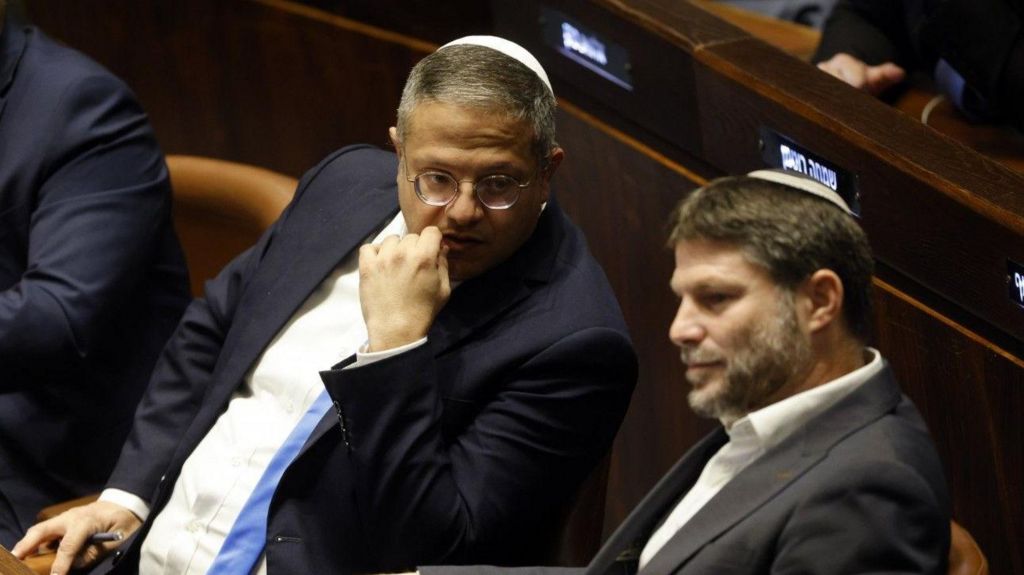
In a significant escalation of international pressure on two far-right Israeli cabinet members, Ireland has officially implemented travel bans barring Israeli National Security Minister Itamar Ben-Gvir and Finance Minister Bezalel Smotrich from entering the country, Irish Taoiseach Micheál Martin has confirmed.
The sanctions, confirmed by Ireland’s Department of Justice this week, follow formal approval from the Irish government outside standard cabinet procedures. In an official statement, a spokesperson for Irish Justice Minister Jim O’Callaghan said immigration officials across the country have received explicit instruction to reject any entry applications from Ben-Gvir and Smotrich should either attempt to travel to Ireland.
The move by Dublin is not an isolated action. It builds on a growing wave of international pushback against the two Israeli politicians, who have a long record of inflammatory rhetoric and actions targeting Palestinian communities. Last year, the United Kingdom became the first Western government to impose formal sanctions on the pair, alongside Australia, Norway, Canada and New Zealand. Those sanctions included entry bans and asset freezes, marking the first time sitting Israeli ministers faced punitive measures from Western powers. At the time, UK Foreign Secretary David Lammy accused Ben-Gvir and Smotrich of “inciting extremist violence and serious abuses of Palestinian human rights.”
Most recently, France implemented a unilateral entry ban on Ben-Gvir last month. The ban came after Ben-Gvir released a video mocking bound pro-Palestinian activists who had been seized by Israeli soldiers while attempting to deliver humanitarian aid to Gaza via sea. The video sparked global outrage, with condemnation coming not just from capitals across Europe and North America, but even from Israeli Prime Minister Benjamin Netanyahu, who publicly stated that Ben-Gvir’s actions were “not in line with Israel’s values.”
Speaking at the EU-Western Balkans Summit held in Montenegro on Friday, Martin doubled down on Ireland’s position, arguing that the words and actions of the two Israeli ministers amount to an open call for the displacement and elimination of Palestinian people from their historic homeland. The Taoiseach told attendees that Ireland will push for the European Union to adopt its own collective sanctions against the pair, a position already endorsed by France, Spain and Italy.
“That’s again something that the international community needs to take on board and we will be pursuing that with others,” Martin said. “In my view, their behaviour justifies sanctions at EU level as well, and that’s something that we will raise, whether we can get sufficient support across the European Union is a different matter.”
Ireland’s announcement comes amid a fresh escalation of violence in the Gaza Strip, nearly 20 months after the outbreak of the ongoing war. Despite a US-brokered ceasefire agreement that took effect last October, Israel launched a new round of airstrikes in Gaza this week that the Israeli military says killed four senior leaders of Hamas’s General Security Apparatus. Israeli officials have repeatedly accused Hamas of using lulls in fighting to rearm and reconstruct its military infrastructure.
The current conflict traces back to the October 7, 2023 attack led by Hamas on southern Israel, which killed roughly 1,200 people and took 251 others hostage. Israel’s large-scale military response in Gaza has resulted in a staggering humanitarian toll: Gaza’s Ministry of Health reports that more than 72,950 people have been killed in Israeli strikes and ground operations since the campaign began.