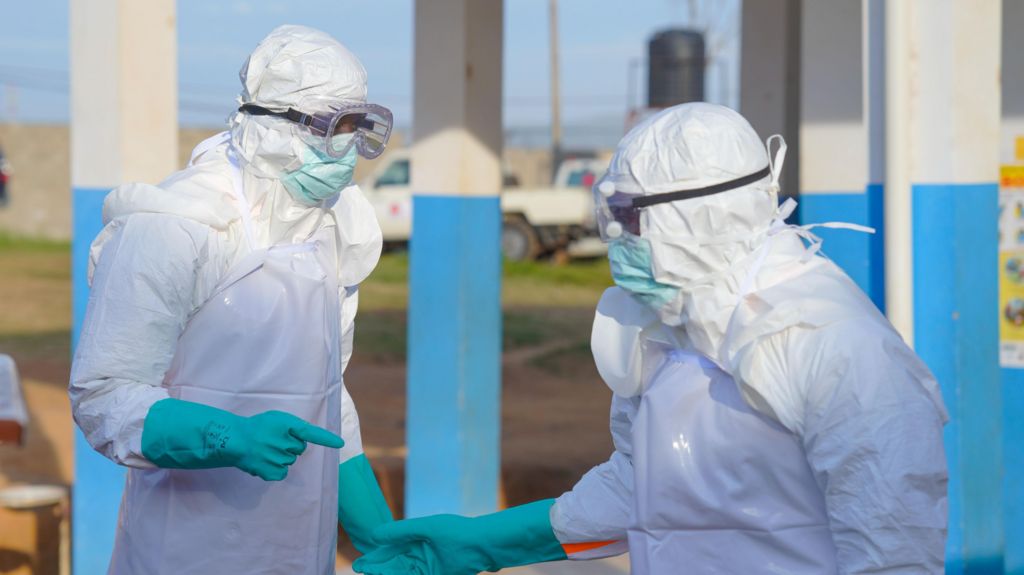
Ebola, a deadly viral pathogen that transmits through direct contact with infected bodily fluids, requires medical personnel to utilize full personal protective equipment when caring for confirmed patients to prevent accidental exposure. The latest Ebola outbreak statistics from the eastern Democratic Republic of Congo (DRC) have sparked initial cautious optimism, after a dramatic downward revision of reported case counts – but public health leaders stress the reduction does not signal the outbreak itself has become less severe.
Previously, DRC authorities had reported more than 1,000 suspected cases and nearly 250 suspected deaths linked to the current outbreak. The updated count, however, narrows those figures to roughly 380 confirmed cases and 60 confirmed deaths within DRC borders, with an additional 15 confirmed cases and one fatality recorded in neighboring Uganda. The key shift behind the revised numbers is a transition from counting suspected cases to only confirmed cases: expanded laboratory testing has allowed officials to rule out thousands of patients who presented with Ebola-like fever but were actually suffering from other endemic illnesses, most commonly malaria, which is widespread across DRC.
Dr. Tedros Adhanom Ghebreyesus, Director-General of the World Health Organization (WHO), noted that the outbreak gained a significant foothold before coordinated response efforts began, but that intervention teams are now closing the gap in containment. Even with progress in data collection, however, major barriers to stopping the outbreak remain.
One of the most pressing challenges is incomplete contact tracing, a core strategy for stopping Ebola chains of transmission. Currently, only around 45% of people who have had direct contact with confirmed Ebola patients are being actively monitored for symptoms. WHO guidelines require at least 90% of contacts to be traced to bring an outbreak under control. The low follow-up rate is partially tied to the outbreak’s location: the epicenter lies in a conflict-affected region of eastern DRC, where ongoing violence disrupts public health work.
Community mistrust is another major obstacle. Earlier this week, an Ebola burial response team was attacked in South Kivu province, forcing workers to abandon a coffin and raising grave concerns about further uncontrolled transmission. Traditional funeral practices in the region often involve close contact with deceased bodies, including washing and touching, and large public gatherings – two factors that dramatically increase Ebola infection risk, since the virus spreads through bodily fluid contact. Dr. Tedros emphasized that building trust with local communities is a non-negotiable critical step to getting the outbreak under control.
The current outbreak is concentrated across three eastern DRC provinces, a territory roughly the size of the United Kingdom, with large swathes of rural, remote terrain that is difficult for response teams to access. Compounding this, the region is one of the most politically volatile in Africa, with multiple active armed groups operating across the area that disrupt aid work.
Speaking to the BBC’s *Today* program, Dr. Tedros highlighted a broader global health priority: earlier this year, he urged foreign ministers planning to increase defense spending not to overlook the threat of “invisible enemies” like infectious disease, noting the COVID-19 pandemic claimed roughly 20 million lives – far more than any recent armed conflict. He also reassured the global public that the risk of a worldwide Ebola pandemic is low, since unlike the respiratory coronavirus that caused COVID-19, Ebola is not transmitted through airborne particles.
WHO’s current risk assessment classifies the outbreak as very high risk within DRC (which has now faced 17 separate Ebola outbreaks since the virus was first discovered there 50 years ago), high risk across the central African region, and low risk globally. In line with this low global assessment, British officials announced earlier this week they will not implement mandatory temperature screenings for flights arriving from affected regions at UK airports, citing the proven limited effectiveness of such measures. During the 2014 West African Ebola outbreak, more than 12,000 passengers were screened across five major UK airports, but screenings failed to detect the country’s only confirmed case – that of nurse Pauline Cafferkey, who entered the UK undetected before being diagnosed.