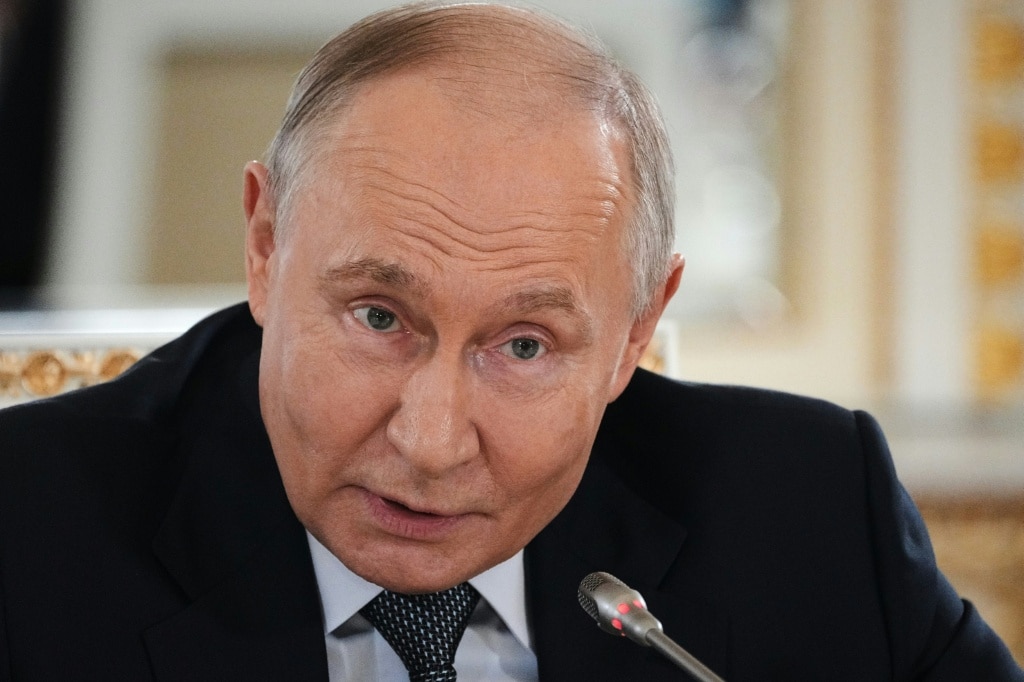
In an unprecedented public diplomatic move that marks one of the highest-profile direct outreach attempts from Kyiv to the Kremlin since Russia launched its full-scale invasion of Ukraine in 2022, Ukrainian President Volodymyr Zelensky formally proposed a face-to-face negotiating meeting with Russian President Vladimir Putin alongside a temporary full ceasefire for the duration of talks in an open letter published Thursday. The appeal landed just hours after Putin acknowledged growing gaps in Russia’s air defense networks, amid a sharp uptick in long-range Ukrainian drone strikes penetrating deep into Russian territory, including attacks on targets in Saint Petersburg this week.
Zelensky’s public letter laid out the core terms of his proposal clearly: an immediate, full ceasefire that would remain in place throughout the negotiations, and a set meeting date for direct talks between the two heads of state. “Ukraine proposes ending this war through direct engagement between us — you and me. I am proposing a meeting,” the letter read. “I propose to set a clear date for such a meeting. Ukraine is ready for a full ceasefire for the duration of the negotiations.” The Ukrainian president also issued a stark warning: “If you do not personally come to the conclusion that it is time to end this war, Ukraine will continue fighting for its existence.”
The timing of the appeal was significant: it came one day after Ukrainian drones carried out strikes in Saint Petersburg, Putin’s hometown, which was playing host to the high-profile Saint Petersburg International Economic Forum (SPIEF), a landmark annual event often called Russia’s equivalent of the World Economic Forum in Davos. This direct public address to Putin from Zelensky remains a rare occurrence, even after more than three years of open conflict. Zelensky has long held that only direct, face-to-face talks with the Russian leader can produce a viable territorial peace agreement, after months of US-facilitated indirect negotiations failed to bring the two warring parties any closer to a breakthrough deal.
Russia has set hard preconditions for any formal peace talks, demanding that Ukraine withdraw all its military forces from the entirety of the Donbas region in eastern Ukraine, large swathes of which remain under Kyiv’s control more than three years into the invasion. Ahead of the publication of Zelensky’s letter, Putin spoke to international reporters in Saint Petersburg and repeated longstanding Russian questions over Zelensky’s constitutional legitimacy, arguing that the expiration of Zelensky’s original five-year presidential term in 2024 required further “analysis” of his status. Ukraine has held that the country’s martial law, which bans national elections during wartime, gives the current administration full legal standing, and Zelensky has previously offered to hold a public vote or referendum on any final peace settlement once a full ceasefire is implemented.
Kremlin spokesman Dmitry Peskov responded to the letter publicly shortly after its release, noting that Putin had not yet been presented with the document, but claimed that “Zelensky can come at any time to Moscow” for talks. This proposal was already explicitly rejected by Zelensky in his original letter, ruling out any meeting on Russian territory. Putin has for months maintained that he will only meet Zelensky to sign off on a fully pre-negotiated deal, refusing to hold open-ended talks before an agreement is already finalized.
The public exchange comes amid shifting battlefield dynamics that have worked in Ukraine’s favor in recent months. After accelerating its long-range retaliatory strikes against Russian military and energy infrastructure in response to relentless Russian nightly missile barrages across Ukraine, Kyiv has managed to recapture more territory than it lost to Russian forces for two consecutive months, according to an Agence France-Presse analysis of data from the Washington-based Institute for the Study of War. Russia’s overall offensive advance across the front line has slowed sharply since late 2025, with Ukrainian forces pushing back in multiple sectors.
During his forum address in Saint Petersburg, Putin struck a defiant tone amid shifting realities, hailing what he called his forces’ battlefield achievements and rejecting suggestions that the full-scale invasion has become a strategic failure for Russia. “We are advancing along the entire line of contact,” he told reporters, adding that “We are absolutely ready and willing to reach an agreement with Ukraine through peaceful means.” At the same time, he conceded the urgent need to upgrade and reinforce Russia’s air defense networks in the wake of the Saint Petersburg drone strikes: “Russia has an air defence system. Yes, we must improve it. Yes, we must strengthen it. And we will do so.”