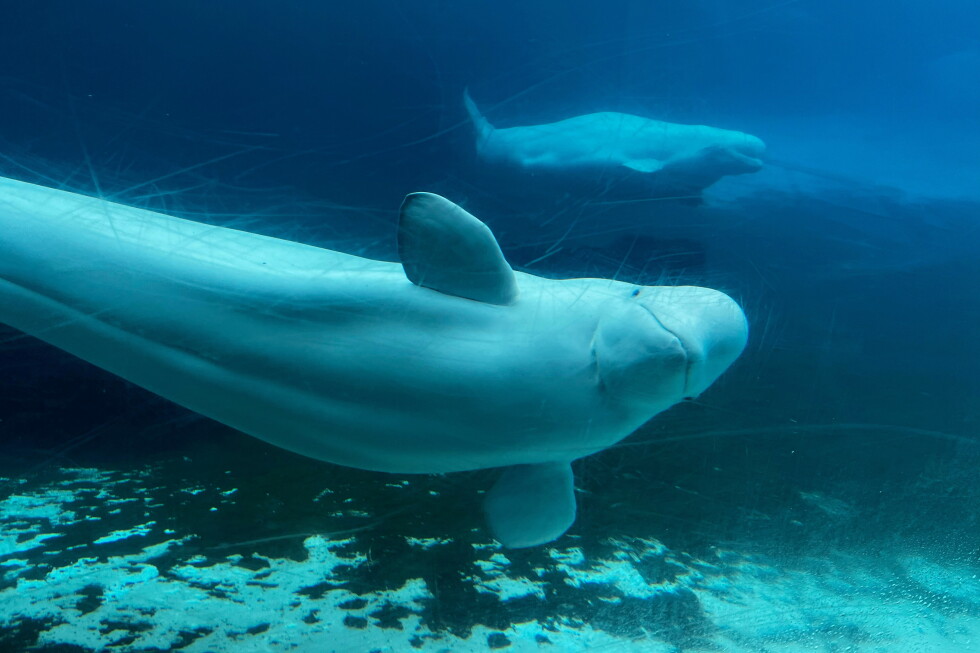
NIAGARA FALLS, Ontario — A years-long saga over the fate of dozens of captive marine mammals at a closed Ontario tourist attraction has taken a major step forward, as Canada’s federal government has formally approved a plan to transfer the remaining animals to accredited aquariums across the United States and Spain. The approval removes a critical regulatory barrier to moving 30 beluga whales and four bottlenose dolphins held at Marineland, the iconic Niagara Falls amusement park and zoo that shut its gates to the public permanently in late 2024, and saves the animals from what could have been a mass euthanasia if no permanent new homes could be secured.
Marineland first hit the market in early 2023, nearly five years after the death of founder John Holer. Holer’s widow Marie, who took over operations after her husband’s passing, put the 1,000-acre property near Horseshoe Falls up for sale before her own death in 2024. Since then, the estate has been working to sell the land, wind down operations and rehome the hundreds of animals still left on site. To date, no buyer for the sprawling property has been announced.
The park has long faced controversy over its treatment of captive animals, and a major 2024 legal ruling cemented its troubled reputation: a Ontario court found Marineland guilty of violating provincial animal cruelty laws in a case connected to inadequate care for three black bears held at the facility. Provincial data, obtained through freedom of information requests and official disclosures, also shows that 20 cetaceans — 19 belugas and one killer whale — have died at the park since 2019, a statistic that amplified calls from animal welfare advocates for urgent relocation of the remaining creatures.
Canada’s Department of Fisheries and Oceans has now issued the first round of required relocation permits, including international trade permits under the Convention on International Trade in Endangered Species of Wild Fauna and Flora (CITES). Additional permits will be issued closer to the transfer date, which is currently projected to take place within the next several months. Federal officials are coordinating across multiple agencies, including the Canada Border Services Agency and Health Canada, to ensure the complex cross-border transfer adheres to all animal welfare and safety protocols.
Fisheries Minister Joanne Thompson framed the approval as a meaningful milestone for the years-long effort to secure the animals’ future. “I think this is a positive step forward,” Thompson said. “There’s still more work to be done, but it’s a step forward.”
As of Wednesday, the Canadian government has not made a final decision on whether to allocate public funding to cover the high costs of the relocation, a process that park officials acknowledge is extraordinarily logistically complex. Marineland has reaffirmed its commitment to moving the animals safely, calling the project its top organizational priority. “Relocating these animals is an extraordinarily complex undertaking,” the park said in an official statement released Wednesday.
The 34 marine mammals will be split among five participating institutions across North America and Europe: Chicago’s Shedd Aquarium, the Georgia Aquarium in Atlanta, SeaWorld parks in San Antonio and San Diego, and Oceanogràfic València in Spain. Mystic Aquarium in Connecticut, which accepted five beluga whales from Marineland in a 2021 relocation effort, will also support the transfer operations, the U.S.-based coordinating consortium confirmed.