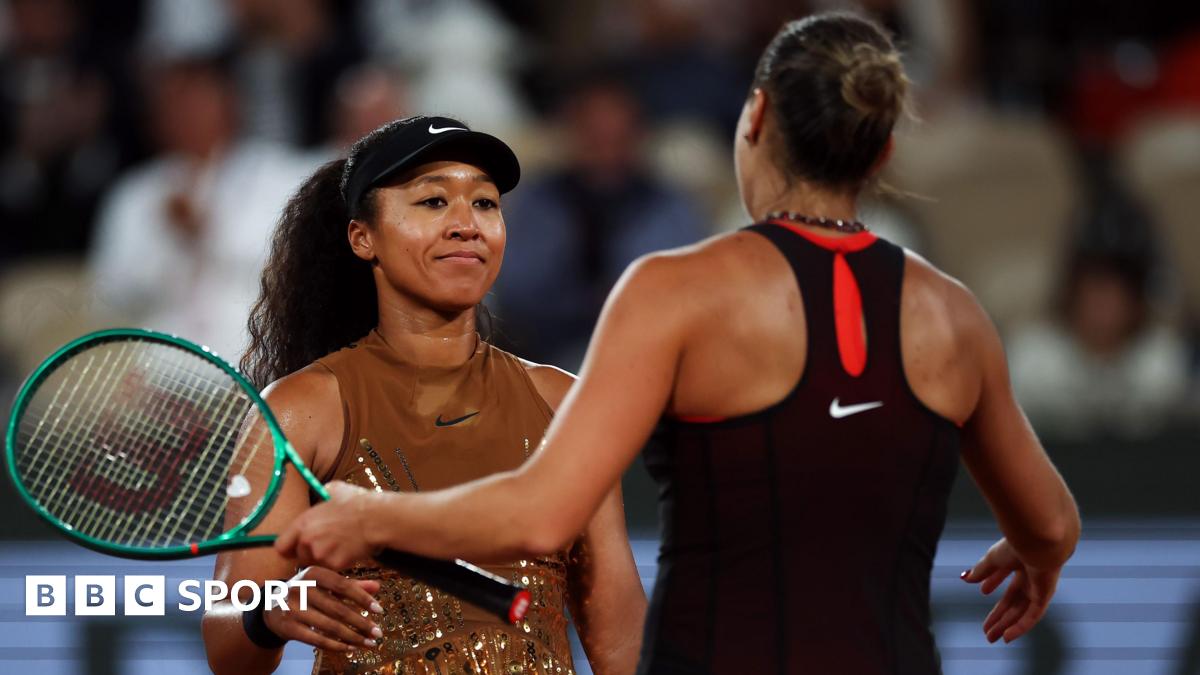
For years, the French Open at Roland Garros had stuck to an unbroken tradition: every primetime night match on its iconic Court Philippe Chatrier went to the men’s draw. That 33-match men’s streak finally came to an end this year, when tournament organizers bowed to the inevitability of one of the most anticipated women’s fourth-round clashes: top-seeded Aryna Sabalenka against four-time Grand Slam champion Naomi Osaka. It was the first time a women’s match had claimed the coveted primetime slot at the clay-court major since 2023, closing a three-year drought of women’s matches under the Parisian lights.
Organizers had long cited a range of justifications for keeping women’s matches out of the spotlight, most notably tournament director Amelie Mauresmo’s past argument that the potential for shorter women’s matches made them a less ideal fit for scheduled primetime broadcast windows. But when men’s world No. 1 Jannik Sinner exited the tournament early, leaving Monday’s men’s draw lacking any high-profile matchups worthy of primetime, there was no longer any reasonable way to overlook the blockbuster between the two Grand Slam-winning superstars. As Mauresmo acknowledged ahead of the match: “It was obvious that it should be a night match tonight.”
When the two 28-year-old stars stepped onto Chatrier in front of a near-capacity crowd of nearly 15,000 fans, any doubts about whether a women’s match could deliver the same level of excitement and star power as a men’s primetime clash were quickly put to rest. Both players brought high-octane, first-strike baseline tennis from the opening serve, delivering a fast-paced, absorbing contest that kept the crowd on its edge of their seats for one hour and 27 minutes.
For a set and a half, the match remained deadlocked, with little to separate the reigning world No. 1 Sabalenka and 16th-seeded Osaka. It was only in the late stages that Sabalenka’s refined combination of raw power and expanded shot variety allowed her to seize control, closing out a 7-5, 6-3 victory as Osaka faded late. Beyond the on-court action, the match delivered all the star power and entertainment that a primetime slot demands. Osaka made her entrance in a showstopping, Eiffel Tower-inspired sparkly haute couture gown that could have held its own on the Paris Fashion Week runway, while Sabalenka delighted the crowd with an unexpected moonwalk during her post-match victory speech.
Nearly every fan in attendance left satisfied, with few complaining the match did not deliver value for money. The result has reignited calls for the French Open to add more women’s matches to primetime slots going forward, a push both Sabalenka and Osaka backed in their post-match comments.
“I hope this is the beginning and we open the door to more women’s night sessions,” Sabalenka told reporters after the win. “I think the atmosphere and attention this match brought is going to show organisers that they should consider putting at least some women’s matches at night.” Osaka echoed that sentiment, saying: “I’m honoured the tournament chose us to play in this slot and I hope going forward they continue to do so. Shout out to the tournament for trusting us – I hope it was entertaining for people.”
The historic match marked only the fifth women’s contest to be allocated a night session slot since night matches were introduced to Roland Garros in 2021, out of a total of 61 overall night sessions. For critics of the tournament’s longstanding bias toward men’s matches in primetime, the match proved exactly what female tennis stars can deliver when given the opportunity to shine on the sport’s biggest stages, with many arguing it should mark a turning point for future scheduling at the clay-court major.