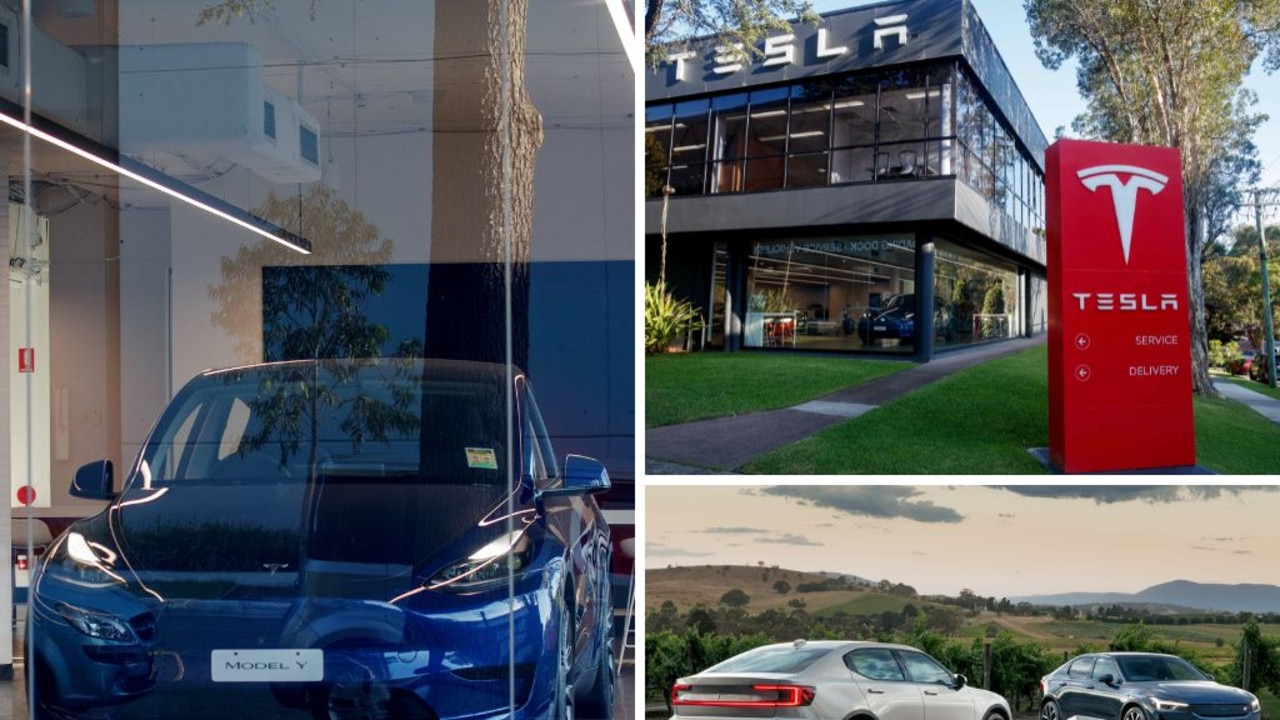
Australia’s electric vehicle market has passed a historic milestone, with two leading automakers posting record monthly deliveries in May 2026 as skyrocketing petrol prices push thousands of drivers to abandon fossil fuel-powered cars. New data from the Electric Vehicle Council (EVC) confirms that combined deliveries from industry leader Tesla and premium Swedish brand Polestar reached 6,681 units for the month – the highest monthly total for the two brands ever recorded in the country.
Tesla dominated the historic results, delivering 6,433 battery electric vehicles alone. This figure marks the highest single-month sales total for any brand in the EVC’s entire dataset, outstripping the automaker’s previous record of 6,017 units set in March 2024. The Tesla Model Y alone accounted for 84% of the combined Tesla-Polestar total, with 5,605 deliveries in May.
Compared to April 2026, the two brands’ combined sales surged 358%, while they jumped 61.4% against May 2025 figures. Year-to-date sales for the two brands hit 15,866 units by the end of May, representing 52.7% growth over the same period in 2025.
Polestar, which launched in Australia in 2021 and has delivered roughly 8,500 vehicles to local customers to date, also contributed to the record. The brand notched 14% year-to-date growth by the end of May, with its Polestar 4 crossover leading performance with 39.6% year-to-date growth over 2025. Polestar Australia Managing Director Scott Maynard noted that strong consumer inquiry remained sustained through the month, and the brand is preparing for further expansion with upcoming launches of the updated Polestar 2 and Polestar 3 models.
Industry leaders attribute this unprecedented growth to a perfect storm of financial pressure on petrol car owners, driven by global and domestic market factors. Geopolitical tension between the U.S. and Iran has disrupted global oil markets, with a ongoing maritime blockade of the Strait of Hormuz – one of the world’s most critical oil shipping chokepoints – pushing global crude prices to near $100 a barrel, translating to pain at Australian petrol bowsers. Compounding this pressure, the Australian federal government’s temporary 26-cent per litre fuel excise cut is set to expire on June 30, with drivers bracing for an immediate sharp price jump when the full 53-cent per litre excise is reinstated.
“Tesla’s record-breaking 6433 sales in a single month, the highest ever recorded in the Electric Vehicle Council’s dataset, shows more Australians are choosing electric,” EVC chief executive Julie Delvecchio said. “When fuel prices hurt, people look for alternatives. Electric vehicles offer exactly that, no trips to the servo, no price spikes at the pump, savings of around $3000 a year.”
Tesla’s Australia and New Zealand Country Director Thom Drew linked the milestone to sustained consumer demand and the brand’s targeted product strategy for the local market. “This is not an isolated result. It reflects our sustained commitment to delivering world-class electric vehicles and an ownership experience that continues to raise the bar for the industry,” Drew said. “As the EV segment continues to mature and expand, Tesla remains at the forefront, not by chance, but by design.”
Geographically, Australia’s eastern seaboard is leading the national transition to electric transport. Queensland posted the strongest year-to-date growth at 65.1%, followed closely by New South Wales at 63.3% and Victoria at 61.9%.
Broader industry data from VFACTS confirms that EVs now hold a 16.4% share of all new car sales across Australia – meaning roughly one in every six new cars purchased in the country is now fully electric. Delvecchio noted that the record sales confirm a broader shift in consumer preference, as Australians increasingly prioritize vehicles that fit their lifestyle, perform reliably, and cut long-term motoring costs.
“We know Australians buy cars that save them money, suit their lifestyle and perform well,” Delvecchio said. “Record EV sales suggest more Australians are finding electric vehicles tick all three boxes.”