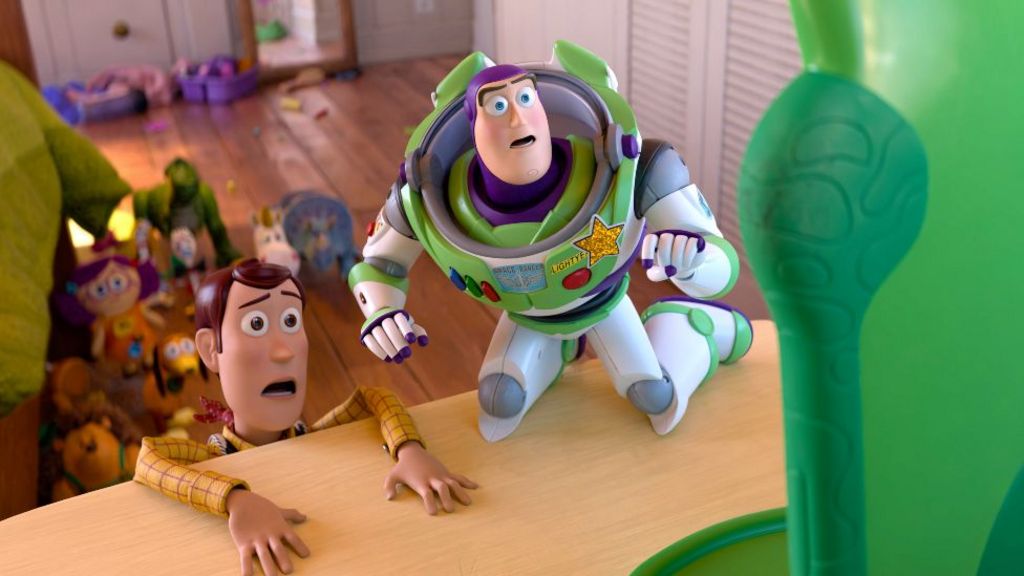
Nearly 31 years after the groundbreaking first full-length computer-animated Toy Story redefined cinema, Disney’s beloved animated franchise is set to release its fifth instalment later this month, bringing with it a sharp, timely new storyline that confronts one of modern parenting’s most pressing challenges: children’s growing dependence on digital screens.
Unlike previous entries in the series, where antagonists ranged from a bitter, power-hungry teddy bear Lotso to a troubled toy-destroying child Sid and a ruthless toy collector Al, this chapter introduces an entirely new type of villain: Lilypad, a frog-shaped tablet voiced by Past Lives star Greta Lee. In the film’s plot, the arrival of Lilypad pushes iconic toy heroes Woody, Buzz Lightyear and Jessie to the sidelines, as the household’s children become completely captivated by the glowing digital device, leaving their old playthings forgotten and threatened with displacement. Returning lead voice actor Tom Hanks, who has portrayed Woody since the franchise’s 1995 debut, says the story’s core theme strikes a deeply personal chord, and one that inspires real worry. “There’s a moment in the movie where we look out over a city skyline, and all you see is the cold blue glow of smartphone screens glowing from bedroom windows,” Hanks explained in an interview with the BBC. “That sight strikes terror in the heart.”
Hanks added that every member of the returning cast immediately connected with the script, because they have all witnessed the trend firsthand: young people constantly glued to their handheld devices, shifting attention between their screens and the world around them, with little focus on the people or analog activities in front of them. “This is a generational pattern,” he noted. “Every era has a technological innovation that becomes the defining force for a generation, and they pour all their attention into it.”
Joining Hanks in returning to their iconic roles are Tim Allen as Buzz Lightyear and Joan Cusack as Jessie, all three reprising parts they have inhabited for decades. Allen echoed Hanks’ observations, sharing a personal anecdote that illustrates how short-form digital content has reshaped young people’s attention spans. He recalled recently taking his own teenage daughter to a feature film screening, only for her to lose focus within minutes. Children raised on seven-second Instagram clips, Allen explained, are conditioned to consume an entire narrative arc in seconds, making two-hour traditional films a hard sell for many young audiences. “She looked at the screen 10 minutes in and said ‘I get it already – that guy’s the villain, this is how it’s going to go,’” Allen recalled. “We had a little talk about it, I told her if we come to the theater we watch the whole movie first, then you can complain. But she wasn’t wrong.” He did note that rare big-screen spectacle films like the Avatar franchise remain an exception, as their immersive theatrical experience holds attention even for viewers accustomed to quick, bite-sized content.
Cusack, who voices the spirited cowgirl Jessie, shared that she expects the new film’s premise to resonate deeply with parents across the globe, who are already navigating daily battles around setting screen time limits for their children. The story’s central conflict – traditional toys fighting to remain relevant against flashy digital devices – is a battleground millions of guardians know well, and it lands amid a growing global conversation about the potential long-term harms of excessive early childhood screen exposure, particularly from social media platforms.
Allen, however, offered a tempered perspective, pointing out that moral panic around new technology is nothing new. When he was a young consumer growing up with the rise of FM radio and rock and roll, his own parents worried that his constant music listening was a harmful distraction. Later, as television became a household staple, that same concern shifted to broadcast media. “This cycle has always existed,” he explained. “It’s just the technology that changes from one generation to the next.”
Ahead of the film’s release, Disney has pulled out all the stops, including adding a brand-new original track from global pop superstar Taylor Swift to the official soundtrack. Swift shared that contributing to the franchise is a lifelong dream: “I’ve adored these characters since I was five years old watching the first Toy Story, so getting to write a song for this new film is something I’ve always dreamed of.”
Looking back at the franchise’s unlikely origin story, Allen recalled that when the original 1995 Toy Story was in production, few outside the Pixar team expected it to become a cultural phenomenon. At the time, it was marketed as little more than a gimmicky children’s film, notable only for being the first fully computer-animated feature ever made. Early test cuts fell flat: the central dynamic between Woody and Buzz was overly hostile, the comedy fell flat, and the unfamiliar computer-animated aesthetic struck many early viewers as strange. It was only after rewrites that softened Woody’s edge and leaned into Buzz’s endearing self-delusion (he doesn’t know he’s just a toy) that the iconic dynamic fell into place. The final product balanced a creative, heartfelt core, clever humor for adult viewers, and a revolutionary visual style that won over audiences and critics alike, spawning decades of sequels, a 2022 Buzz Lightyear spin-off, and billions in merchandise sales.
Now, Toy Story 5 is set to become the first entry in the franchise to directly engage with a real-world modern social issue, exploring both the benefits and risks of pervasive digital technology in children’s lives. Critics have not yet released their full reviews, so the jury is still out on how effectively the film handles this nuanced topic – but its core premise has already sparked conversation across generations of fans.