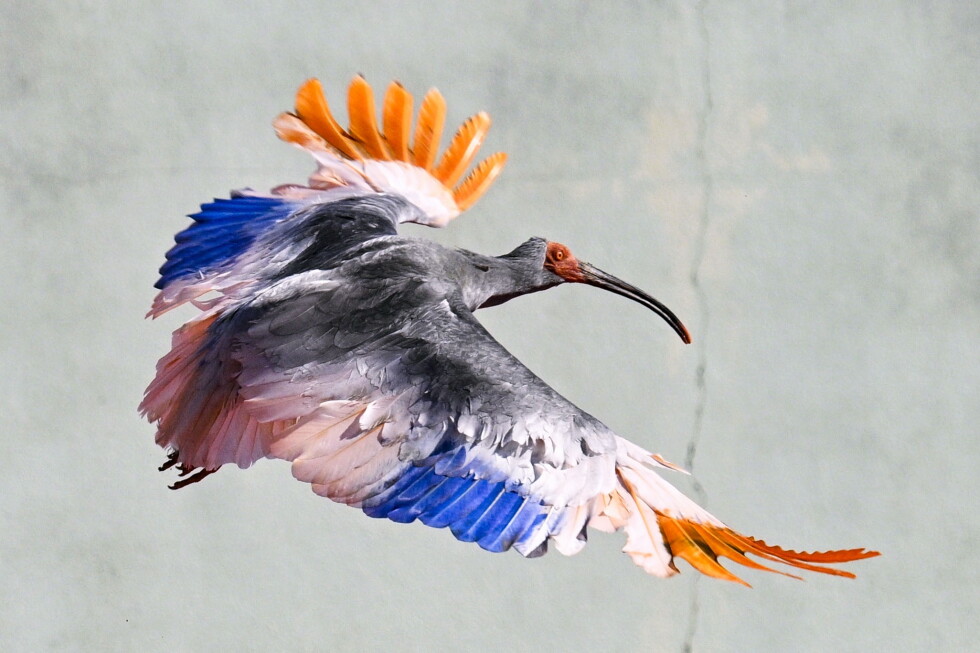
Decades after the crested ibis was declared extinct in Japan, eight of the iconic endangered birds have soared back into the country’s wild skies, launching a landmark new chapter in cross-border conservation and offering a hopeful symbol to a region still healing from a devastating natural disaster.
The historic release ceremony took place Sunday in Hakui, a small city in Japan’s north-central Noto region — the very area where the last wild crested ibis in this part of the country was recorded decades ago. Under clear skies, the eight white-feathered birds, known locally as “Toki,” glided out of handcrafted wooden enclosures immediately after Crown Prince Akishino, his wife Crown Princess Kiko, and senior Japanese environmental officials cut the opening ribbon. Hundreds of local residents gathered for the event, breaking into cheers and applause as the birds climbed into the sky.
Native to East Asia, crested ibises are celebrated for their striking features: soft orange-pink wing undersides and vivid red facial markings that make them a cultural icon across the region. By the 1970s, the species had completely vanished from Japan’s main island of Honshu, driven to local extinction by rampant overhunting and widespread habitat degradation that accompanied rapid industrial development. The last surviving individual of Japan’s original native crested ibis population passed away on Sado Island in 2003, leaving the country without any naturally occurring members of the species.
The species’ remarkable return to Japanese wilderness would not have been possible without cross-border conservation collaboration with China. According to Japan’s Ministry of the Environment, Beijing donated a breeding pair of crested ibises to Japan in the 1990s, and in 1999, the artificial breeding program supported by this gift produced the first crested ibis chick ever successfully hatched in captivity in Japan.
In the decades since that breakthrough, sustained breeding and protection efforts have steadily grown the Japanese crested ibis population. The first wild release took place in 2008, when 10 captive-bred birds were set free on Sado Island. Today, the wild population on the island has climbed to roughly 500 individuals, a major milestone for the decades-long recovery program.
For the Noto region, this new release carries extra meaning beyond conservation success. The area is still in the early stages of recovery after a deadly earthquake struck in January 2024, which destroyed thousands of homes and took dozens of lives. The return of the iconic birds is widely viewed as a positive omen for the region’s rebuilding, offering a much-needed boost of hope to local communities.
All eight birds released on Sunday were raised and prepped for wild life at the Sado Island conservation center, located in neighboring Niigata Prefecture. Ministry officials confirmed that 10 additional captive-bred crested ibises are currently being prepared for future release in the Noto region, as conservationists work to establish a stable, self-sustaining wild population outside of Sado Island.