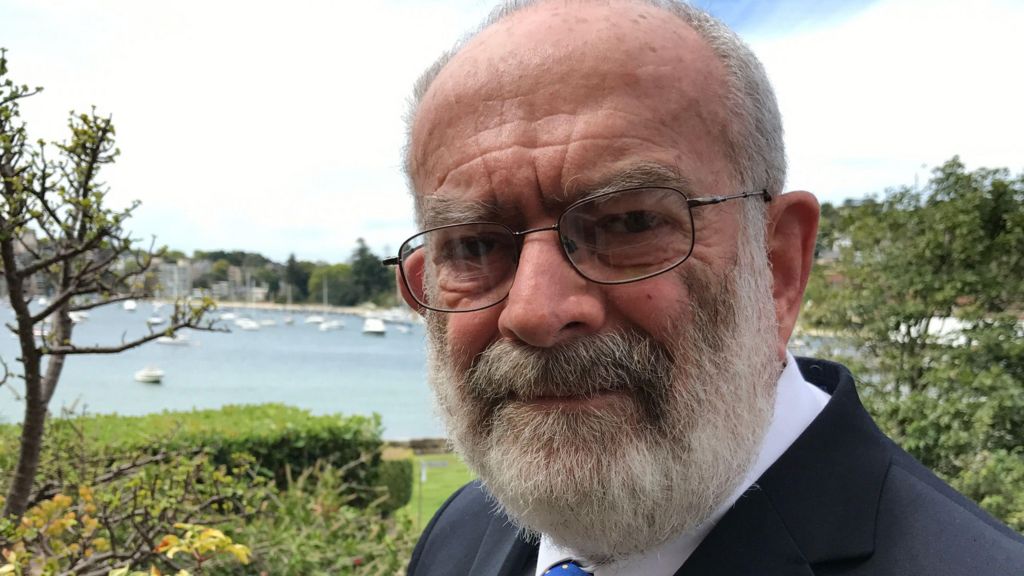
Half a world away from the English countryside, an 80-year-old Sydney-based solicitor with a lifelong passion for heraldry has pulled off a remarkable feat of historical restitution: tracking down and securing the return of two stolen centuries-old artefacts taken from parish churches in Norfolk and Hertfordshire. Richard d’Apice, an active member of both the UK and Australian branches of the Heraldry Society, spotted the items by chance while browsing online auction listings, turning his decades of specialized hobbyist knowledge into a win for cultural preservation.
d’Apice has long been drawn to the study of heraldic symbols, particularly those connected to funeral memorials, and says he makes a point of exploring every open church he encounters during his travels. That curiosity translated to online browsing last December, when he came across a painted wooden panel listed for sale by UK-based Dreweatt Auction House. His specialized training let him spot that the piece was out of place: ecclesiastical heritage items almost never get formal permission to be removed from church property, so seeing a 17th-century heraldic panel up for public auction immediately raised red flags.
After weeks of targeted research, d’Apice cross-referenced details of the panel with historical records, confirming it was first documented in an 1812 issue of *The Gentleman’s Magazine* as a memorial to George Cordell, a figure who served in the royal households of three successive British monarchs. The panel, valued at roughly £3,000, had been stolen from St Leonard’s Church in Flamstead, Hertfordshire back in 1996. Once d’Apice verified its origin, he reached out directly to the church’s rector and wardens to alert them to the impending sale.
Church officials confirmed the item matched their 1996 theft report, which had already been filed with police and added to the Art Loss Register, a global database tracking stolen cultural property. With the official documentation in hand, the auction house pulled the panel from its sale schedule, and arrangements were made to return it to its rightful home. A public unveiling ceremony is scheduled for June 4 at St Leonard’s, as a highlight of this year’s Flamstead Arts Festival, which runs through June 7. d’Apice will travel from Australia to attend the event and personally unveil the restored memorial.
The Hertfordshire recovery was not a one-off coincidence: it came only a short time after d’Apice helped track down a second stolen artefact, a 19th-century funeral hatchment, the diamond-shaped heraldic panel that memorializes a deceased individual, stolen from St Margaret’s Church in Felbrigg, Norfolk. That piece, which honors Cecilia, the widow of 19th-century MP William Windham who died in 1824, had been listed for sale by Sworders Fine Art Auctioneers in Stansted Mountfitchet, Essex.
Following d’Apice’s tip, Essex Police’s rural engagement team launched an investigation and recovered the hatchment from a private seller who had purchased it in good faith roughly 20 years prior. The artefact was officially returned to St Margaret’s last October. “It was recovered from the seller, who had bought it in good faith around 20 years ago. Then, happily, I was able to deliver it safely back to its legal guardians,” explained PC Dane Wyatt, the rural engagement officer who led the handover. Sworders Fine Art Auctioneers also confirmed they were proud to support the restitution effort, welcoming the chance to return the piece to its original home.
For d’Apice, the dual recoveries are not just a personal win for his hobby, but a reminder of a growing threat to UK ecclesiastical heritage: rampant theft of historical items from rural churches that has slowly eroded collections of irreplaceable cultural objects across the country. He emphasized that the Art Loss Register has emerged as a critical tool in fighting this trend, allowing owners to prove rightful ownership and recover stolen property across the global art and antiquities market.
“It feels wonderful to know my extensive knowledge and research had been put to good use, and the items were now back to where they belong,” d’Apice said in an interview. “I’m excited to know the memorial board has been returned to the place it’s been for hundreds of years.”
This report originates from BBC Beds, Herts and Bucks, which invites audience members to submit local story tips via multiple digital platforms, including BBC Sounds, Facebook, Instagram and X.