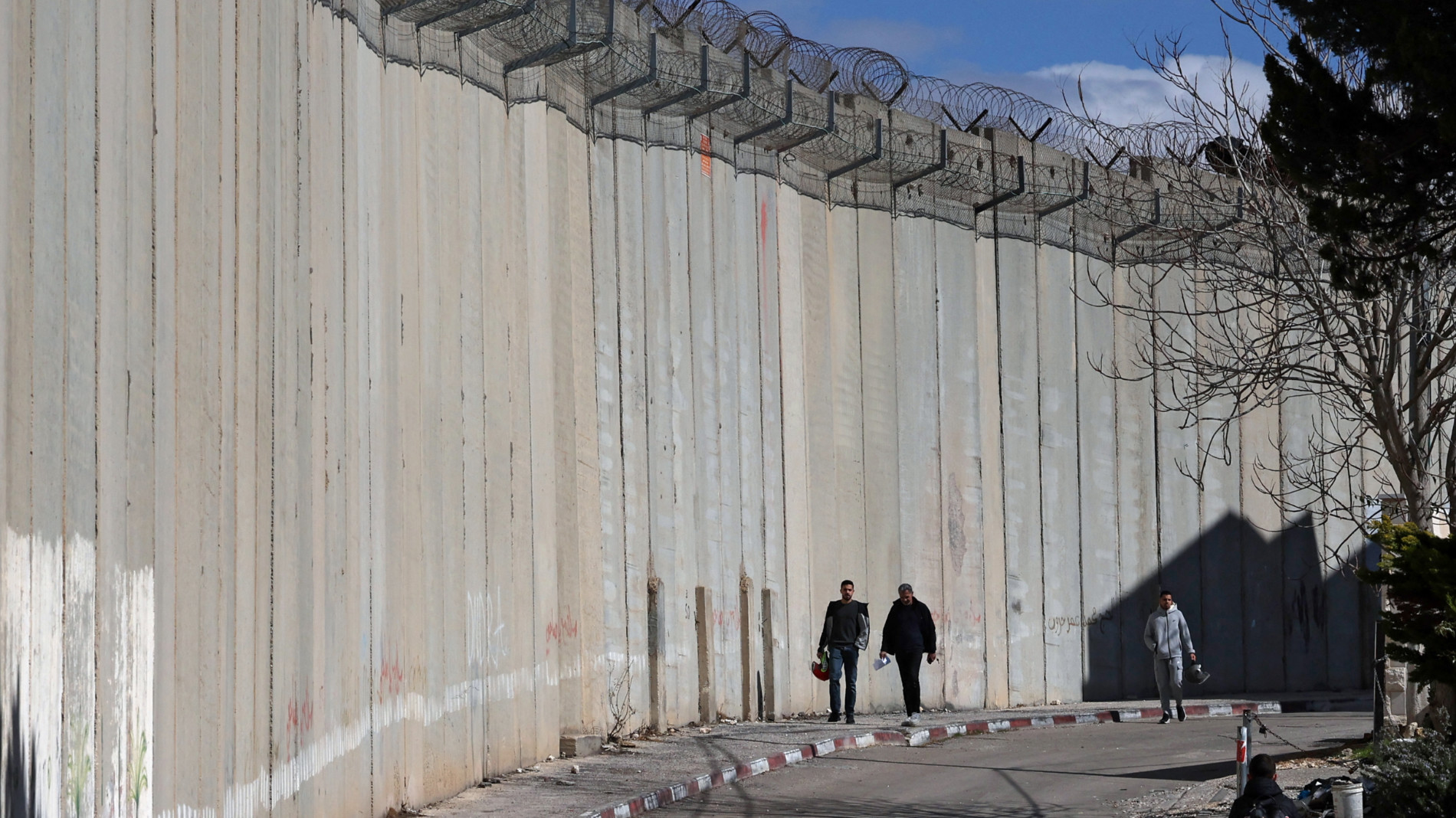
On a Sunday afternoon in the occupied West Bank, a 27-year-old Palestinian worker named Imad Haroun Ishtayeh lost his life after Israeli soldiers opened fire on him as he climbed the Israeli-built separation wall. Ishtayeh, a native of Salem village near the northern West Bank city of Nablus, was attempting to cross into Jerusalem to find informal employment to support his struggling family.
The Palestinian Ministry of Health confirmed that the bullet struck Ishtayeh in the thigh, severing a critical artery near al-Ram, a town located just north of Jerusalem. Mobile phone footage captured by other workers on the scene shows multiple men carrying the injured man down from a ladder propped against the barrier before an ambulance rushed him to a nearby hospital for emergency care. Despite urgent surgical intervention to repair the damaged artery, medical teams were unable to save Ishtayeh, and he was soon pronounced dead.
In an interview with Middle East Eye, Nasser Ishtayeh, Imad’s cousin, shared details of the young man’s life and final days. He explained that Imad had previously owned and operated a small poultry shop in his home village, but the crippling economic crisis across the occupied Palestinian territories forced him to shut the business down two years earlier. Ishtayeh had not attempted to cross the barrier for work in two years, but mounting financial pressure pushed him to try again: he made an unsuccessful attempt on Saturday, and was shot dead when he tried again the following afternoon.
Describing his cousin, Nasser called Imad a warm, kind-hearted man who was known for his sense of humor and constant willingness to help neighbors. “Everyone in the village loved him so much that they rushed to the hospital in Ramallah as soon as they heard he had been shot,” Nasser said. Imad was one of three brothers, and his father was undergoing ongoing cancer treatment that left the family already strained financially. He had recently finished construction on a new home and was planning to become engaged, with hopes of decorating the house alongside his future fiancée to pick out every detail of their new life together. That dream was never realized.
Palestinian labor leaders say Ishtayeh’s death is far from an isolated incident. According to Shaher Saad, head of the Palestinian General Federation of Trade Unions, Imad is the fifth Palestinian worker killed by Israeli forces so far in 2024 while attempting to cross the controversial barrier to access work. Since the outbreak of the Israel-Hamas war on October 7, 2023, that death toll has climbed to 52 workers killed en route to jobs inside Israel and occupied East Jerusalem.
Abdul Hadi Abu Taha, a member of the federation’s general secretariat, told Middle East Eye that the targeting of Palestinian workers seeking employment is a systematic campaign, directly tied to policies enacted by far-right Israeli National Security Minister Itamar Ben Gvir. Abu Taha explained that Ben Gvir has explicitly relaxed rules of engagement, allowing Israeli security forces to target Palestinians who cross without permits in search of work. “The targeting of Palestinian workers is real and ongoing. The Israeli army and police raid workplaces, assault them, imprison many, and shoot them. Some have even been killed after being severely beaten,” Abu Taha said, adding that soldiers have received formal orders to shoot any worker attempting to climb the separation wall in the al-Ram area.
Data from the United Nations Office for the Coordination of Humanitarian Affairs (OCHA) underscores the scale of the crisis: the organization has recorded more than 290 Palestinian workers injured while attempting to cross the barrier to reach jobs in Israel and occupied East Jerusalem. Following the October 7 outbreak of war, Israeli authorities canceled or suspended the vast majority of existing work permits for Palestinian residents of the West Bank and Gaza, a decision that has stripped hundreds of thousands of people of their primary source of income and plunged already vulnerable families deeper into poverty.