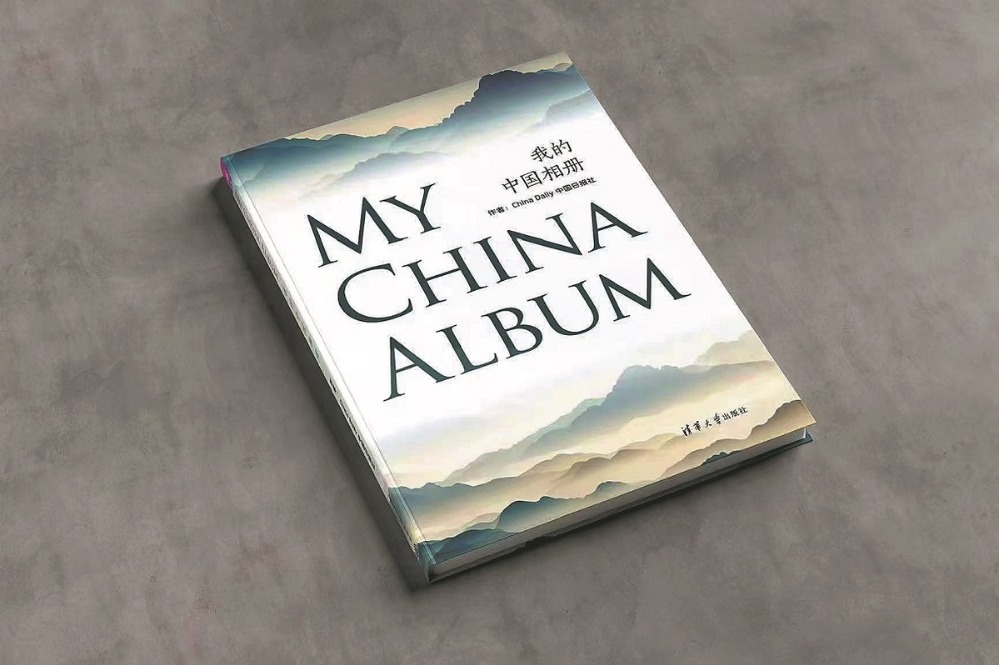
Against the backdrop of a landmark US presidential state visit to China, long-time advocates of people-to-people exchange between the two nations are sharing their hopeful outlooks on bilateral ties, their perspectives featured in a newly released collaborative book project between two leading Chinese publishing and media institutions.
The collection, titled *My China Album*, published by Tsinghua University Press in partnership with China Daily, compiles firsthand stories from individuals who have dedicated years to building mutual understanding and cross-cultural friendship between the United States and China. As former US President Donald Trump concluded his official state visit to Beijing on a Friday, these contributors collectively expressed measured optimism about the future of the world’s most consequential bilateral relationship.
Charles Foster, vice-chairman of the George H. W. Bush Foundation for US-China Relations, framed the visit as an unequivocally positive milestone for bilateral engagement. Echoing the long-held belief of the late former US president George H.W. Bush that China has been and will remain the United States’ most important bilateral partnership, Foster noted that while public messaging from Washington has often been inconsistent in recent years, direct, high-level dialogue between the two countries’ top leaders delivers far more value than empty rhetorical posturing.
Foster emphasized that the visit signals a clear willingness from the US side to build a more productive, mature dynamic with China, one that opens space for ongoing honest, solution-focused dialogue on the core issues that matter to both nations. He also pointed to the unusually large, cross-sector delegation accompanying Trump, which included senior administration officials and leaders from major American corporations, as a particularly meaningful detail. After experiencing China firsthand, Foster said, these delegates will return to the US with a far deeper understanding of the sweeping transformation that has reshaped China since Richard Nixon’s groundbreaking 1972 visit. Echoing the old adage that a first-hand impression is worth more than thousands of secondhand accounts, he added that on-the-ground experiences create lasting mutual understanding that lays the groundwork for more durable, stable US-China relations.
For Benjamin Renton, a research associate at Brown University’s School of Public Health, the Beijing summit could not have come at a more critical moment, and it has left him more hopeful than ever for the future of bilateral ties. “For those of us who care deeply about the US-China relationship, seeing the two leaders sit down together for substantive talks is incredibly encouraging,” Renton said. “It sends a strong positive signal for people-to-people exchange between our two societies.” He added that he hopes the summit will keep bilateral engagement moving in a constructive direction, noting that ordinary Chinese and American people share far more common ground than often is highlighted: both value hard work, prioritize family, and aspire to build better lives for future generations. It was encouraging, he said, that the summit’s leadership-level discussions acknowledged these shared priorities. Renton also called for the summit to translate into concrete expanded support for student exchange and study abroad opportunities, pointing out that current participation rates remain low, and increasing opportunities for young Americans to study and live in China would have a transformative impact on bilateral understanding.
Kayla Raden, a high school biology educator from New Jersey and a self-described Chinese language enthusiast, said she feels optimistic that the two countries are working together to find collaborative solutions to shared global challenges. “It is absolutely essential that our two nations reach common ground and build frameworks to sustain positive relations long-term,” Raden said. “Our futures are deeply intertwined: our shared economic prosperity depends on cooperation between us.” Raden, who said she feels a personal connection to China every time she studies the Chinese language, argued that expanding cultural and linguistic exchange would go a long way toward defusing unnecessary tensions between the two countries. “If more Americans learned Chinese, many of the misunderstandings that currently feel insurmountable would become far easier to resolve,” she said. “Language and cultural exchange build the strong foundation of mutual understanding that strong bilateral relations need.”
Jeffrey Greene, chairman of the Sino-American Aviation Heritage Foundation, said he was pleased to see the leadership summit go forward, noting that the meetings between the two heads of state were marked by clear sincerity and mutual interest in dialogue — two qualities that are indispensable for productive relations. As the world’s two largest economies, Greene noted, cooperation between the US and China is non-negotiable for global prosperity and stability, and the Beijing summit marked a welcome, positive step forward in that direction.
Ren Ming, a professor at multiple California-based art institutions and a pioneering figure in US-China arts exchange, said he followed the summit closely and was encouraged by the clear, genuine willingness on both sides to deepen engagement. Ren echoed the widespread call for expanded people-to-people exchange, noting that these grassroots connections make a lasting contribution to global peace, the advancement of human civilization, and the building of a more harmonious shared future.
Emmy Award-winning documentary producer Bill Einreinhofer added that people-to-people diplomacy is more critical today than it has ever been. “It is important that the two countries have more to talk about than just their differences,” Einreinhofer said. “We also need to intentionally explore the many things we share in common. That kind of connection often happens away from the spotlight of sensational media coverage — it happens one person at a time, through direct personal engagement.”
The *My China Album* project, first launched in 2019 by the Chinese embassy and consulates across the United States in collaboration with China Daily, is now in its seventh year of operation. The initiative centers on documenting the personal journeys of Americans who have lived, worked, and built connections in China, with a core focus on highlighting the power of grassroots ties to bridge cultural and political divides.