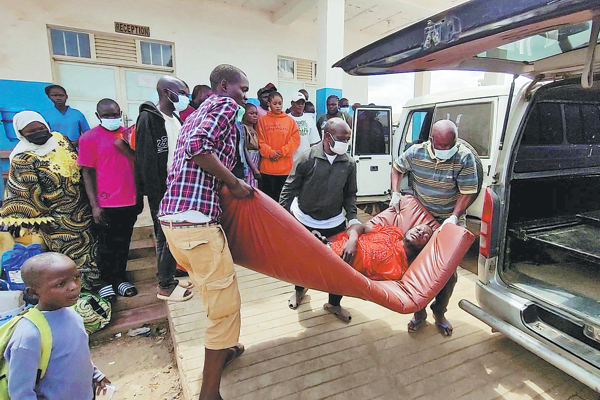
A growing Ebola outbreak caused by the rare Bundibugyo virus strain is facing severely hindered containment efforts in the eastern Democratic Republic of the Congo (DRC), driven by ongoing armed conflict and mass population displacement, the World Health Organization (WHO) has warned. In one of Central Africa’s most unstable regions, persistent insecurity, unregulated population movement and already overburdened health systems have ground critical surveillance and emergency response operations to a near halt.
Speaking at a Wednesday press briefing, WHO Director-General Tedros Adhanom Ghebreyesus detailed the rapid deterioration of security conditions in the area. “Conflict has intensified since late 2025, and fighting has escalated significantly over the past two months, with over 100,000 people newly displaced,” he said. Adding to the risk, the affected region is a major mining hub marked by constant cross-community and cross-border population movement that creates ideal conditions for the virus to spread further.
The outbreak has already been categorized as a Public Health Emergency of International Concern (PHEIC), the WHO’s highest alert level. Official counts stand at 51 confirmed cases and nearly 600 suspected cases across the DRC and neighboring Uganda, but WHO officials estimate the actual scope of the epidemic is far larger than current reporting indicates.
Insecurity in DRC’s Ituri Province has completely upended routine healthcare delivery and disease tracking infrastructure, Tedros explained. Health facilities cannot operate effectively amid active combat, and hundreds of healthcare workers have been forced to flee alongside displaced civilian communities. This has gutted the region’s already limited capacity to detect new infections and roll out targeted response measures.
Mohamed Yakub Janabi, WHO Regional Director for Africa, noted that outbreak detection in conflict-riven remote areas faces inherent structural barriers. Effective disease surveillance depends entirely on three core pillars: reliable community reporting, fully operational local health facilities, and timely access to laboratory testing. None of these are currently functional in much of eastern DRC, he added.
“Surveillance systems rely on a combination of community reporting, local health facilities, lab confirmation, and partnership,” Janabi said, emphasizing that the WHO’s mandate is to reinforce national health authorities rather than replace their leadership in the response.
Even when samples are collected, logistical hurdles and limited local diagnostic capacity create dangerous delays. Currently, test samples from Ituri must be transported more than 1,700 kilometers to the DRC capital Kinshasa for confirmation, extending the window for the virus to spread between confirmed cases.
WHO officials also confirmed that healthcare-associated transmission has already been documented, including confirmed infections among frontline healthcare workers. This development underscores the urgent need to rapidly scale up infection prevention and control protocols across all care facilities in the region.
Lucille Blumberg, an epidemiologist and former deputy director of South Africa’s National Institute for Communicable Diseases, called for an immediate ramp-up of core response measures: enhanced active surveillance, rapid contact tracing, enforced targeted quarantine protocols, and expanded protective equipment and support for frontline health workers and affected communities.
Blumberg added that the ongoing outbreak lays bare a critical unmet need for additional international resources and support. Local authorities are already struggling to maintain routine essential health services for conditions including tuberculosis, malaria, and maternal and child healthcare in conflict-affected regions, even as they confront the new Ebola emergency.