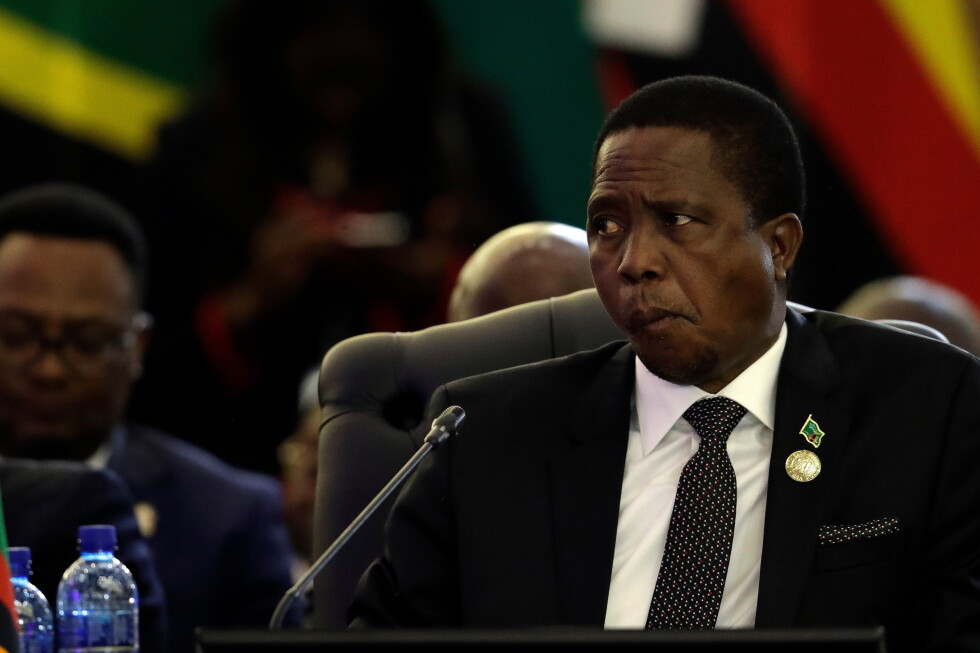
Nearly 12 months after the passing of former Zambian President Edgar Lungu, a high-stakes legal conflict over where the former leader will be laid to rest landed in South Africa’s Supreme Court of Appeal on Friday. The bitter dispute, pitting Lungu’s surviving family against the current Zambian government led by his long-time political rival, has left Lungu unburied since his death in June 2025.
Lungu, who held Zambia’s presidency from 2015 to 2021, died at the age of 68 while receiving treatment for an undisclosed medical condition at a private hospital in South Africa. What should have been a period of mourning has devolved into a public standoff over his final arrangements, rooted in deep political enmity between Lungu’s camp and current President Hakainde Hichilema.
Hichilema’s administration has pushed to repatriate Lungu’s remains to Zambia for an official state funeral. In August, the Pretoria High Court ruled in the government’s favor, ordering that Lungu’s body be handed over to Zambian diplomatic representatives to be returned home for the ceremony. But Lungu’s family, which rejects any involvement of Hichilema in the former president’s funeral, refused to comply with the ruling and launched an appeal to the higher court to allow burial in South Africa.
During Friday’s oral arguments held in Bloemfontein, Tembeka Ngcukaitobi, the lead lawyer for Lungu’s family, laid out the defense’s core position: the Zambian government’s claim to organize a state funeral has no legal standing, because all of Lungu’s presidential benefits were officially revoked before his death. Ngcukaitobi further emphasized that under prevailing legal principles, the wishes of Lungu’s widow should be prioritized when making burial decisions, overriding any competing claims from the state.
In response, Ben Stoop, legal counsel for the Zambian government, countered that the family and the administration had already reached a prior agreement that would allow Hichilema to attend the funeral and receive visiting international dignitaries. Stoop argued that the family’s current opposition amounts to a breach of that earlier mutually accepted pact.
The five justices hearing the appeal focused significant scrutiny on one key gap in the family’s case: the absence of written or clear verbal instructions from Lungu himself confirming his explicit desire to be buried in South Africa. While the bench acknowledged that Lungu may well have preferred not to have his political opponent lead his funeral, the lack of direct evidence from the former president leaves the family’s position on uncertain legal ground.
As of Friday’s hearing, the Supreme Court of Appeal has not announced a timeline for when it will issue its final ruling on the appeal, leaving the question of Lungu’s final resting place unresolved for the foreseeable future.