Three months after a regional war upended daily life across the Middle East and sent shockwaves through the global economy, a potential breakthrough to extend the fragile existing ceasefire between the United States and Iran remains locked in limbo, awaiting final sign-off from President Donald Trump. Speaking to reporters Thursday, US Vice President JD Vance confirmed that negotiating teams have made significant headway on draft terms for the agreement, though final adjustments to key language are still ongoing. “It’s hard to say exactly when or if the President is going to sign the MOU,” Vance noted, adding “We’ve made a lot of progress here.”
News of the emerging framework has already shifted global market sentiment: Asian stock markets rose on Friday as optimism grew around a deal, while global crude oil prices edged lower, a welcome shift after a week of extreme volatility driven by investor speculation over the outcome of talks. A core priority of the proposed agreement is the reopening of the Strait of Hormuz, one of the world’s most critical chokepoints for global energy trade. According to details reported by US media, the deal would mandate unrestricted, toll-free passage for commercial shipping through the strait, require Iran to clear existing mines from the waterway within a 30-day window, and see the US lift its ongoing naval blockade once commercial traffic resumes.
However, Tehran has yet to publicly confirm any of the terms under discussion, and conflicting accounts have emerged from Iranian sources. Multiple Iranian media outlets have reported that any deal unilaterally announced by the Trump administration would not be recognized by Tehran. Tasnim News Agency, Iran’s semi-official state-aligned outlet, cited a source close to Iranian negotiation teams saying the draft text has not been finalized, and that key mediator Pakistan would be notified immediately once a final agreement is reached. Diplomatic efforts have drawn involvement from multiple regional players: Qatar’s role in talks has expanded in recent days, and the Gulf nation’s state news agency confirmed late Thursday that Trump had spoken with Qatar’s ruler to discuss the latest updates on peace efforts. Doha hosted Iranian negotiating officials this week, as regional powers push for a durable resolution to the conflict that has shaken the region since fighting erupted three months ago. The current fragile bilateral ceasefire between the US and Iran has held officially since April 8, but repeated breaches have threatened to unravel the truce entirely.
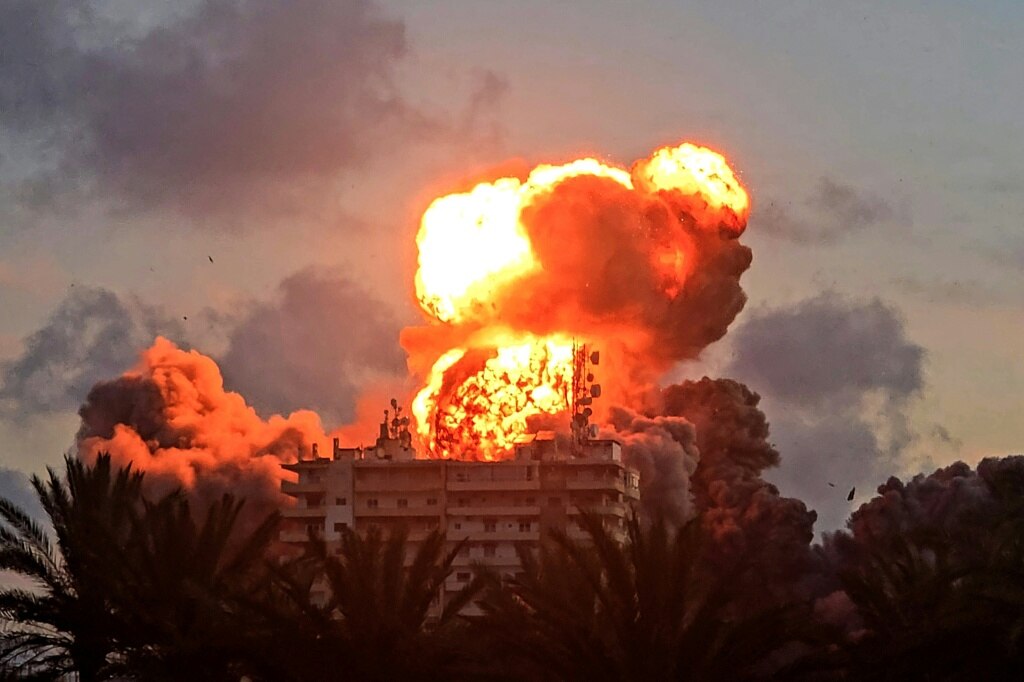
Even as backroom diplomacy proceeds, both sides have traded accusations of ceasefire violations in recent days. This week, the US carried out airstrikes on the southern Iranian port of Bandar Abbas, prompting immediate retaliatory fire from Iranian forces. Iran’s state broadcaster IRIB, citing the Islamic Revolutionary Guard Corps (IRGC), confirmed that Tehran targeted the US airbase that served as the origin of the American strike. While the IRGC did not publicly name the location of the base, Kuwait — which hosts thousands of US troops on its territory — reported that its air defense systems activated to intercept incoming fire. Kuwait’s foreign ministry issued a sharp condemnation of what it called “the criminal Iranian attacks that targeted the territory of the State of Kuwait with missiles and drones, in a dangerous escalation.” US Central Command labeled the Iranian retaliation an “egregious ceasefire violation.”
Further tensions persist in the Strait of Hormuz itself: IRIB reported Thursday that Iranian forces opened fire on four commercial ships attempting to transit the waterway without Tehran’s authorization, a step consistent with Iran’s total blockade of the strait implemented when the war began. US military officials confirmed their forces intercepted five Iranian attack drones in and around the strait, and disrupted a sixth drone launch attempt near Bandar Abbas. A senior US official told AFP that US military actions were “measured” and “intended to preserve the ceasefire,” but the IRGC has warned it will respond with force to any new American strikes. On Friday, Iranian state television reported that 24 commercial ships had transited the strait in the previous 24 hours under coordination with the IRGC and Iranian foreign ministry, but added a sharp warning that “ships from hostile countries face a severe response” from Iranian military forces.
Beyond the direct US-Iran front, the conflict has spilled over into Lebanon, where a separate unimplemented ceasefire between Israel and Iran-backed Hezbollah continues to be violated on a daily basis. On Friday, Lebanon’s culture minister Ghassan Salame told AFP that Israeli forces had struck the historic medieval Beaufort Castle, a landmark overlooking the southern Lebanese city of Nabatieh. Salame added that bombings have already struck close to the ruins of Tyre, a UNESCO World Heritage Site, and warned that dozens of other cultural and heritage sites across southern Lebanon are in “serious danger.” Beaufort Castle, also known locally as Qalaat al-Chakif, was used as a military base by Israeli forces during their 22-year occupation of southern Lebanon that ended in 2000.
The ceasefire between Israel and Hezbollah was scheduled to take effect on April 17, but it has never been enforced, with both sides launching repeated attacks and justifying their actions as responses to the other side’s breaches. Lebanon was drawn into the broader regional war in early March, when Hezbollah launched a large rocket attack on Israel in retaliation for the killing of Iran’s supreme leader in a joint US-Israeli strike, prompting full-scale Israeli airstrikes and a ground incursion into southern Lebanon. Thursday saw a sharp escalation of Israeli operations: Israeli forces carried out intensive deadly bombardment across southern Lebanon, and expanded their offensive with the first raid near the Lebanese capital Beirut in weeks. Local authorities confirmed that a woman and two children were killed in the raid, despite the nominal ceasefire.