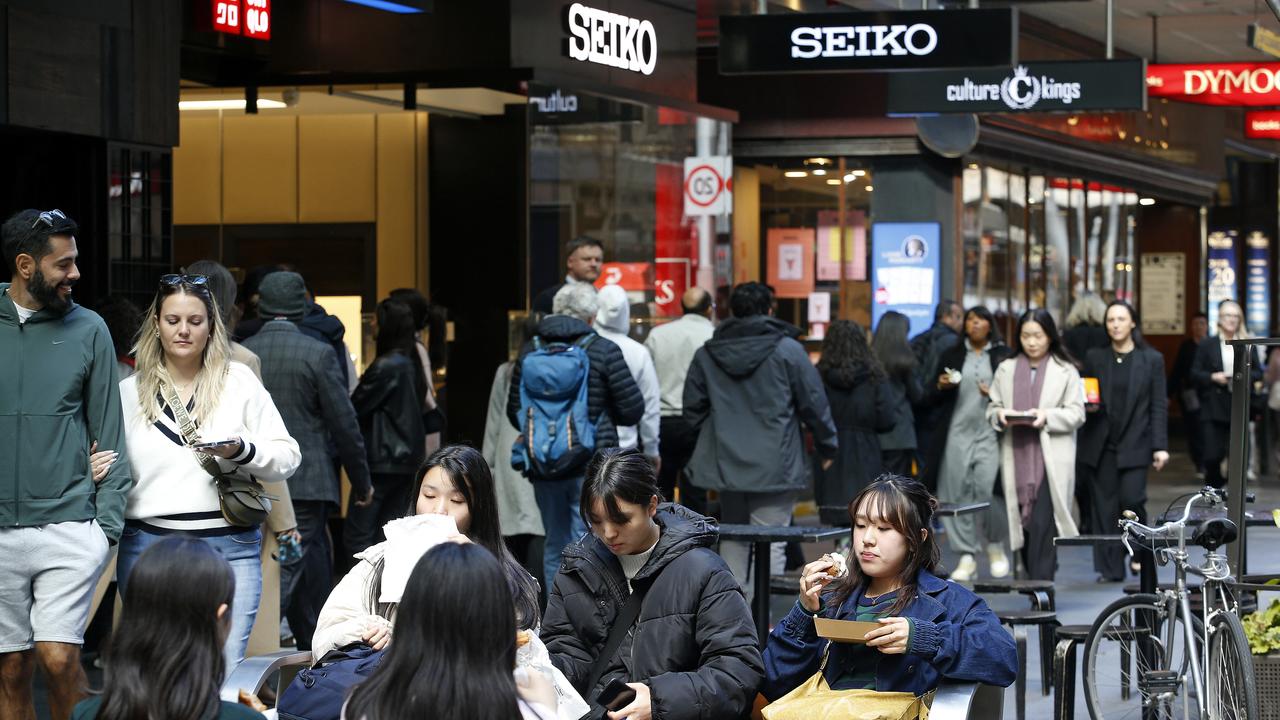
Australia’s retail sector is bracing for significant financial strain as it confronts a dual threat of soaring operational costs and faltering consumer demand, a new report from Deloitte Access Economics has warned. Analysts have framed the overlapping challenges as a classic “pincer movement” that will compress profit margins and drag sales growth lower through 2026.\n\nIn the report’s baseline outlook, annual retail turnover is projected to decelerate to 1.8% growth in 2026, down from an expected 2.3% in 2025. But David Rumbens, Deloitte Access Economics partner and lead author of the analysis, warns that downside risks far outweigh potential upside surprises. Should the ongoing conflict in the Middle East escalate, the report cautions, consumer spending could see almost no expansion for the remainder of 2026.\n\nThe first wave of pressure stems from global supply shocks tied to Middle East tensions, which are pushing up the cost of critical retail inputs. The report estimates that conflict-driven price hikes for fuel, natural gas, fertilizer and plastic will directly add 2.1% to retailers’ overall operating costs. On the demand side, broader cost-of-living pressures have already dragged Australian consumer sentiment to its lowest temporary level in 50 years, leaving households far more cautious about discretionary spending.\n\nRumbens explained that the dual pressures leave retailers with little room to absorb shocks: “The Middle East conflict is pushing up costs as the prices of key inputs including fuel, energy, plastics and fertiliser rise. At the same time, the rising cost of living is once again squeezing household budgets, dampening the outlook for consumer spending.”\n\nRecent official inflation data from the Australian Bureau of Statistics underscores the complicated economic backdrop. Yearly headline inflation dipped slightly from 4.6% in March 2026 to 4.2% in April, a decline driven entirely by temporary government policy measures: a 50% cut to the national fuel excise and a GST rebate for fuel purchases. Since April 1, these policies have saved Australian drivers 26 cents per liter in direct excise cuts and an additional 5.7 cents per liter via the GST rebate. But the trimmed mean inflation rate, a key underlying measure tracked by the Reserve Bank of Australia that strips out volatile price shifts, rose to 3.4% in the 12 months to April, confirming that persistent core price pressures remain embedded in the Australian economy. The temporary fuel relief measures are set to expire on July 1, 2026, which will likely push inflation back upward in the third quarter.\n\nThe report adds that accelerating inflation over the past year has already erased all of the real wage gains Australian households achieved in 2025. Real wages fell 1.3% year-over-year as of March 2026, eroding household purchasing power and directly weakening demand for retail goods.\n\nBreaking down spending trends, Deloitte forecasts that growth in discretionary retail spending will slow sharply from 2.5% in the 12 months to December 2025 to just 0.7% in the 12 months to December 2026. Growth in spending on non-discretionary essentials is projected to tick up slightly from 2.5% to 3% over the same period, but the report notes that even essential spending could pull back later as households ramp up savings to cope with financial uncertainty.\n\n“Discretionary spending is likely to weaken further as the lagged effects of interest rate rises continue to flow through to household budgets, elevated inflation erodes consumers’ purchasing power, and uncertainty surrounding the Middle East conflict persists,” Rumbens said.
Australian retailers face ‘simultaneous attacks’ from rising costs and falling demand