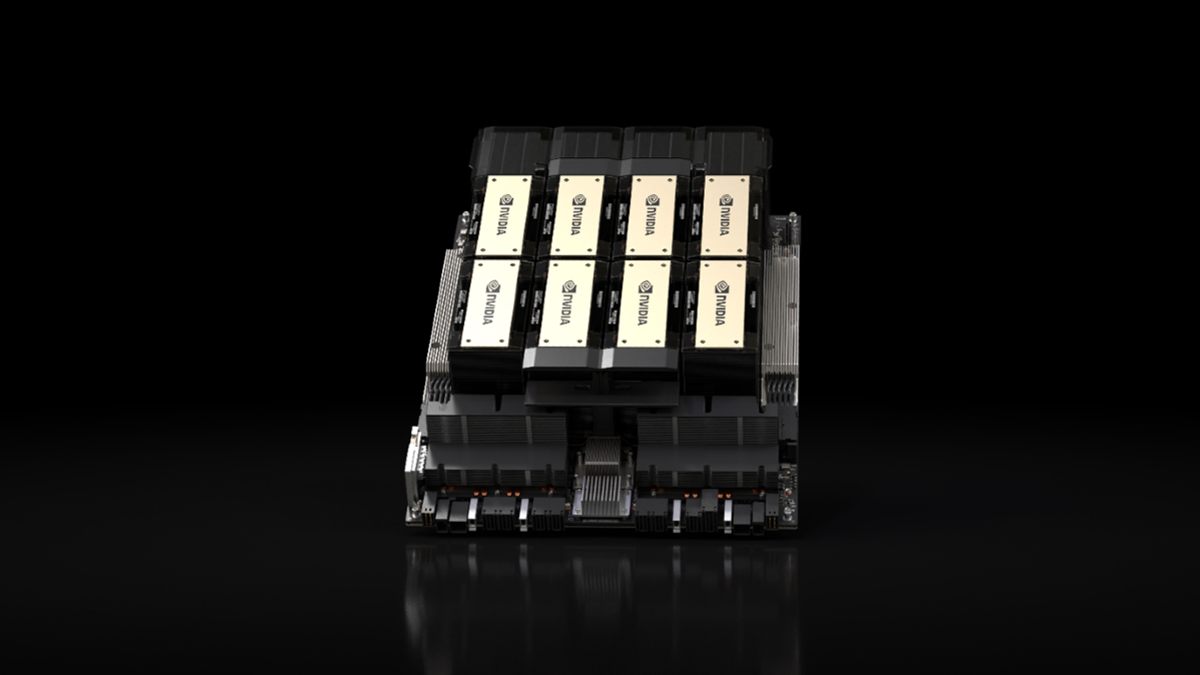
Against a backdrop of escalating trade restrictions on advanced semiconductor technology between the United States and China, Taiwanese law enforcement has successfully dismantled a major smuggling ring that exploited a new transit route through Japan to funnel restricted high-end AI servers into China. Three suspects have been taken into custody, and authorities seized 50 Supermicro servers loaded with top-tier Nvidia AI chips, valued at more than $15 million in total. This marks the first documented case of smugglers using Japan as a waypoint for this illicit trade, uncovering a new gap in global export control enforcement.
According to official statements from Taiwan’s Keelung District Prosecutors’ Office, the three suspects—identified only by their surnames You, Wang, and Chen—allegedly orchestrated the scheme to generate massive illegal profits. Fully aware that U.S. export regulations strictly prohibit the sale of these advanced AI systems to mainland China, Hong Kong, and Macau, the trio purchased dozens of servers locally in Taiwan, with each unit carrying a price tag of more than $310,000. To avoid detection, they falsified cargo documentation, mislabeling the shipments and listing a Northeast Asian nation as their final destination. Bloomberg later confirmed that this destination was Japan.
Taiwan’s Coast Guard carried out coordinated raids on 12 locations, including the suspects’ private residences and linked corporate offices, on May 20. In addition to the 50 servers, investigators seized mobile devices, desktop computers, financial ledgers, luxury vehicles, and roughly $280,000 in local currency. Investigators familiar with the case told Bloomberg that at least one illicit shipment successfully transited Japan and reached Hong Kong, which investigators believe was a staging point for delivery to mainland China. A second planned shipment was intercepted before it could depart Taiwan.
Supermicro, officially the Nasdaq-listed Super Micro Computer Inc., specializes in manufacturing custom AI servers powered by Nvidia’s most advanced GPU lines, including the GB200, B200, H200, and H100. In an official statement released after the bust, the company emphasized its commitment to upholding global export regulations and protecting its intellectual property. The firm noted it had collaborated closely with Taiwanese authorities throughout the investigation, adding that the servers had been deceptively acquired after an initial sale to an authorized reseller.
During a press visit to Taipei on May 23, Nvidia CEO Jensen Huang addressed the incident, noting that the company proactively trains all of its business partners on global export control rules. He called on Supermicro to strengthen its internal compliance frameworks to prevent similar illicit diversion from occurring in the future.
This bust is the second major smuggling case linked to Supermicro in 2026. Back in March, U.S. law enforcement charged Supermicro co-founder Yih-Shyan “Wally” Liaw and two other associates with running a separate transshipment network that moved billions of dollars worth of restricted AI servers through Taiwan, Thailand, and Hong Kong to end users in China. Liaw and one co-defendant were arrested in California, while a third suspect remains at large. A May Bloomberg report identified Bangkok-based OBON Corp as the central Southeast Asian player in that network, and named Chinese tech giant Alibaba as an alleged end customer. Alibaba has issued a full denial of any involvement, stating it has no business ties to any of the parties named in the U.S. indictment and has never utilized banned Nvidia chips in its data centers.
When asked about the most recent smuggling case during a regular May 22 media briefing, Chinese Foreign Ministry spokesperson Guo Jiakun dismissed the matter, stating it was not a foreign affairs issue and that he had no knowledge of the incident. Following Bloomberg’s confirmation that Japan was the transit country, most Chinese state-aligned media outlets and independent commentators chose to remain silent on the details of the case.
Industry analysts broadly frame this enforcement action as Taiwan’s first large-scale crackdown on gray-market semiconductor smuggling, a trade that has grown rapidly as the U.S. has tightened restrictions on high-end chip exports to China. The arrest of the three suspects sends a clear signal that authorities are cracking down on illicit supply chain activity, and adds additional compliance pressure on major global technology firms including Nvidia and Supermicro.
The smuggling bust unfolded against a shifting landscape in the U.S.-China chip trade, where Beijing has recently moved to block new Nvidia chip imports in a push to promote domestic semiconductor manufacturing. After Washington initially approved Nvidia’s H200 chip for export to China, Beijing nullified that approval and urged all domestic Chinese tech firms to source chips from local manufacturers such as Huawei Technologies. To date, zero H200 chips have been shipped to China, and Nvidia’s market share in the country has dropped sharply.
In a May 20 interview with CNBC, Huang confirmed that Nvidia’s share of China’s AI accelerator market has plummeted from roughly 95% to effectively zero following successive rounds of U.S. export restrictions. He noted that Huawei has emerged as the primary beneficiary of this shift, with its domestic Ascend line of AI chips on track to generate $12 billion in revenue in 2026. Huang told investors not to expect any near-term progress in regaining access to the Chinese market, but added that Nvidia remains ready to re-enter the market if regulatory conditions change. Huang’s recent inclusion in U.S. President Donald Trump’s trade delegation to Beijing in mid-May had sparked market hopes for a breakthrough on H200 sales, but those expectations were quickly dashed: Beijing not only rejected H200 imports but also enacted a ban on the GeForce RTX 5090D V2, a graphics card specifically designed for the Chinese market to meet U.S. export rules.
Many Chinese commentators have framed Huang’s public comments as proof that China has won the ongoing chip conflict with the U.S., arguing that decades of American chip dominance in the Chinese market has come to an end. One Gansu-based commentator noted that the core goal of U.S. export restrictions—slowing the development of Chinese AI by cutting off access to advanced chips—was flawed from the start. “U.S. policymakers believed China could not develop advanced AI without American chips, but what we have seen is that China has built out its own domestic computing ecosystem that can fully function without external supply,” the commentator wrote.
However, independent observers point out that Beijing’s narrative of victory overlooks ongoing market realities: many major Chinese tech firms still retain strong unmet demand for Nvidia’s high-end chips, and demand for illicit smuggling and alternative workarounds, such as building AI data centers in overseas locations, confirms that demand has not disappeared.