Just days after the most intense exchange of fire between the United States and Iran since an April truce took effect, negotiators from both sides have reached a preliminary framework for a 60-day extension of the ceasefire, multiple anonymous U.S. sources confirmed to Agence France-Presse on Thursday. The deal, which also paves the way for formal negotiations over Iran’s nuclear program, still requires final sign-off from U.S. President Donald Trump to move forward.
The breakthrough comes amid heightened tensions that have put wider diplomatic efforts to end the three-month conflict to the test. The war began in late February when U.S. and Israeli forces launched joint strikes on Iranian targets, and the April truce had largely held until this week’s flare-up.
On Wednesday, the U.S. carried out airstrikes on the southern Iranian port city of Bandar Abbas. In response, Iran’s Islamic Revolutionary Guard Corps (IRGC) announced it had targeted the U.S. airbase that launched the attack, though it did not specify the base’s location. Kuwait, which hosts U.S. military personnel on its territory, said its air defense systems intercepted incoming projectiles, drawing the U.S. ally directly into the clash. Kuwait’s foreign ministry quickly condemned what it called “criminal Iranian attacks” on its territory, labeling the incident a dangerous escalation.
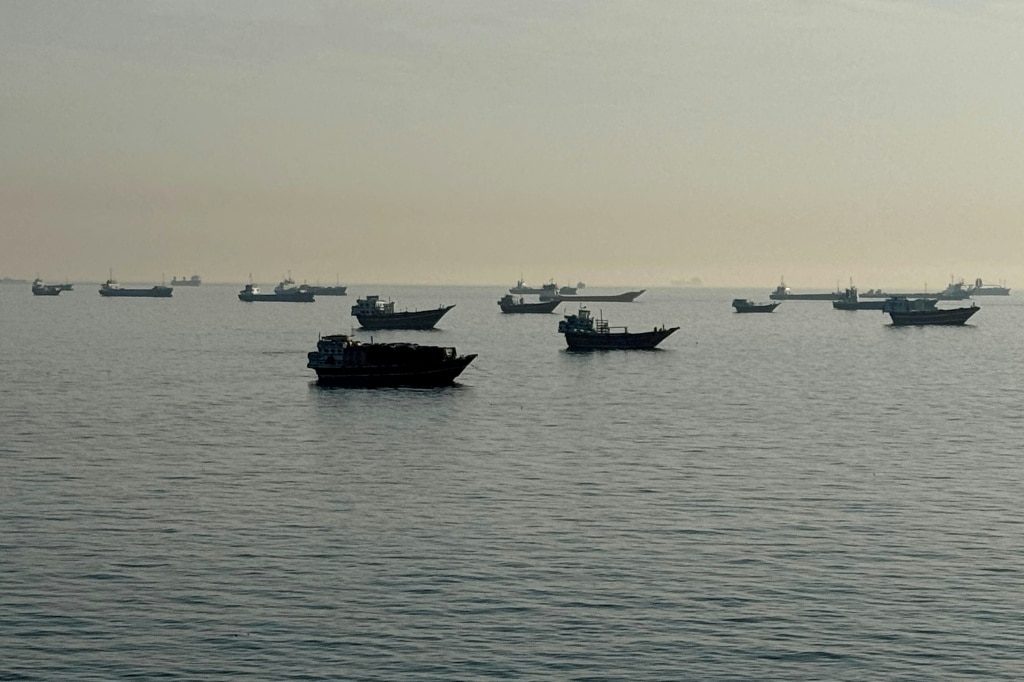
U.S. Central Command denounced Iran’s response as an “egregious violation” of the existing ceasefire. Separately, Iranian state media reported Thursday that Iranian forces had opened fire on four commercial ships that attempted to transit the Strait of Hormuz without authorization. Iran has blocked all commercial traffic through the strategic waterway, a critical chokepoint for global energy supplies, since the start of the war. U.S. forces confirmed they intercepted five attack drones in and around the strait, and disabled a sixth drone before it could launch from a ground control station near Bandar Abbas.
For its part, Iran has pushed back against U.S. accusations of truce violations. Foreign ministry spokesman Esmaeil Baqaei said Iran would “take all necessary measures to defend its national sovereignty,” and called the U.S. airstrikes themselves a clear breach of the truce. A senior U.S. official countered that American actions were “measured” and carried out with the goal of preserving the existing ceasefire agreement. The IRGC issued a fresh threat Thursday, promising a “firm response” if the U.S. carries out any new attacks against Iranian territory.
Beyond the immediate ceasefire extension, a core sticking point in the proposed deal is the reopening of the Strait of Hormuz. The closure has disrupted global oil and gas supplies, roiling international energy markets. On Thursday, oil prices rose sharply following news of the fresh clashes, erasing most of the gains from the previous day’s drop driven by growing optimism over a potential diplomatic breakthrough.
The Trump administration has taken a hard line on any arrangement that would keep the strait restricted. When asked about a proposal that would let Oman and Iran jointly manage transit through the waterway, Trump issued an explicit threat to the U.S. ally, saying “No, the strait is going to be open to everybody. It’s international waters and Oman will behave just like everybody else or we’ll have to blow them up.” U.S. Treasury Secretary Scott Bessent echoed the threat, saying the U.S. would “aggressively target” Oman if it moved forward with plans to implement a tolling system for ships transiting the strait. Oman, which previously mediated U.S.-Iran talks in Geneva before the war broke out, has already come under attack from Tehran. Pakistan has since taken over the lead mediation role in ongoing peace efforts. Baqaei called the U.S. threats against Oman “a worrying sign of the normalisation of anarchy and intimidation in international relations.”
The conflict also remains unresolved in neighboring Lebanon, where a separate ceasefire between Israel and Iran-backed Hezbollah has failed to stop escalating violence. Iran has insisted that any comprehensive deal to end the wider war must include a cessation of hostilities in Lebanon. On Thursday, the Israeli military carried out a targeted strike in southern Beirut, a known Hezbollah stronghold, hitting a residential apartment. Lebanese authorities reported that 14 people, including three children and one soldier, were killed in Israeli attacks across southern Lebanon on Thursday. A day earlier, Israel declared most of southern Lebanon a combat zone and ordered all civilian residents to evacuate. As of Wednesday, Lebanon’s health ministry reported that 3,269 people have been killed since fighting escalated in the country. On the Israeli side, one soldier was killed in a Hezbollah drone attack near the Lebanese border Wednesday, bringing the total Israeli death toll to 23 troops and one civilian contractor since the fighting began.
For ordinary Iranians, uncertainty over the future remains a constant, even amid hopes for a ceasefire deal. “I feel like nothing is certain yet,” said Amir, a 27-year-old software developer based in Tehran. “The daily question is: Will there be missile strikes tonight?”