On Thursday, Ukrainian President Volodymyr Zelenskyy traveled to Stockholm to hold high-stakes bilateral defense negotiations with Swedish Prime Minister Ulf Kristersson, marking another step in Kyiv’s ongoing push to secure additional military support from Western allies.
Following the meeting, Zelenskyy announced via social media that the two nations are currently developing a landmark new defense assistance package, with negotiations advancing on an agreement to supply Saab Gripen fighter jets to Ukraine’s air force. This deal would mark a significant upgrade to Ukraine’s aerial capabilities, which have long been outmatched by Russia’s larger air fleet.
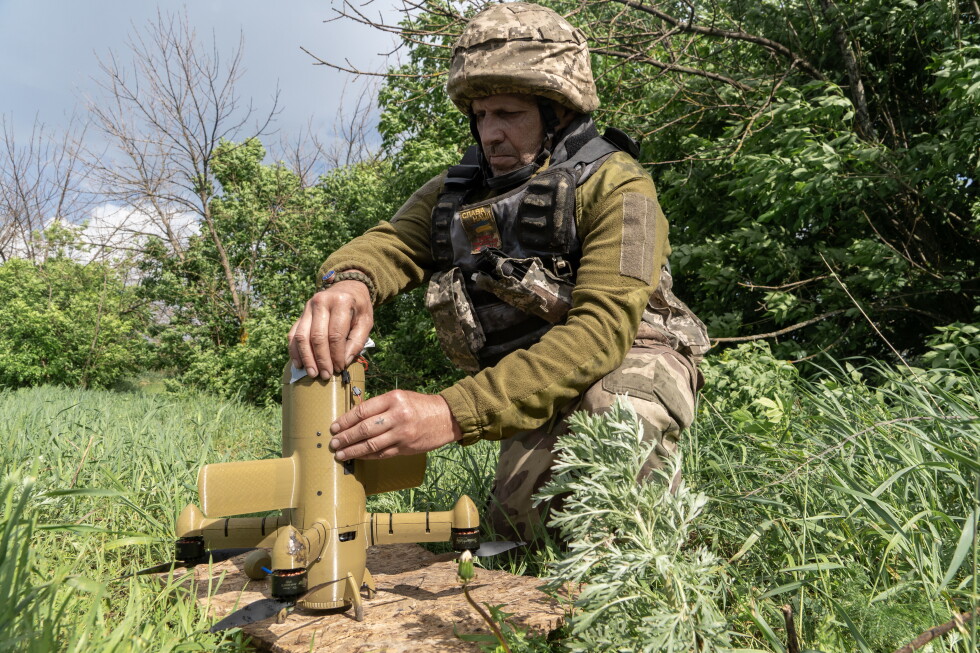
A core pillar of Zelenskyy’s current global diplomacy has centered on reciprocal defense cooperation: Ukraine is now leveraging the specialized drone warfare expertise it has honed over more than four years of full-scale conflict with Russia to build deeper defense partnerships around the world. Zelenskyy confirmed that Ukrainian drone specialists have already assisted nations across the Middle East, particularly Gulf Arab states, in strengthening their air defense capabilities amid rising regional tensions tied to the Iran conflict. They have also provided support to U.S. military bases operating across the Middle East, he added. Beyond the Middle East, Ukraine has finalized joint drone production agreements with multiple European Union member states, where leaders share widespread concerns that Russian President Vladimir Putin holds broader military ambitions beyond Ukraine’s borders.
On the battlefield, Ukraine’s domestic drone fleet has already proven to be a game-changing advantage against Russia’s much larger conventional military. Ukrainian drones routinely patrol the 1,250-kilometer front line stretching across eastern and southern Ukraine, and carry out deep strikes against Russian supply routes, slowing the advance of Moscow’s forces. In an updated assessment released late Wednesday, the Washington-based Institute for the Study of War confirmed this impact, noting that Ukraine’s successful mid-range and front-line drone strike campaigns have severely restricted Russia’s capacity to move troops to the front and resupply forward positions.
Despite this tactical advantage, the conflict remains deeply lopsided in key areas. Russia currently occupies roughly 20 percent of Ukraine’s internationally recognized territory, including the Crimean Peninsula that Moscow illegally annexed in 2014. The human cost of Russia’s campaign has been staggering: the head of the United Kingdom’s GCHQ intelligence agency disclosed Wednesday that nearly 500,000 Russian soldiers have been killed in the conflict to date. Even so, Russia retains a significant quantitative edge in long-range ballistic missiles, which it has systematically used throughout the war to degrade Ukraine’s critical energy infrastructure and attack urban civilian centers.
Last weekend, that escalating aerial campaign reached a new intensity when Russian forces launched a massive barrage against Kyiv, firing nearly 90 missiles alongside hundreds of attack drones in an attempt to overwhelm the capital’s air defense networks. In response to this escalating threat, Kyiv officials confirmed Wednesday that Zelenskyy has sent a formal letter to U.S. President Donald Trump and congressional leaders requesting additional American-made air defense ammunition to counter Russian ballistic missile attacks. In the letter, Zelenskyy stressed that Ukraine urgently needs more U.S. Patriot PAC-3 interceptors and other advanced air defense systems, warning that current delivery volumes have fallen to dangerously low levels as the ongoing Iran conflict diverts U.S. military stockpiles.
As Kyiv prepares for expected further large-scale bombardments, no foreign diplomatic missions have followed Moscow’s recent recommendation to evacuate the capital ahead of what the Russian Foreign Ministry warned would be coming “systemic strikes” against Kyiv. On Thursday, Ukraine’s Foreign Ministry confirmed that all diplomatic missions based in the capital continue to operate as normal, with no suspensions or evacuations reported.
The Associated Press continues to provide ongoing full coverage of the Russia-Ukraine war at https://apnews.com/hub/russia-ukraine.