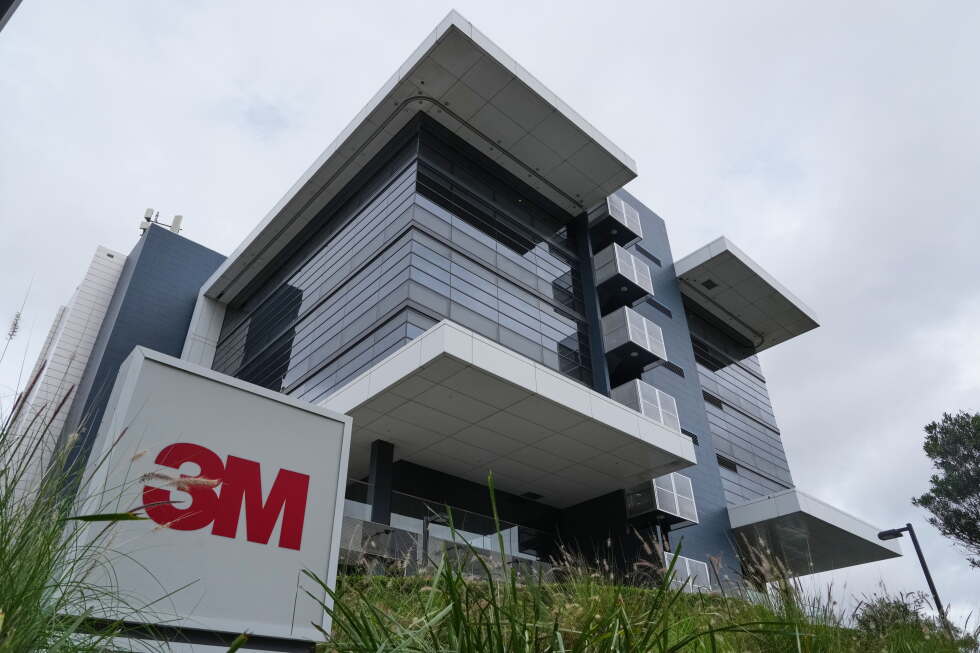
On Thursday, the Australian government announced a landmark legal action against U.S.-based industrial conglomerate 3M and its Australian subsidiary, seeking more than 1.4 billion U.S. dollars (equivalent to 2 billion Australian dollars) in compensation for widespread toxic “forever chemical” contamination linked to firefighting foams used across national defense sites. The compensation claim, the largest the Australian federal government has ever pursued, stems from per- and polyfluoroalkyl substances, or PFAS, pollution that has affected soil and water resources at 28 defense installations across the country.
PFAS are a class of synthetic human-made compounds that have earned the nickname “forever chemicals” due to their inability to break down naturally in the environment, leading them to accumulate in ecosystems and human bodies over decades. First widely adopted in the 1950s, PFAS became a staple ingredient in a range of household and industrial products thanks to their unique ability to resist heat, stains, grease, and water. For firefighting teams, PFAS-infused foam became a go-to solution for quickly extinguishing volatile fuel-based fires, making it a standard fixture at military bases and civilian airports globally.
Australia filed the lawsuit at the country’s Federal Court, opening a high-stakes legal battle between the national government and one of the world’s largest manufacturing conglomerates, which has already confirmed it will vigorously contest the claim. In an official statement responding to the action, 3M pushed back against the allegations, noting that the company never manufactured PFAS on Australian soil and halted sales of the PFAS-containing products in question roughly 20 years ago. The company argues that the Australian Department of Defense continued to use the existing stockpiles of PFAS-laden firefighting foam for almost two additional decades after sales stopped, placing responsibility for the ongoing contamination on the department itself.
The Australian government, however, accuses 3M of long withholding critical information about the severe environmental and public health risks posed by PFAS-containing foam. Attorney-General Michelle Rowland outlined that the federal government is seeking compensation to cover both past and future costs of addressing the contamination crisis, which has required extensive investigation, remediation, and public health monitoring across affected communities.
PFAS contamination linked to defense base foam use first made national headlines in Australia in 2018, when the Department of Defense issued an official warning to residents living near Richmond Air Base, located on the outskirts of Sydney. After testing confirmed dangerous levels of PFAS in local groundwater, authorities advised nearby residents to reduce their consumption of locally caught fish and farmed eggs, sparking widespread community concern over long-term health impacts.
Assistant Defense Minister Peter Khalil shared that the federal government has already spent roughly 920 million U.S. dollars (1.3 billion Australian dollars) on efforts to manage and mitigate the environmental damage caused by the PFAS contamination. To date, remediation teams have removed more than 200,000 metric tons of contaminated soil from affected defense bases and treated more than 13 billion liters of PFAS-tainted water. Khalil emphasized the government’s commitment to holding powerful entities accountable when Australian communities face harm from corporate activity, saying “We are prepared to take on powerful corporations when Australians and Australian communities have been impacted.”