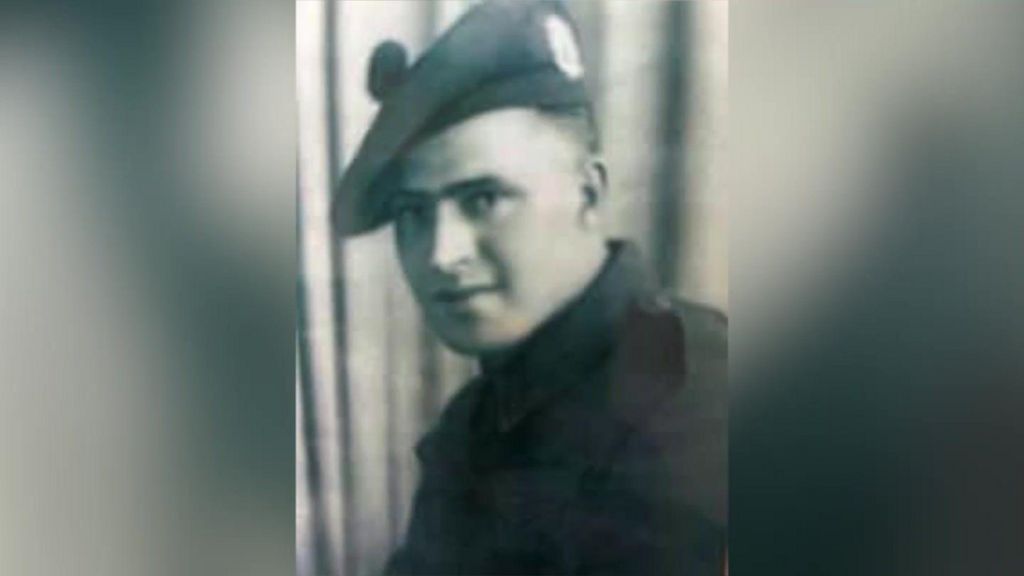
For nearly 80 years, Leslie Heath of Liverpool carried an unresolvable uncertainty: his father, Sergeant Leslie Heath, had been listed as missing in action from World War II, and his family grew up believing his body was never found. That long-held misunderstanding finally unraveled this year, opening a new chapter of healing and connection that crosses international borders.
Sergeant Heath was just 30 years old when he lost his life in February 1945, fighting alongside Allied forces to liberate the Dutch town of Venray from Nazi occupation. Leslie, his only son, was barely 12 months old when his father shipped out to war, and he never got the chance to build a single living memory of him. For decades, the mystery of his father’s fate hung over the family; Leslie’s mother, who never remarried, died holding fast to the belief that her husband’s remains had never been recovered.
The turning point came when the Venray War Cemetery Foundation launched a public appeal, partnering with BBC North West to trace the families of nearly 100 fallen soldiers from northwest England buried in the cemetery’s grounds. The organization’s initiative was simple but deeply meaningful: volunteers had taken on the work of tending to each grave, and they wanted to add personal photographs to every headstone to humanize the sacrifices of the men who died liberating their country. They weren’t just grave tenders—they were amateur detectives, digging through military records to connect lost soldiers to their long-separated families.
Through the appeal, Leslie was put in touch with Rob Vdhoven, a volunteer with the foundation who had been tending to Sergeant Heath’s grave for months. Rob shared a long-hidden truth with Leslie: his father was not missing at all. He had been buried in a temporary battlefield grave immediately after his death, and his remains were only moved to the permanent Venray War Cemetery in 1947, two years after the war ended, a detail that had never been passed along to his family.
For Leslie, the revelation was life-changing. “I’ve learned more about my father in the last eight weeks than I’ve known most of my entire life,” he shared in an interview.
Last week, the pair finally met face-to-face in Liverpool, after Leslie’s daughter Michelle organized the cross-border trip to give the family a chance to thank Rob personally. Leslie said the connection was instant: “We connected immediately, and I felt like I had known him for ages. It was a strange feeling, but it was a nice feeling, you know? A really nice feeling.” As a token of gratitude, Leslie gave Rob one of his father’s original war medals, a small memento to honor the volunteer’s years of care.
Rob, who visits and tends to Sergeant Heath’s grave once a month, says the work of caring for these fallen soldiers is more than a volunteer activity—it’s a debt of gratitude that can never be repaid. “Because of the man who’s laying at the cemetery we can walk freely in the Netherlands, and that’s a thing that we can never forget,” he said. “Someone has to care about it.”
For Leslie, the knowledge that Rob tends to his father’s final resting place has brought a profound sense of peace after decades of uncertainty. “It gives you a hell of a lot of comfort,” he said. He praised the foundation’s work to add photographs to each grave, noting that the project turns an anonymous headstone into a reminder of a real man who gave his life for a country not his own. “They actually put photographs on the grave of every soldier to make it more human. It’s not a piece of concrete that’s there. It’s a man,” Leslie said. “The care and attention the volunteers give to the graves is absolutely amazing.”
For the Heath family, what began with 80 years of uncertainty has ended in a connection that honors both sacrifice and friendship, binding a British military family to the Dutch community their father died to free.