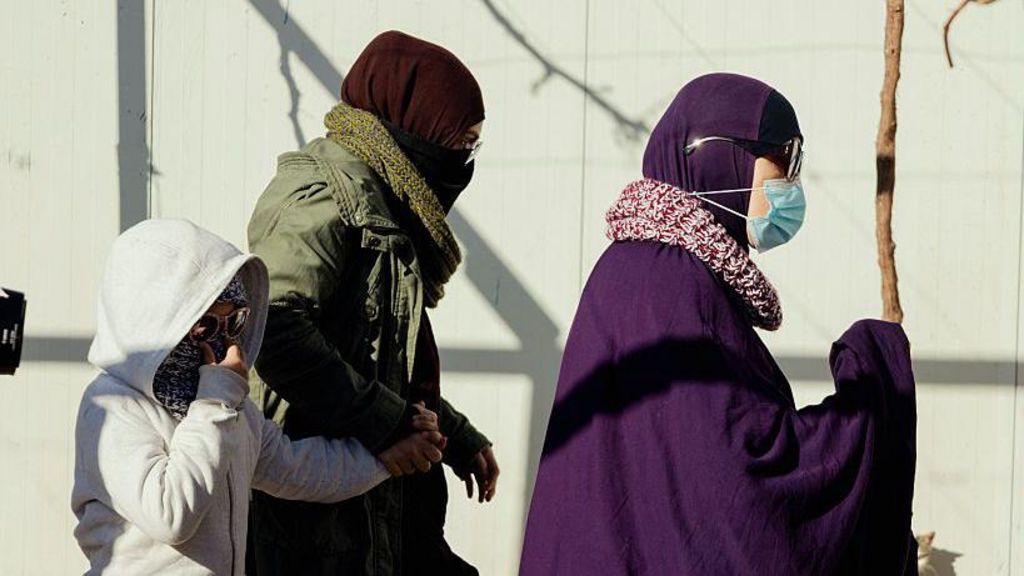
Australian federal law enforcement authorities have announced terrorism charges against a woman with documented connections to the Islamic State (IS) group, following her repatriation to Australia from a detention camp in northeastern Syria. The development comes just weeks after the final two groups of Australian women and children, who had been held for years in the al-Roj camp, arrived back on Australian soil earlier this month.
Al-Roj camp, established in 2019 after the territorial collapse of the IS caliphate, has held thousands of family members of alleged IS fighters from countries across the globe. Tuesday’s arrivals in Sydney and Melbourne marked the end of repatriations for all known Australian citizens held in the facility, with other groups having returned to Australia in staggered waves over preceding months and years.
As of Thursday morning, Australian police had not released additional details about the charged woman, including her identity or the specific parameters of the terrorism allegations, with a formal press briefing scheduled for later that day to disclose further information. This latest charge marks the fourth legal action taken against repatriated Australian women this month: three other women who returned from Syria have already been hit with a range of allegations, including crimes against humanity and unlawful presence in a declared active conflict zone.
The repatriation and legal processing of these Australian citizens has ignited fierce political and public debate across Australia. Prime Minister Anthony Albanese has repeatedly reiterated the federal government’s stance that it provided no official assistance to facilitate the group’s return, doubling down on a long-held government position with the remark: “if you make your bed, you lie in it.”
However, human rights advocates and legal organizations have pushed back against this hardline approach, arguing that all Australian citizens hold a fundamental right to return to their home country. They have emphasized that many of the repatriated people are children, who had no choice in being brought to the region by family members, and require targeted support and rehabilitation rather than punitive action. The unfolding legal process is now being closely watched as a test case for how Australia will handle future repatriations of citizens with links to extremist groups.