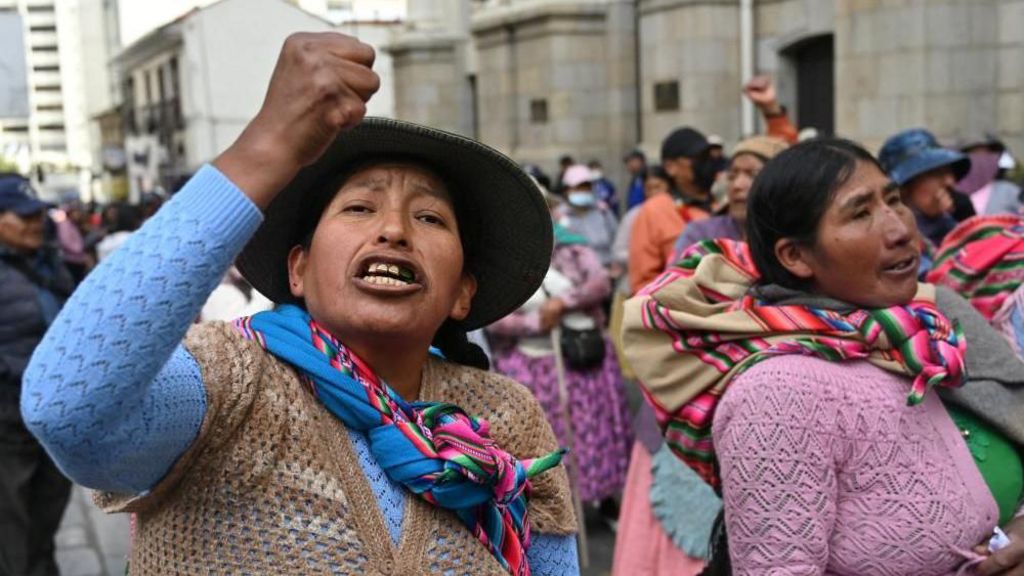
Nearly four weeks of mass road blockades and widespread demonstrations across Bolivia have pushed the country’s Congress to approve a controversial bill expanding the president’s authority to declare national states of emergency and deploy military forces to put down public protests. The legislative vote, which passed Bolivia’s Chamber of Deputies by a comfortable two-thirds majority on Tuesday, reverses a 2020 regulation that only allowed military deployment for crowd control when police forces were proven to be overwhelmed by civil unrest. The unrest currently roiling the Andean nation began in late April, initially sparked by a proposed land reform package from current centre-right President Rodrigo Paz.
Small-scale Bolivian farmers raised early alarm over the legislation, arguing it would clear the way for large agricultural landowners to acquire small holding properties at an accelerated pace. Though the Paz administration insisted that any future land transactions would remain strictly voluntary, major farm advocacy groups rejected the assurance and moved to block the country’s key highway arteries, kicking off the wave of nationwide protest. Paz eventually pulled the controversial land reform bill completely, but the movement had already snowballed, drawing in multiple sectors of Bolivian society with separate grievances against the sitting government.
Transport workers and commercial drivers joined the demonstrations shortly after, decrying poor fuel quality that emerged after the administration eliminated long-standing national fuel subsidies. The subsidy cut initially created widespread fuel shortages, and enabled unregulated fuel vendors to sell adulterated product that has caused permanent damage to countless vehicle engines. Protesters’ road blockades have only worsened these supply gaps, creating a self-reinforcing cycle of scarcity and unrest that has cut off access to basic goods including potable water, fuel, and critical medications in multiple hard-hit regions. Last week, residents of the capital city of La Paz organized a large-scale ‘march in defense of democracy’ aimed at ending the blockades that have left the capital grappling with severe, ongoing shortages.
Additional anger has been stoked by Paz’s plan to revise the 2009 Bolivian constitution, which was enacted during the tenure of left-wing former president Evo Morales. Paz, who ran for office on a platform of opening key Bolivian economic sectors to expanded private investment, has faced fierce pushback from Morales’ supporters, who warn the proposed constitutional changes will erode state control over the country’s most valuable strategic industries. Morales, who led Bolivia from 2006 to 2019, remains a deeply influential political force across the country, particularly among Indigenous communities that make up a large share of the protest movement.
The Paz administration has directly accused Morales of orchestrating the ongoing unrest to distract public attention from an arrest warrant issued against him on May 11. A Bolivian judge held the former president in contempt of court after he failed to appear for a hearing over charges of statutory rape and human trafficking; prosecutors allege Morales impregnated a 15-year-old minor in 2015 and transported her across international borders. Morales has repeatedly dismissed the allegations as a politically motivated vendetta orchestrated by the country’s new right-wing leadership, and his supporters have threatened to shut down all national activity if he is taken into custody.
In a public statement Monday, President Paz reaffirmed his preference for negotiated dialogue over what he called ‘armed confrontation’ even as mounting political pressure pushes his administration to move quickly to end the unrest. Supporters of the new emergency powers bill argue the 2020 restriction on military deployment improperly limited the sitting president’s constitutional authority, and that violent protest groups should not be allowed to dictate policy to a democratically elected government. But opposition lawmaker Sonia Siñani, who voted against the legislation, warned the new law will only escalate existing social tensions, comparing the move to ‘throwing fuel onto the flames.’
Paz has already attempted a series of conciliatory measures to de-escalate the crisis, including a full cabinet reshuffle, cutting his own salary and the pay of all his cabinet ministers in half, and announcing the formation of a new negotiation council to engage with marginalized social sectors that feel disenfranchised under his administration. To date, none of these efforts have succeeded in ending the nationwide unrest, leaving the country in a stalemate as the expanded emergency powers open a new, more volatile chapter in the ongoing political crisis.