LONDON – The head of the United Kingdom’s leading signals intelligence agency has issued an urgent wake-up call, warning that Britain and its Western partners could cede ground in the escalating global cyberspace conflict to hostile state actors unless all sectors of society ramp up cybersecurity efforts immediately.
Anne Keast-Butler, director of Government Communications Headquarters (GCHQ), is set to deliver a stark address Wednesday at Bletchley Park, the historic World War II codebreaking site that laid the groundwork for modern computing. In pre-released excerpts of her speech, Keast-Butler will detail that Russian actors are carrying out unrelenting cyber operations targeting critical national infrastructure, democratic electoral processes, global supply chains and public confidence across Britain and the European continent. Beyond cyber espionage, she will accuse Russia of stealing proprietary cutting-edge technology, orchestrating sabotage plots and planning assassination attempts against Western targets.
The GCHQ chief also highlighted the disruptive impact of rapid artificial intelligence advancement, noting that the evolving digital landscape has upended traditional cybersecurity norms. She described China as a leading science and technology superpower, warning that the window for Britain and its allies to maintain a strategic technological lead over competing nations is shrinking rapidly.
To counter these growing threats, Keast-Butler is calling for a collective, cross-society shift in mindset that treats cybersecurity as a far higher priority—arguing that urgency must spread from corporate boardrooms to ordinary household living rooms to build collective resilience.
This warning marks the latest in a series of alerts from Western intelligence leaders about escalating hostile Russian activity in the so-called “gray zone,” a space of aggressive action that falls just below the formal threshold of open war. In recent months, authorities across Nordic and Eastern European nations including Sweden, Poland, Denmark and Norway have publicly confirmed that Russian-affiliated hackers have targeted their critical infrastructure, ranging from power generation facilities to dam systems.
Just one month prior, Richard Horne, head of the UK’s National Cyber Security Centre, issued a similar alert, noting that the most severe cyber threats facing the United Kingdom are orchestrated by hostile states including Russia, China and Iran. Horne added that the frequency and severity of these attacks could surge exponentially if Britain is drawn into a formal international military conflict.
Keast-Butler’s speech also emphasizes the critical importance of retaining strong cross-border intelligence and security partnerships, at a time when strained transatlantic relations—fueled by former U.S. President Donald Trump’s “America First” foreign policy that sidelined longtime alliance commitments—have created new rifts between London and Washington.
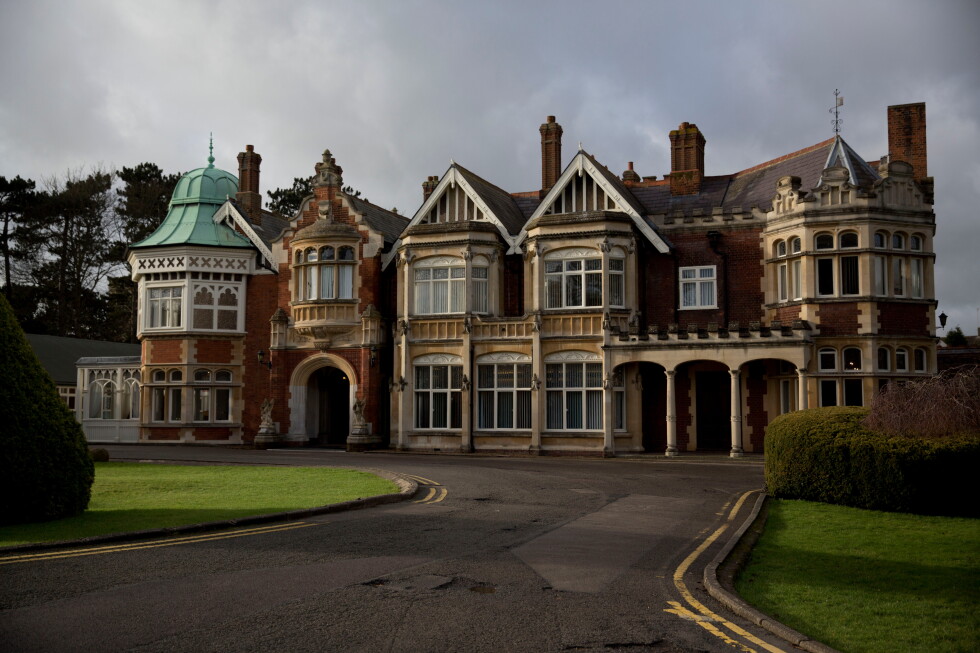
The choice of Bletchley Park as the venue for the annual GCHQ director’s lecture carries deliberate symbolic weight. Located 72 kilometers northwest of London, the historic manor house brought together hundreds of mathematicians, cryptographers, puzzle enthusiasts and chess masters during World War II to crack Nazi Germany’s Enigma code, a system long thought to be unbreakable. Their breakthrough work not only shortened the Second World War by years, but also paved the way for the development of modern digital computing.