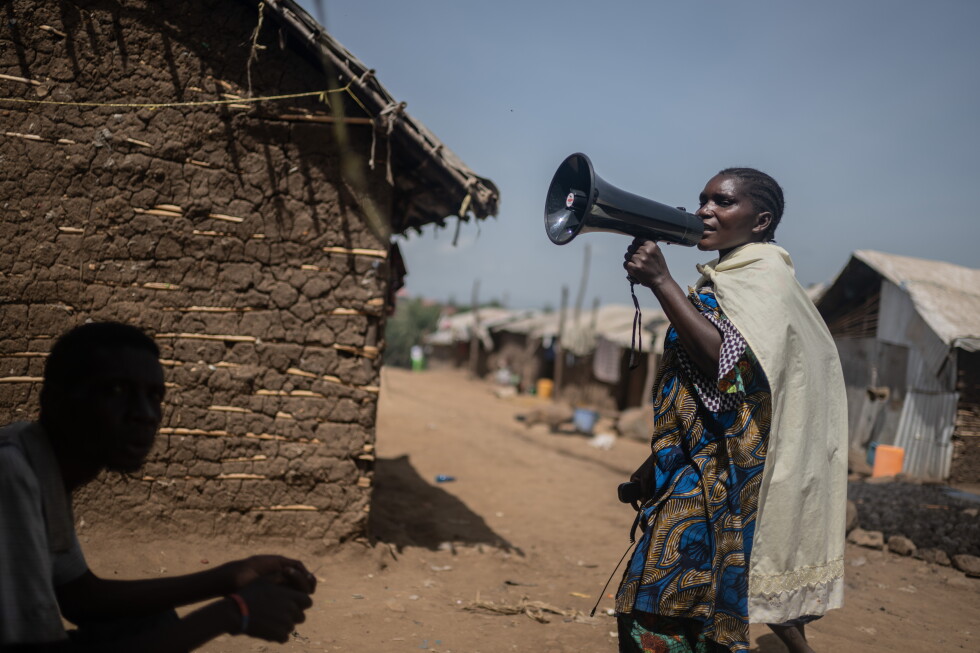
In the heart of eastern Congo’s Ebola outbreak zone, the grim reality of public health failure is on full display at the ISP displaced persons camp in Bunia, where 10,000 people forced from their homes by years of regional conflict are trapped with almost no tools to stop the spread of the deadly virus.
Against a backdrop of persistent armed violence that has shattered local healthcare infrastructure, this overcrowded settlement has just one handwashing station and a single infrared thermometer to guard against a raging epidemic declared a global public health emergency. Camp organizers have issued guidance to wash hands before meals, but the harsh reality means only a small fraction of residents can access soap. Those without are instructed to use sand or oatmeal as a poor substitute.
“My fear is that we are here with nothing to protect ourselves. We have no protection, no water or soap, and we live near garbage,” Francine Leve Janguzi, a long-term camp resident, told the Associated Press beside an empty water tap amid a sea of tarpaulin temporary shelters. Janguzi, who has lived in the camp for eight and a half years after fleeing militia attacks in Djugu territory, added: “Look at the state of where we’re sleeping. We don’t have any help whatsoever. We don’t have soap or water, yet we’re told to wash our hands regularly and be clean.”
Nearly one million people have been displaced by ongoing conflict across Ituri province, the epicenter of the current outbreak, according to United Nations figures. While international aid organizations and public health teams have rushed emergency supplies to the region to contain the virus, frontline responders warn that overcrowded displacement camps like ISP are the most vulnerable points for catastrophic spread.
“Eastern DRC’s years of conflict and displacement have left health systems on their knees, and that makes containing this outbreak all the harder,” explained Heather Kerr, country director for the International Rescue Committee in Congo. Gabriela Arenas, regional coordinator for the International Federation of Red Cross and Red Crescent Societies, echoed that assessment, noting the outbreak is “unfolding in communities already facing insecurity, displacement and fragile healthcare systems.”
Most ISP camp residents were displaced by violence from the CODECO armed group, one of dozens of active militant factions operating in eastern Congo. The region has been mired in instability for decades: Rwandan-backed M23 rebels control large swathes of territory, while the Ugandan Islamist Allied Democratic Forces, linked to the Islamic State group, carries out frequent deadly attacks on civilian targets across Ituri. Even before the Ebola outbreak, humanitarian group Doctors Without Borders documented worsening insecurity that had driven medical staff to flee, leaving health facilities overwhelmed and in many areas facing “catastrophic conditions.”
Compounding the risk is the nature of the specific virus circulating: this is the rare Bundibugyo strain of Ebola, which has no approved vaccine or targeted treatment and circulated undetected for weeks before being identified. Standard diagnostic tests also struggle to detect the strain, leading experts to warn that official case counts are a significant underrepresentation of the true scope of the outbreak.
As of Tuesday, official records counted more than 1,000 suspected cases and at least 220 deaths, including seven confirmed cases that have already spread across the border to Uganda. The World Health Organization and on-the-air aid groups confirm the actual number of infections is far higher. Ebola is a highly contagious pathogen spread through contact with infected bodily fluids including blood, vomit and semen, causing a severe, often fatal illness marked by fever, muscle pain, weakness, gastrointestinal distress and abnormal bleeding.
For camp residents and community leaders, the lack of basic resources and treatment options has created a climate of pervasive fear. “I’ve learned that there’s no cure, which is why it scares me. … Our government should also do everything possible to find a solution to this disease,” said Gérard Maki, a community leader at the ISP camp.
This reporting was contributed by Pronczuk from Dakar, Senegal, and AP writer Jean-Yves Kamale from Kinshasa, Congo. The Associated Press receives financial support for global health and development coverage in Africa from the Gates Foundation, and maintains full editorial control over all content.