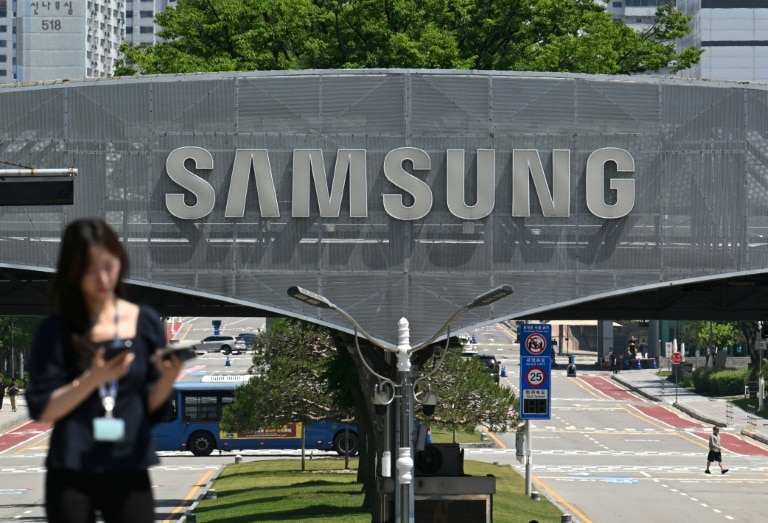
South Korea’s largest tech and semiconductor powerhouse Samsung Electronics has avoided a potentially economy-altering work stoppage after union members voted overwhelmingly to approve a landmark 10-year bonus agreement that unlocks massive payouts for semiconductor workers, fueled by skyrocketing global demand for AI infrastructure. More than 73% of voting union members supported the deal struck with management last week, ending a standoff that had included threats of an 18-day strike — a disruption that sent ripples of concern across South Korea’s economy, where Samsung Electronics alone contributes 12.5% of national GDP and memory chips account for roughly 35% of the country’s total exports.
The agreement, which ties payouts to aggressive performance targets, allocates 10.5% of the semiconductor division’s annual operating profit to worker bonuses paid in company stock, plus an additional 1.5% payout in cash. Based on current market projections for annual operating profit, roughly 78,000 of Samsung’s 125,000 domestic employees will qualify for an estimated payout of around $370,000 this year. The vote, held electronically over six days concluding Wednesday, drew participation from more than 95% of eligible union members, with 62,600 total ballots cast.
Samsung’s earnings have exploded in recent months, driven by frenzied global demand for the high-capacity memory chips that power AI data centers. The company reported a 750% year-over-year jump in first-quarter operating profit in April, and earlier this month its market capitalization crossed the $1 trillion threshold for the first time in corporate history.
While the deal has averted a strike, it has ignited widespread tensions across multiple groups: non-semiconductor workers at Samsung, employees at the company’s listed subsidiaries, and shareholders. A smaller union representing workers in underperforming divisions including mobile devices, displays, and consumer electronics — where profits have either stagnated or declined — filed a court injunction Tuesday to block the agreement, arguing it disproportionately favors semiconductor staff. Workers at separate listed Samsung affiliates, such as Samsung Display, Samsung SDI, and Samsung Electro-Mechanics, have also expressed discontent, as their bonus structures deliver far smaller payouts even as parent company profits surge. A group of retail shareholders has also threatened legal action, claiming the bonus scheme was approved without their input.
Beyond Samsung’s internal walls, the agreement has sparked a broader national conversation about how windfall profits from the AI boom should be distributed across South Korean society. A senior official from South Korea’s presidential office has even proposed exploring a “national dividend” program, which would redirect excess tax revenue from AI-related corporate gains to fund expanded social welfare programs.
Industry analysts note that the generous bonuses serve a strategic purpose for Samsung: retaining top domestic engineering talent that has increasingly been targeted by U.S. tech and automotive firms, including Tesla, which are ramping up their own investments in AI chip development and production. For context, the Samsung union points out that workers at rival South Korean chipmaker SK hynix received bonuses more than three times larger than Samsung’s payouts last year.
The massive windfalls for chip workers at both Samsung and SK hynix have already reshaped South Korea’s social hierarchy, elevating semiconductor engineering to one of the country’s most desirable professions. A simple branded jacket with the SK hynix logo went viral on South Korean social media earlier this month, with users joking it served as a “golden ticket” to luxury shopping and improved dating opportunities. Local news agency Yonhap reports that chip workers now see their “marriage market value” surge, with desirability ratings from matchmaking agency Sunoo rising to nearly match the traditionally elite professions of doctors and lawyers.
The Samsung deal has also emboldened labor organizers across South Korea, with workers in sectors from biotechnology and automotive manufacturing to shipbuilding and information technology now pushing for larger shares of corporate profits through expanded bonus programs.