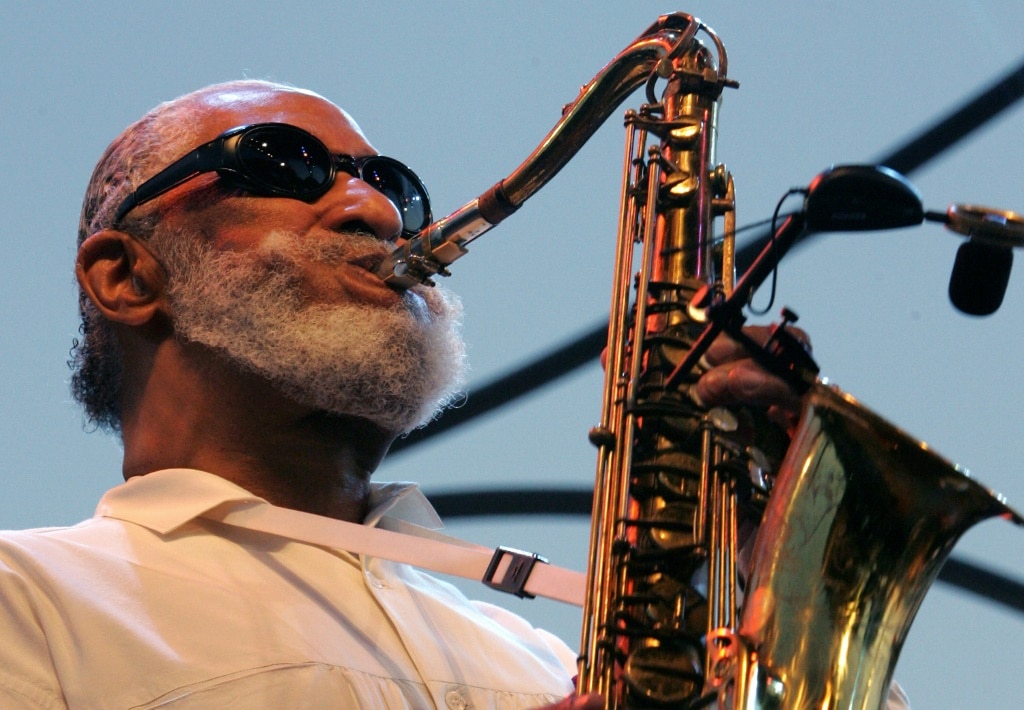
The world of jazz has lost its last iconic giant from the genre’s golden age. Sonny Rollins, the trailblazing American tenor saxophonist universally known as the ‘Saxophone Colossus’, passed away at his home in Woodstock, New York, on Monday at the age of 95. The announcement of his death was shared in a heartfelt post on his official social media accounts, which confirmed the news of his peaceful passing.
A creative visionary who constantly reinvented his art across seven decades, Rollins transformed jazz into a medium for both social commentary and spiritual exploration. His bold, resonant saxophone lines gave voice to the aspirations of Black Americans during the civil rights movement, channeled collective national grief in the wake of the September 11 attacks, and reflected the mystical insights he gained during years of spiritual retreats in Asia. Born in Harlem to parents who migrated from the U.S. Virgin Islands, Rollins rose to join the ranks of the most influential saxophonists in jazz history, alongside legends including Charlie Parker, Coleman Hawkins, and John Coltrane — with whom he shared an affectionate yet complex artistic relationship.
Unlike many of his contemporaries from jazz’s post-WWII golden era, Rollins lived a remarkably long, disciplined life, continuing to refine and remaster his work well into his 80s, even as chronic respiratory issues gradually limited his public performances. When asked in a 2016 interview with Agence France-Presse about the secret to his longevity, Rollins attributed it to two things: his lifelong practice of yoga, which helped him stay focused and avoid the substance abuse that cut short the lives of many fellow artists, and his unquenchable thirst for creative growth. “I’m still alive because I’m still learning,” he famously said in that interview.
Rollins’ signature sound was distinct among major saxophonists of his generation: a biting, heavy delivery that often challenged listeners rather than soothing them, paired with an intricate, holistic approach to composition that framed music as a lifelong search for universal truth. His iconic nickname originated from his breakthrough 1956 album *Saxophone Colossus*, a record that redefined the hard bop genre, bringing raw, new power to the tenor sax while stripping jazz of unnecessary structural constraints. One of the album’s most enduring tracks, “St. Thomas”, wove in the Caribbean calypso rhythms Rollins had heard growing up, a nod to his Virgin Islands heritage that remains his most recognizable composition.
One of the most legendary stories of Rollins’ career came in the early 1960s, when overwhelmed by the pressure of his rising fame, he stepped away from the spotlight to practice daily on New York City’s Williamsburg Bridge, which connects Brooklyn to Manhattan’s Lower East Side. For three years, he played for nearly every waking hour, even through the cold of winter, turning the busy bridge into his private rehearsal space. This self-imposed public sabbatical yielded one of his most acclaimed albums, 1962’s *The Bridge*, and in recent years, proposals have circulated to rename the Williamsburg Bridge in his honor. Rollins also crossed over to mainstream audiences outside of jazz, making a notable guest appearance on The Rolling Stones’ 1981 hit album *Tattoo You*.
By his mid-20s, Rollins had already shared stages and recording studios with nearly every jazz legend of the era, including Parker, Miles Davis, and Thelonious Monk, with whom he was particularly close early in his career. He famously cut the classic 1957 album *Brilliant Corners* alongside the pioneering pianist. While many framed Rollins’ relationship with Coltrane as a rivalry — the two both pushed jazz into new creative territory and shared a fascination with Indian spirituality — Rollins offered a warm reflection on their connection later in life. Where Coltrane was known for his graceful, gentle texture, Rollins brought a firmer, more tangible command of musical dynamics, approaching composition with the intentional craft of a classical composer. The pair only recorded together once, on the title track of Rollins’ 1956 album *Tenor Madness*. Looking back on his early career, Rollins acknowledged he had been overly brash with his idols: “I look back on my relationship with Coltrane, and my relationship with Monk — a lot of stupid things I did with those people that I would not have done if I was more mature,” he said, calling Coltrane “a beautiful, beautiful human being.” Rollins was predeceased by his wife and manager of nearly 40 years, Lucille, who died in 2004.
Following his 1956 breakthrough, Rollins continued to innovate on 1957’s *Way Out West*, where he introduced his signature “strolling” technique: unaccompanied sax solos that flow over only bass and drums, forgoing the traditional piano chords that anchored most jazz ensembles of the era. Rollins often described his improvisational style as rooted in intuition rather than conscious planning. “When I play and I improvise, I don’t think, because music comes from the subconscious, someplace else,” he told news outlet The Root. “I’m just a human, so when I play my horn, I get into a state where the music plays me. I’m just standing up there and fingering my horn and blowing.”
His commitment to yoga extended far beyond physical health; the breathing techniques and mental discipline it afforded him deepened his fluency on the sax. A decade after his Williamsburg Bridge sabbatical, Rollins stepped away again in 1966, this time to study Zen meditation in Japan before moving to an ashram on the outskirts of Mumbai, India, where he arrived with nothing but a suitcase and his saxophone. Under the guidance of spiritual teacher Swami Chinmayananda, he spent his days studying and discussing sacred Vedic texts, performing rarely, before bringing his spiritual learnings into his music with works like *Patanjali*, named for the ancient founder of yoga. “Jazz artists were trying to find a way to express life through our improvisations. The music has got to mean something,” he later told National Public Radio.
Beyond his artistic innovations, Rollins was unafraid to use his platform to advance social justice. His 1958 work *Freedom Suite* was an explicit artistic statement in support of the rising civil rights movement. While the 20-minute instrumental piece spoke to artistic freedom on its surface, Rollins made its political purpose unmistakeable in the album’s liner notes — a strikingly bold stance for a Black artist of the era. “America is deeply rooted in Negro culture: its colloquialisms; its humor; its music,” he wrote. “How ironic that the Negro, who more than any other people can claim America’s culture as his own, is being persecuted and repressed; that the Negro, who has exemplified the humanities in his very existence, is being rewarded with inhumanity.” The album was so controversial that a later reissue was released under an alternate title, and Rollins faced pushback when performing the piece in the Jim Crow South. He doubled down on his advocacy for Black pride with *Airegin*, a fast-paced classic whose name is an anagram for Nigeria.
Late in his life, Rollins once again turned to music to process collective trauma after the September 11, 2001 attacks. Living just six blocks from the World Trade Center, he evacuated his home by walking down 40 flights of stairs and suffered respiratory irritation from the attack’s toxic fumes. Just four days later, he drove to Boston (all commercial flights were grounded nationwide) to perform a memorial concert that was later released as a live tribute album to the attacks’ victims.
After decades in New York City, Rollins retired to a quiet farm in upstate New York, where he had space to continue his meditation practice. In his final years, he acknowledged a growing pessimism about humanity’s trajectory, noting that he and his fellow mid-century artists once believed music could help bring about world peace. “But then I learned, and I lived a little longer,” he told AFP. “I realized that this world will never change. This world is meant to be a place of war, killing, everything — sickness, illness, death. That’s this world.”