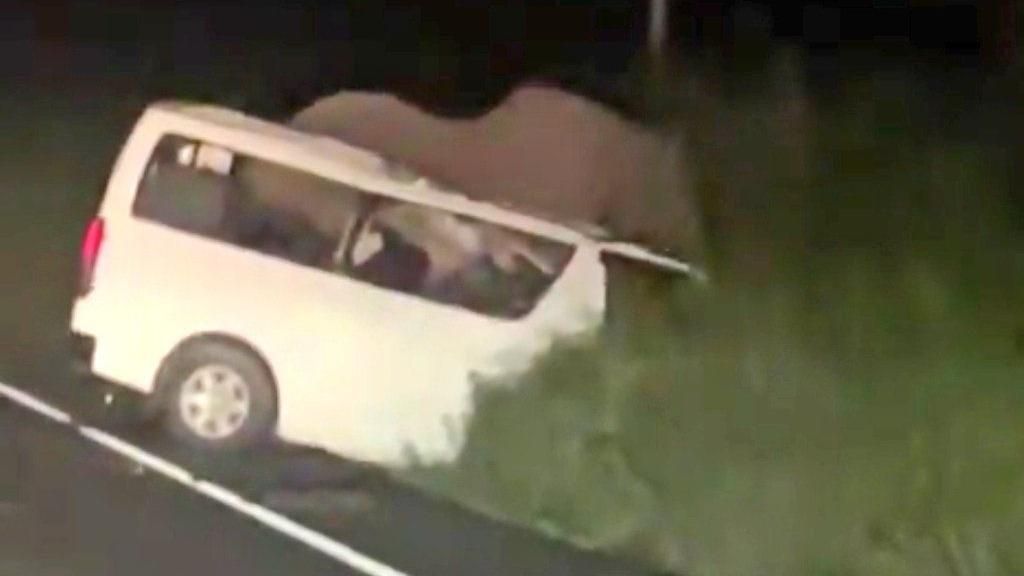
A deadly collision between a passenger vehicle and a wild elephant has left at least three people dead and four others injured inside Uganda’s iconic Murchison Falls National Park, Ugandan law enforcement confirmed this week. The tragic incident unfolded Sunday evening along a park roadway linking the northern city of Arua to Kampala, the country’s capital, according to an official update posted by the Uganda Police Force to the social platform X.
All seven people traveling in the vehicle at the time of the crash were employed as officials by the Uganda Revenue Authority, the nation’s tax administration body. Emergency response teams quickly transported the injured casualties to a nearby local medical facility for immediate stabilization, before transferring them to more advanced hospitals in Kampala for ongoing care.
Officials have not yet released any details regarding the condition of the elephant involved in the collision, leaving it unclear whether the animal sustained life-threatening injuries or escaped unharmed.
The crash marks one of a growing number of human-wildlife conflicts recorded across Uganda in recent years. As human populations expand rapidly across the East African nation, residential and agricultural communities have increasingly encroached on protected wildlife habitats, shrinking the natural ranges of native species and bringing them into more frequent contact with roadways built for human travel. Vehicle accidents are already a widespread public safety issue across Uganda, and collisions between cars and large wildlife have become an increasingly common fatal outcome of this habitat encroachment.
Following the incident, the Ugandan Wildlife Authority issued a renewed public warning to all drivers traveling through the country’s protected conservation areas. The agency stressed that wild animals cross park roads on a regular basis, and urged all motorists to maintain reduced speeds and exercise extreme caution while traveling through these habitats to prevent future tragedies.