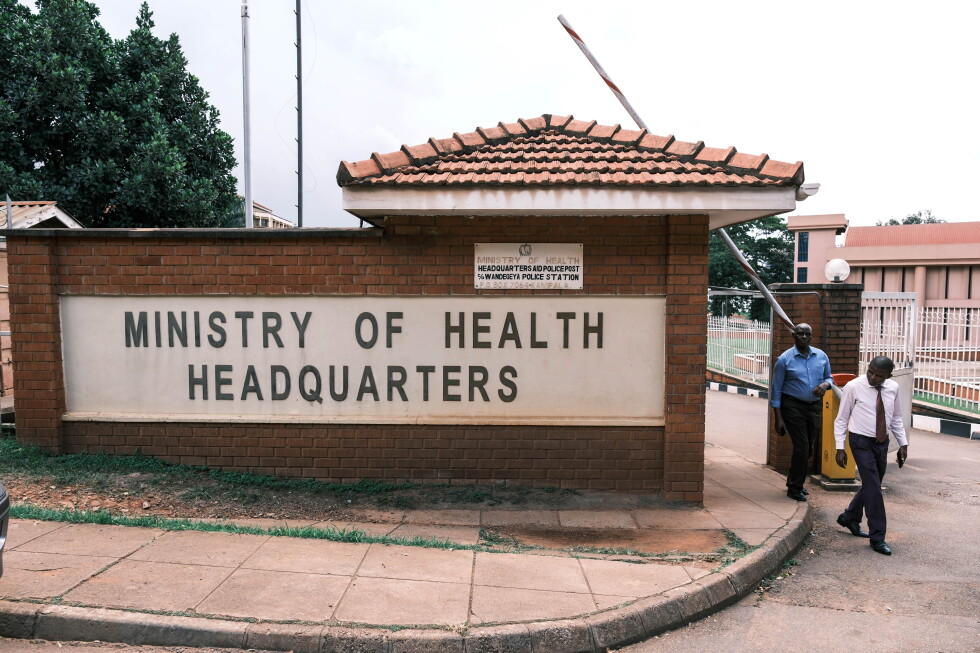
KAMPALA, UGANDA – In a fresh update to the expanding Ebola outbreak that originated in the Democratic Republic of the Congo, Ugandan health officials announced two additional confirmed infections on Monday, pushing the total number of active cases in the East African nation to seven. All Ugandan cases can be traced directly to the ongoing outbreak centered in eastern DR Congo, which health experts confirm was circulating for days or even weeks before Congolese authorities officially declared the public health emergency on May 15. The cross-border spread first reached Uganda on May 11, when a 59-year-old Congolese national sought care at a Kampala hospital. He died three days later, before clinicians confirmed he was infected with the Ebola virus. Two more Congolese travelers seeking medical treatment in Uganda subsequently tested positive for the virus. Over the weekend, Ugandan authorities confirmed the first locally transmitted infections: a commercial driver and a frontline health worker who had both been exposed to the initial Congolese patient who died in mid-May. Monday’s announcement added two more local cases, both health workers employed at a private Kampala facility who tested positive for the virus. Dr. Charles Olaro, Uganda’s national director of health services, confirmed in an official statement that both newly identified patients have been transferred to a specialized Ebola treatment unit and are currently receiving targeted care. To slow community transmission, Ugandan President Yoweri Museveni has rolled out a series of urgent public health measures, including a national appeal to residents to abandon the common cultural practice of handshakes to reduce viral spread. He also issued an order postponing a major annual religious gathering that typically draws thousands of pilgrims from the Congo and other neighboring countries to a Catholic basilica on the outskirts of Kampala, scheduled to take place before June 3. Additional containment measures include a temporary halt to all cross-border public transportation and commercial flights between Uganda and the DR Congo to limit unchecked movement across the shared border. The crisis unfolding in the DR Congo is far more severe: Congolese authorities reported Sunday that suspected Ebola cases have surpassed 900, with the vast majority concentrated in eastern Ituri province, the epicenter of the current outbreak. Response efforts in the region have been severely hampered by widespread public fear, anger, and deep-seated frustration among local communities, a legacy of decades of armed conflict that has also eroded trust in national authorities. Violent attacks on Ebola treatment centers have further disrupted emergency response work. The DR Congo has recorded more than a dozen Ebola outbreaks since the virus was first identified, but public health experts warn that recent cuts to international aid from wealthy nations including the United States have left eastern Congo uniquely vulnerable to large-scale spread. Aid organizations on the ground confirm they lack critical personal protective equipment for frontline health workers, including face shields and full-body hazmat suits, as well as insufficient diagnostic testing kits and materials for safe burial of contagious victims, a core step to halting transmission. The current outbreak is caused by the Bundibugyo strain of Ebola, a variant for which no approved vaccine or targeted treatment currently exists. The World Health Organization has already declared this outbreak a Public Health Emergency of International Concern, the highest global alert level for infectious disease events. Public health officials identify contact tracing and rapid isolation of exposed individuals as the most critical interventions to stop the virus from spreading widely. Ebola typically causes severe hemorrhagic fever, and the WHO notes that a species of fruit bat is the natural reservoir for the virus. The pathogen spreads through direct contact with bodily fluids of an infected person, or contact with contaminated surfaces and materials.