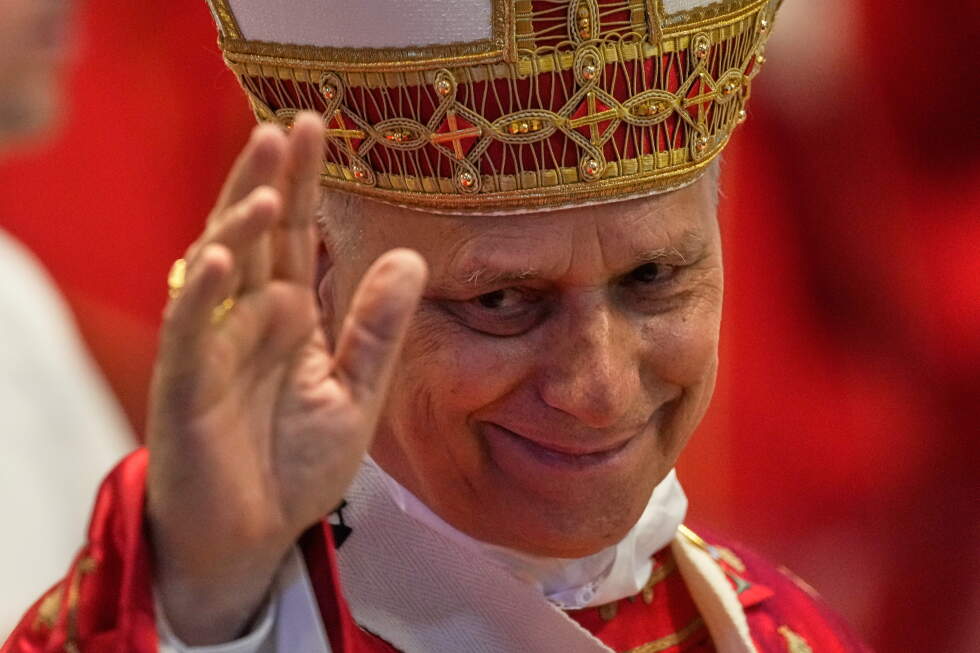
On Monday, Pope Leo XIV, the first American-born pontiff in history, released a groundbreaking encyclical *Magnifica Humanitas* (Magnificent Humanity) that outlines sweeping calls for robust, enforceable regulation of artificial intelligence, demanding the technology’s developers prioritize the global common good over private profit amid growing anxiety over AI’s expanding impact on labor, warfare and human dignity.
This first major teaching document of Leo’s pontificate has been highly anticipated since his election, when he immediately identified unregulated AI development as the single greatest contemporary challenge facing humanity. Tying his argument to the Catholic Church’s long tradition of social teaching, Leo frames the AI revolution as a defining modern test comparable to the Industrial Revolution that prompted Pope Leo XIII’s landmark 1889 encyclical *Rerum Novarum* — a text that laid the foundation for modern Catholic thought on workers’ rights and the limits of unregulated capitalism. The new encyclical was intentionally signed on May 15, the 135th anniversary of his namesake’s groundbreaking work, positioning it as the latest update of that teaching to address 21st-century technological change.
At its core, the document denounces what Leo calls the “culture of power” driving the global AI race, calling out particular risks from the concentration of AI development and vast troves of user data in the hands of a tiny cohort of private tech firms. Leading AI developers OpenAI and Anthropic rank as the second and third most valuable private companies in the U.S., with valuations in the hundreds of billions of dollars that exceed the total GDP of many sovereign nations. Leo argues that this concentration of power poses unique harm to children and the world’s most vulnerable populations, writing that abstract ethical commitments from tech firms are insufficient: “It is not enough to invoke ethics in the abstract; robust legal frameworks, independent oversight, informed users and a political system that does not abdicate its responsibility are required. A more moral AI is not enough if that morality is determined by a few.”
One of the encyclical’s most provocative stances comes on the use of AI in military affairs, where Leo declares it “not permissible” to cede irreversible, lethal decision-making authority to AI systems. He argues that AI-driven remote warfare has accelerated the “normalization of war” by desensitizing global publics to the human cost of conflict, and notes that the Church’s centuries-old “just war” framework, which outlines when the use of force is morally justified, is now outdated in the face of modern AI-enabled weapons technology. Leo demands full transparency and accountability from developers, requiring that the full chain of command for any AI-assisted strike remain traceable to human decision-makers. This position puts the pontiff in direct conflict with the Trump administration, which has aggressively pushed to deregulate AI development and expand military use of the technology.
The encyclical also addresses growing public anxiety over AI’s impact on the global workforce, arguing that the pursuit of corporate profit can never justify mass displacement of human workers. “The pursuit of greater profits cannot justify choices that systematically sacrifice jobs, because the human person is an end, not a means, and the economic order must remain subordinate to human dignity and the common good,” Leo wrote. In an unexpected add-on to the document, the pontiff issued the first ever papal apology for the institutional role past popes played in legitimizing chattel slavery, acknowledging that previous popes explicitly granted European monarchs authority to subjugate and enslave non-Christian peoples — a step no prior pontiff has ever publicly taken.
The encyclical’s official launch event at the Vatican included a appearance from Anthropic co-founder Christopher Olah, a choice that drew scrutiny given the firm’s ongoing high-profile legal battle with the Trump administration. In February, the administration banned all U.S. federal agencies from using Anthropic’s technology after the company refused to grant the U.S. military unrestricted access to its AI systems, and Anthropic has since sued the administration over the order. While critics have framed the invitation as an implicit papal endorsement of the firm, Vatican observers note it aligns with a 10-year Vatican effort to engage Silicon Valley stakeholders in dialogue about AI’s human impact. Brian Boyd, U.S. faith liaison for the nonprofit Future of Life Institute, characterized the invitation not as an endorsement, but as a recognition of Anthropic’s outsize role in the global AI race, noting the company has centered safety and risk mitigation in its public messaging and has demonstrated a willingness to engage with ethical questions.
Across academia, tech and Catholic ethics circles, experts broadly agree that *Magnifica Humanitas* is poised to become a defining benchmark for the global AI policy debate, offering a framework that will guide policymakers, researchers and the general public as the technology continues to evolve at a breakneck pace. Paolo Carozza, a Notre Dame Law School professor and chair of Meta’s independent oversight board, called the document “a defining document for our era, a profound and prophetic document.” He added, “Pope Leo is offering a clear, comprehensive, and coherent voice urging us to take responsibility for constructing a world in which technology will serve humans rather than degrade them.” Taylor Black, a Microsoft AI executive and director of the Catholic University of America’s AI institute, noted the text pushes even AI insiders to confront fundamental questions about humanity’s role in an increasingly AI-driven world: “It lends itself to people who are at the forefront of these tools and able to see the incredible things that they’re able to do, to have questions about their own ‘What does it mean to be human?’”
The release comes amid a period of intensifying global debate over AI’s future, with the technology sparking both utopian hopes for transformative human progress and deep existential fears that it will erase millions of high-wage jobs, erode human cognition and concentrate unprecedented power in the hands of a small elite. Pope Leo closes the encyclical with a direct appeal to AI developers and global policymakers: hit pause on the breakneck AI race, reflect on the long-term impacts of the technology, and commit to building AI that serves all of humanity, not just private profit and state power.