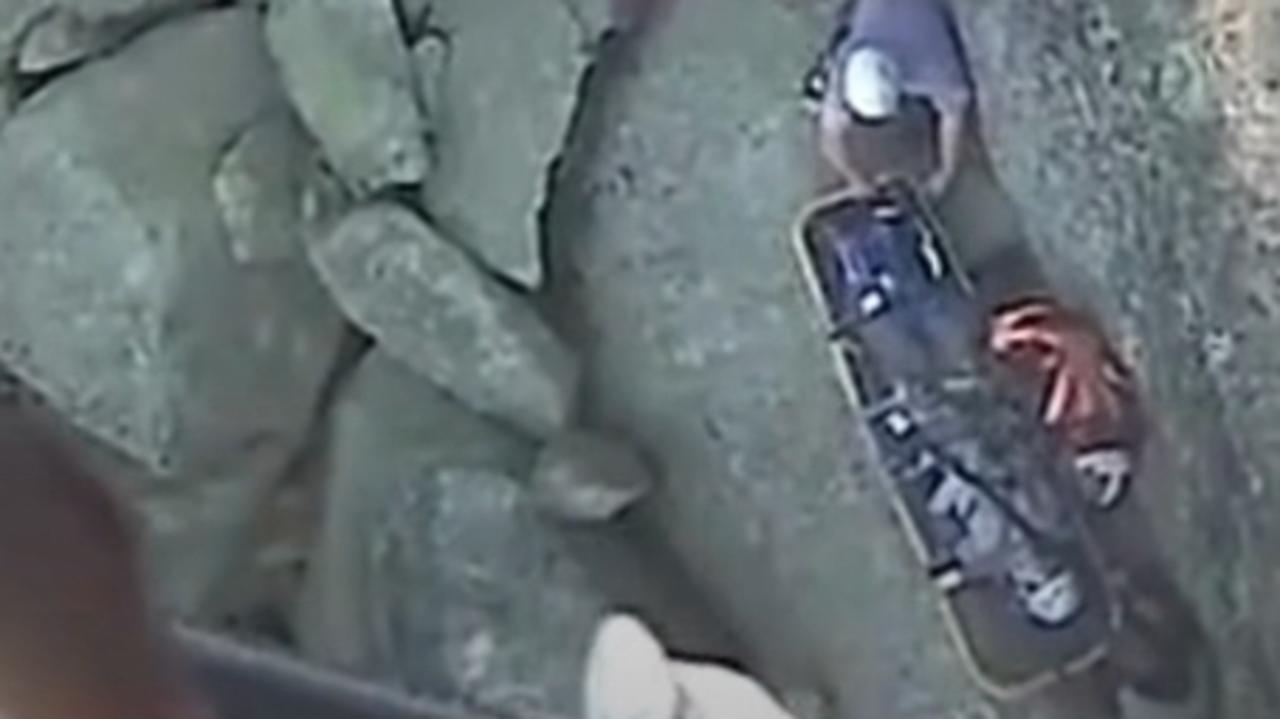
Footage of a high-stakes mountain rescue operation that unfolded earlier this year has been made public, detailing the nerve-wracking extraction of a rock climber who survived a devastating 8-meter fall after his climbing gear malfunctioned at a popular Victorian alpine destination.
The incident took place on the Horn, a well-known climbing spot located on Mount Buffalo, roughly 325 kilometers northeast of Melbourne. Standing at 1,723 meters above sea level at its highest plateau, Mount Buffalo draws hundreds of hikers and climbers annually for its challenging rock faces and scenic alpine views. On the day of the accident, a failure in the climber’s protective equipment sent him tumbling off the route he was ascending, leaving him stranded on a narrow, unstable ledge hundreds of meters above the valley floor.
A spokesperson for Ambulance Victoria confirmed that the climber suffered severe trauma from the fall, including suspected broken ribs. The impact of the fall left him briefly unconscious before emergency responders were called to the remote site. Multiple specialized emergency teams were deployed to the incident: a Helicopter Emergency Medical Service (HEMS) air crew, paired with ground teams from Mobile Intensive Care Ambulance (MICA) with advanced life support capabilities.
Before the extraction could begin, the HEMS crew first completed a low-altitude reconnaissance flight over the ledge to evaluate whether a winch rescue could be carried out without putting responders at unacceptable risk. After confirming the operation was feasible, MICA Flight Paramedic Shaun Whitemore was lowered down onto the narrow ledge to treat the injured climber. Working in what emergency officials described as “extremely tight conditions,” Whitemore stabilized the climber’s injuries, administered potent pain relief, and applied splints to fractured ribs to prepare the patient for air extraction.
Once the climber was stabilized, he was successfully winched back up to the waiting rescue helicopter. He was then flown directly to Royal Melbourne Hospital, a major tertiary trauma center, to receive ongoing specialized medical care. Months after the successful operation, Ambulance Victoria has released on-the-scene footage and photos from the March rescue, shining a light on the extraordinary work of high-altitude emergency responders who carry out these risky missions to save lives.