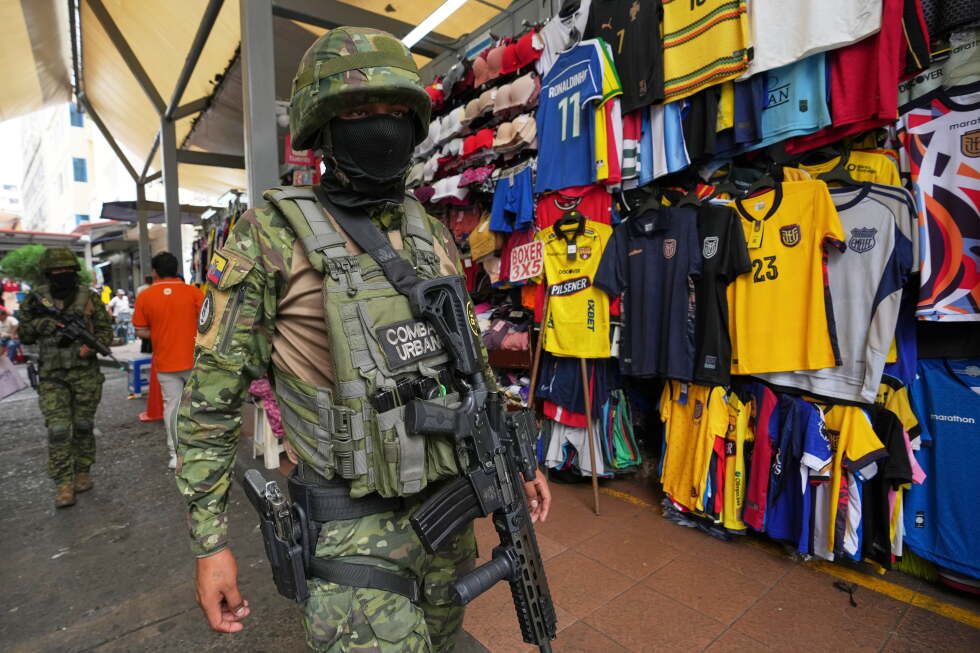
Against a grim backdrop of spiraling violent crime, widespread drug trafficking-related unrest and deep-seated economic strain, the South American nation of Ecuador is turning to its national men’s soccer team for a much-needed lifeline of hope ahead of the upcoming FIFA World Cup. Multiple provinces across Ecuador have already been placed under formal states of emergency, with thousands of military personnel and police officers deployed to counter a dramatic surge in organized criminal activity driven by drug trafficking networks. Curfews after dark are commonplace across large swathes of the country, the border with neighboring Colombia remains unstable, and a crippling fuel crisis has disrupted daily life for millions of Ecuadorians. Even amid these cascading crises, however, national enthusiasm and optimism for La Tri – as the Ecuador national team is affectionately known – remains completely undimmed.
Ecuador’s national side turned heads during qualifying, securing a second-place finish in the South American standings behind defending World Cup champions Argentina, dropping only two matches across 18 qualifying games – both one-goal away losses to Argentina and Brazil, the continent’s two soccer powerhouses. For long-time fans, this strong qualifying run has fostered bold expectations: many believe the 2022 squad is good enough to surpass the nation’s best ever World Cup result, a round-of-16 exit at the 2006 tournament in Germany, where Ecuador was knocked out by a iconic free-kick goal from England’s David Beckham.
In downtown Guayaquil, Ecuador’s largest port city and one of the most violent urban centers in the Americas, that excitement translates to tangible displays of support. Mario Uquillas, a 43-year-old local shopkeeper, even purchased a large new television on credit specifically to watch his nation compete on the global stage. “I hope that, at the very least, La Tri reaches the quarterfinals. It’s about time, because we have a great team,” Uquillas explained. Merchants across the city’s busy La Bahía market have also leaned into the World Cup fever, stocking a wide range of official and fan-made national team jerseys. The most popular designs bear the names of the squad’s three breakout stars, all plying their trade at top European clubs: Arsenal defender Piero Hincapié, Chelsea midfielder Moisés Caicedo, and Paris Saint-Germain center back Willian Pacho.
Hincapié already gave Ecuadorian fans a taste of major trophy success earlier this month, when he helped Arsenal end a 22-year drought to claim the English Premier League title. Next weekend, fans will get another chance to cheer on their homegrown heroes when Hincapié and Pacho face off against each other in the UEFA Champions League final, building even more momentum ahead of the World Cup.
Tragically, Ecuador’s wave of violence has not spared local soccer, leaving the domestic game stained by bloodshed. Five active domestic players were murdered last year alone, with three more wounded in targeted armed attacks. The most high-profile killing came last December in northern Guayaquil, where hired gunmen assassinated Mario Pineida, a former left back for top local side Guayaquil Barcelona and a one-time Ecuador national team player. Pineida was shot multiple times while visiting a local butcher shop with his mother and partner; his partner was killed in the attack, his mother wounded. One suspect was arrested shortly after the shooting, but the full motive for the killing remains unconfirmed.
Statistics underscore the severity of Guayaquil’s security crisis. Ranked the eighth most violent city in the Americas by global crime tracking platform Numbeo, the city sits at the heart of Ecuador’s national wave of violence. Official data from the Ecuadorian Observatory of Organized Crime recorded 9,216 violent deaths across the country last year, representing a homicide rate of 50.1 per 100,000 inhabitants – one of the highest in the Western Hemisphere. For families in Guayaquil’s sprawling informal slum communities, daily life has been reshaped by fear: where children once played informal soccer matches in the streets after school, many now lock themselves inside their homes as soon as night falls, avoiding the threat of random shootings, robberies and targeted attacks.
Even in this challenging security environment, soccer remains a powerful unifying force, largely thanks to Guayaquil Barcelona, the nation’s most popular and successful club. The club’s youth academy, which counts Hincapié as one of its early graduates, offers a tangible path out of poverty and insecurity for hundreds of young local players – and the facilities have been upgraded with heavy security to protect the young athletes from organized crime. Today, the academy serves nearly 300 boys and girls, providing a safe space to train that they cannot find in their home neighborhoods.
For the young athletes honing their skills on the academy’s pitches, the dream of following in Hincapié, Caicedo and Pacho’s footsteps is alive. “My dream is to play for PSG or Real Madrid,” said 10-year-old Piero Ortega, who has trained at the academy for five years. “My dream is to be a professional soccer player.” Another 10-year-old prospect, Washington Vera, already displays elite ball control and passing skill, and has his sights set on the national team. “I would like to play for the national team as a right winger,” Vera said, adding he is eager to one day “score goals for the national team.”
Enrique Benavides, coordinator of Guayaquil Barcelona’s youth academy network, says the program fills a critical void for young people amid widespread instability. “Insecurity has set a limit for us; fear has entered every neighborhood, every community. Nobody is safe,” Benavides said. ”Given the insecurity, this school offers children the opportunity to attend our pitches and train safely. Before, they played in parks and streets at any time of day, but now that’s no longer possible because of the insecurity.”
That collective need for a reprieve is why so much is riding on Ecuador’s World Cup run: for a nation grappling with daily violence, the tournament offers a brief, much-needed distraction from the crises unfolding outside their doors. Fans’ passion is as unbridled as their expectations for the squad. “Before, we dreamed of qualifying; now we’re hoping they reach the quarterfinals or semifinals of the World Cup,” said Daniel Sánchez, a Guayaquil-based lawyer. Matías Oyola, a former Guayaquil Barcelona player who recently took over as the club’s sporting director, shares that confidence. “The World Cup for Ecuador will be a continuation of what they did in the qualifiers,” Oyola said. “It’s going to be excellent.”