Beneath the scorching desert sun of Las Vegas, giant billboards blare the slogan “Live Enhanced” as a deep-voiced sports commentator runs through a practice introduction for British elite swimmer Ben Proud and dozens of other competing athletes. The open-air arena where he rehearses will host one of the most divisive sporting events in modern history: the inaugural Enhanced Games.
Often described as “the Olympics with steroids” — a description that is literally accurate — this groundbreaking competition changes the core rules of traditional competitive sport entirely. For Sunday’s first official contest, dozens of top-tier athletes from around the world will be permitted to use performance-enhancing substances in their bids to shatter long-standing world records across three disciplines: track and field, weightlifting, and swimming.
The event offers staggering financial incentives to draw top talent, with a total prize pool of $25 million (£18.6 million) awarded directly to winning competitors. Any athlete who breaks a recognized world record in their event walks away with an additional $1 million (£740,000) bonus — a payout that has caught the eye of high-profile competitors including American sprinter Fred Kerley, who is among the event’s headline participants. While all substances used must be legally approved by the U.S. Food and Drug Administration, compounds strictly banned by the World Anti-Doping Agency (WADA) — including testosterone and human growth hormone — are not just permitted here: they are openly encouraged and even available for purchase on-site.
Founded in 2023 by entrepreneurs Aron D’Souza and Maximilian Martin, the project has secured high-profile backing from leading industry figures, including billionaire tech investor Peter Thiel and Donald Trump Jr. This prominent support has only amplified global scrutiny of the event’s unconventional stance on doping. Public health experts have issued urgent warnings about the severe health risks linked to regular anabolic steroid and growth hormone use, ranging from increased stroke risk to permanent cardiovascular damage and long-term organ dysfunction.
Event organizers frame the Enhanced Games as a bold push to expand the absolute limits of human physical performance, but critics — particularly leaders within the global Olympic movement — condemn the competition as a direct insult to the foundational spirit and core principles of fair competitive sport.
“You don’t have to be pressured or use drugs in order to be the best,” stated Travis Tygart, Chief Executive Officer of the U.S. Anti-Doping Agency (USADA). In an interview with the BBC, Tygart argued that while the existing Olympic anti-doping system has clear flaws that need addressing, the solution is systemic reform, not full normalization of performance-enhancing drug use. He emphasized that athletes must be able to trust that the Olympics remain a clean competition where cheating is not tolerated. “We don’t want kids to have to say, ‘in order to win an Olympic medal, when I’m 18 or 20 years old, I have to inject myself every day in the rear end with a potentially dangerous drug, ‘” he added.
Organizers of the Enhanced Games push back against this criticism, arguing that their event brings into the open an open secret of elite athletics: that many athletes already use performance-enhancing drugs in secret, away from drug testing regimes. This transparency, they claim, makes their model more ethical than the current system, which relies on imperfect testing that catches only a fraction of cheaters.
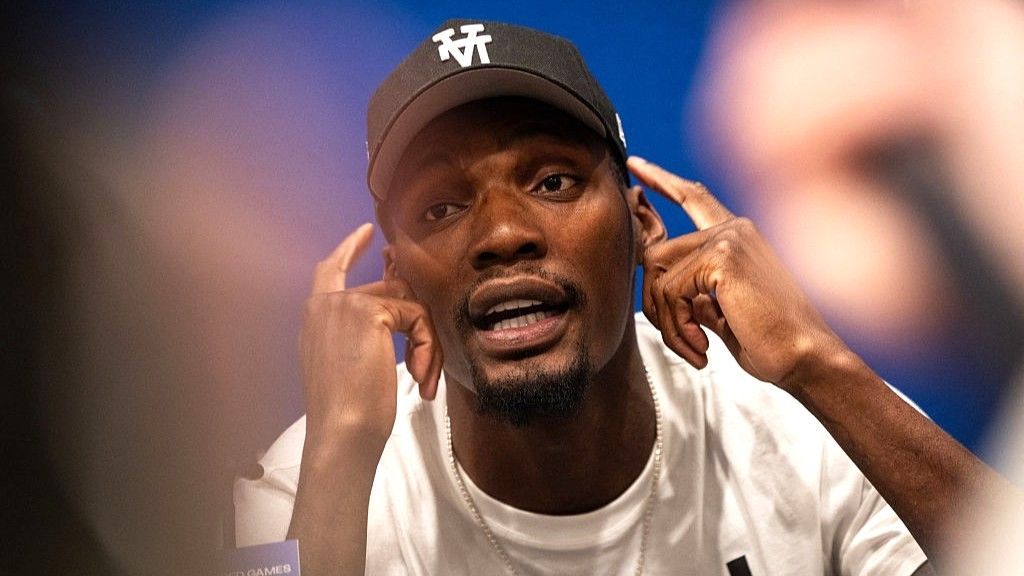
At a two-hour media question-and-answer session held in a packed ballroom at Las Vegas’ Resorts World Casino, most participating athletes declined to specify which performance-enhancing substances they were using. Only one competitor — legendary strongman Hafthor Bjornsson, best known for playing The Mountain in *Game of Thrones*, who aims to break his own 510 kg (1,124.4 pound) world deadlift record — openly shared details of his drug use. Bjornsson explained that he is comfortable being open about steroid use because the practice is already widely accepted in the professional strongman community.
American sprinter Shania Collins argues that the full transparency around doping at the Enhanced Games gives the competition more integrity than traditional elite sports, where cheaters hide their use. “We’re being up front and honest and transparent from the start,” Collins told the BBC. “So how can you challenge our integrity when we’re forthright with the information?”
Mainstream national sports governing bodies have already taken strong public action against athletes who have chosen to compete in the event. Jack Buckner, Chief Executive of UK Athletics, said he was “appalled” when former British national sprinter Reece Prescod’s participation was revealed in January. UK Anti-Doping (Ukad) has gone further, labeling the entire venture a “reckless” project that endangers athlete health. Meanwhile, GB Aquatics has issued an explicit ban: if British swimmer Ben Proud competes in the Enhanced Games, he will never again be selected for the British Olympic team.
Proud, who won a silver medal in the men’s 50m freestyle at the 2024 Paris Olympics, says financial incentive is his core motivation. He is aiming to break the 50m freestyle world record at the event, which would net him $1 million. Even if he wins the race but falls short of the record, he will still take home $250,000 (£185,000) — a sum he says it would take 13 years of consecutive World Championship titles to earn through traditional elite swimming channels. “There’s no money in sport,” Proud told the BBC ahead of the competition. “I was 30 and had just come off a silver medal, what future path do I follow?”
Not all athletes competing at the Enhanced Games plan to use performance-enhancing substances, however. A small number of competitors have confirmed they will compete clean, including American swimmer Hunter Armstrong. “I definitely don’t want to dope for the games,” Armstrong said, adding that “I personally have taken pride in getting as far as I can on natural God-given talent.” Armstrong plans to compete clean for a shot at the event’s prize money before returning to traditional competition to qualify for the 2028 Los Angeles Olympics. Whether he will be allowed to do so remains unclear, given widespread pushback from mainstream sports governing bodies. USADA’s Tygart, however, noted that as long as Armstrong passes all required anti-doping tests to qualify for the Olympic team, there is no formal rule to bar him from participation.
Earlier this month, Enhanced Group, the parent company behind the competition, went public and began trading on the New York Stock Exchange, a move that has drawn further attention to the organization’s commercial ambitions. Beyond the competition itself, the event doubles as a platform for Enhanced to sell its own line of performance-enhancing medications and supplements both on-site and via its online store. This commercial model has sparked broader public concern, particularly at a time when social media is flooded with unregulated offers for performance and appearance-enhancing peptides, and young people face growing pressure to conform to unrealistic body standards.
Joe Vennare, founder of industry analysis outlet Fitt Insider, warned that normalizing performance-enhancing drug use could have unforeseen long-term impacts on both public health and global culture. While Vennare acknowledges that adults have the right to choose to use legal medical interventions, he expressed concern that many people will turn to these products instead of prioritizing consistent fitness and balanced nutrition. “Kids are using social media filters, they’re getting Botox injections,” he told the BBC. “They’re having body dysmorphia – especially young men, in this case at record numbers.” Vennare emphasized that the Enhanced Games does not create these cultural trends, but rather reflects existing problems that need broader societal action. “That’s a problem that parents and culture and society more broadly have to address,” he said.
Australian swimmer and Enhanced Games athlete James Magnussen echoed the call for personal and parental responsibility, arguing that the event is not targeted at young people. “It’s an entertainment company and product targeted at people looking at the longevity and human performance space,” Magnussen said.
Despite the wave of global criticism the event has attracted, controversy has done nothing to dampen enthusiasm among participants or the invited Las Vegas audience. With the inaugural competition set to kick off, the debate over the Enhanced Games’ place in global sport is only just beginning — and it will likely reshape conversations about doping, fairness, and the limits of human performance for years to come.