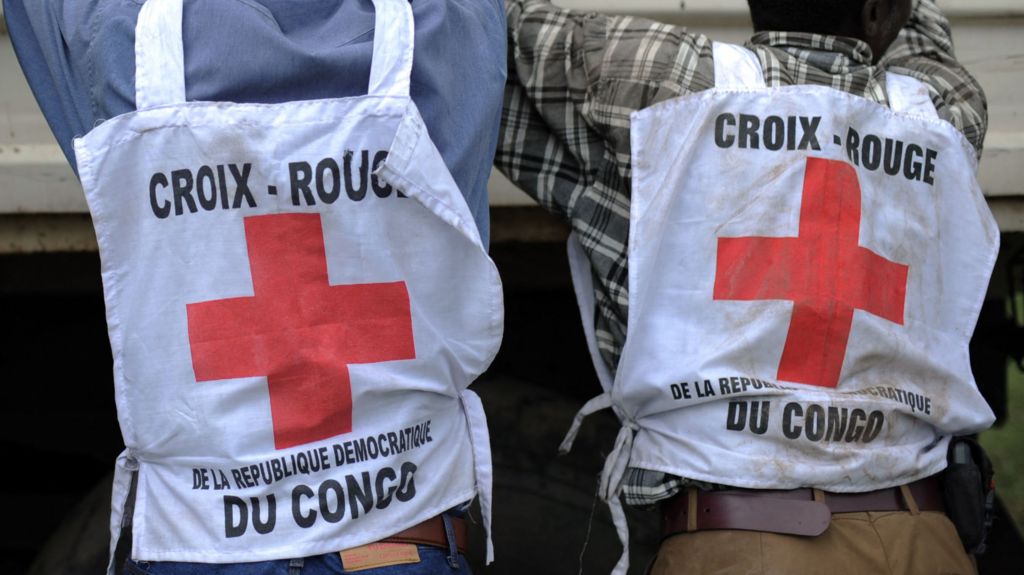
A devastating chapter of the ongoing Ebola outbreak in the Democratic Republic of Congo (DRC) has claimed the lives of three Red Cross volunteers, who likely contracted the virus while handling deceased bodies before public health officials identified the growing epidemic, the International Federation of Red Cross and Red Crescent Societies (IFRC) has confirmed.
The three volunteers – Alikana Udumusi Augustin, Sezabo Katanabo and Ajiko Chandiru Viviane – were working on a non-Ebola related community project in the conflict-affected eastern province of Ituri when they were exposed to the virus on March 27, weeks before the outbreak was formally detected. They passed away between May 5 and May 16 in Mongbwalu, the town now recognized as the epicenter of the epidemic, and are counted among the earliest recorded fatalities of this outbreak.
As of the latest updates, the outbreak has been linked to more than 170 suspected deaths and over 750 suspected cases across eastern DRC. Paying tribute to the fallen workers, the IFRC honored them for serving their local communities “with courage and humanity” in a public statement.
On May 24, the World Health Organization (WHO) upgraded the public health risk assessment of the DRC outbreak from “high” to “very high”, acknowledging the rapid spread of the virus. WHO Director-General Dr Tedros Adhanom Ghebreyesus noted that while the regional risk across the African continent remains categorized as “high”, the global risk level is still classified as “low”.
A particularly challenging aspect of this outbreak is the Ebola strain involved: the rare Bundibugyo variant, which has no licensed, proven effective vaccine and carries a mortality rate of roughly one third of all confirmed infections. Health authorities have repeatedly emphasized that Ebola spreads easily through contact with bodily fluids of infected people, and remains highly contagious in deceased bodies even after death, making safe body management a high-risk task.
The outbreak has already spread beyond DRC’s borders. Neighboring Uganda confirmed three new confirmed cases on May 24, bringing the country’s total to five confirmed infections. The Africa Centres for Disease Control (Africa CDC) issued an urgent alert the same day, warning that 10 additional African countries – Angola, Burundi, the Central African Republic, the Republic of Congo, Ethiopia, Kenya, Rwanda, South Sudan, Tanzania and Zambia – face significant risk of imported cases and local spread.
Response efforts have been complicated by both community distrust and ongoing armed conflict in eastern DRC. On May 23, Médecins Sans Frontières (MSF) reported that an Ebola treatment tent it had set up in Mongbwalu was burned by local community members. The organization noted that the rapidly evolving outbreak has left many residents with deep uncertainty and fear, adding that the incident underscores the urgent need for sustained community engagement and trust-building to enable effective response.
The unrest follows another incident a day earlier, when an angry crowd in a separate district of Ituri set fire to part of a local hospital after authorities blocked the family and friends of a young man suspected of dying from Ebola from taking his body for a traditional burial. Beyond Ituri, confirmed cases have also been detected in North Kivu and South Kivu, where large swathes of territory are controlled by the M23 rebel group. Ongoing armed conflict in these areas has severely restricted access for public health response teams, creating additional barriers to containing the spread of the virus.