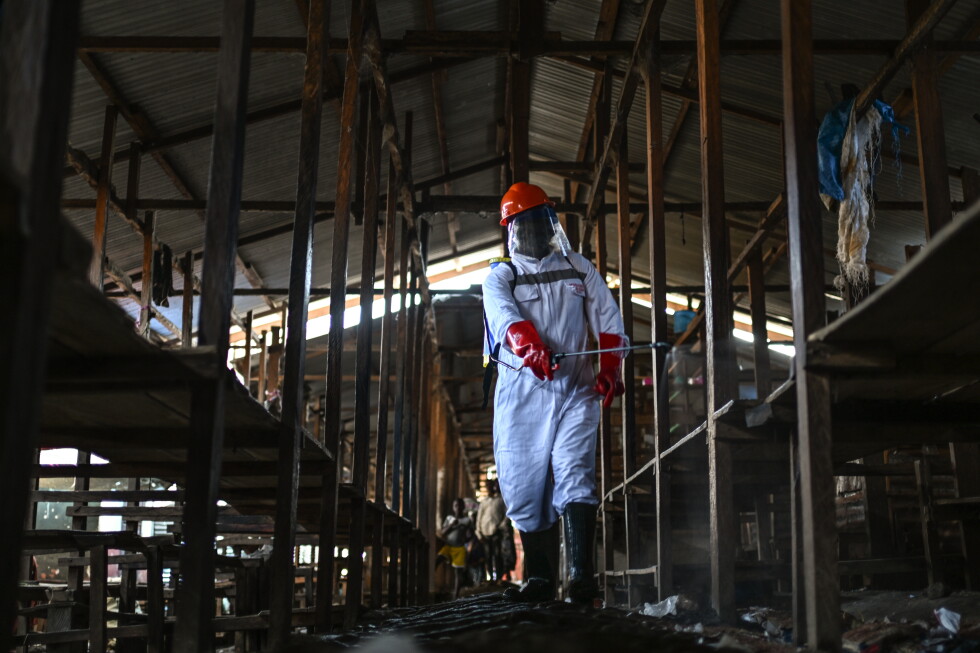
BUNIA, Democratic Republic of Congo — A growing wave of community distrust around the ongoing Bundibugyo Ebola outbreak in eastern Congo has boiled over into a second arson attack on a public health facility in less than a week, triggering a dangerous escape of infected patients and deepening concerns over virus containment efforts. Local hospital director Dr. Richard Lokudi, head of Mongbwalu General Reference Hospital, confirmed to the Associated Press that unidentified assailants targeted an MSF (Doctors Without Borders) isolation tent late Friday. The tent had been purpose-built to house both confirmed and suspected cases of the rare Bundibugyo strain of Ebola, which is currently driving the outbreak centered on the Mongbwalu area.
In the wake of the attack, 18 patients being monitored for possible Ebola infection fled the facility into the surrounding community, a development that public health officials warn drastically elevates transmission risks. “We strongly condemn this act, as it caused panic among the staff of the Mongbwalu Referral Hospital and also resulted in the escape of 18 suspected cases into the community,” Lokudi said. The attack marks the second targeting of Ebola response infrastructure in the region this week: just two days prior, a separate treatment center in nearby Rwampara was burned to the ground by community members after authorities blocked family members from recovering the body of a local man who had died from the virus.
This tension stems from a critical point of conflict between public health guidelines and local cultural practices: Ebola corpses are extremely contagious, and traditional funeral gatherings and body preparation are among the most common pathways for large-scale secondary spread. To curb transmission, authorities manage burials of confirmed and suspected Ebola victims whenever possible, a policy that frequently sparks pushback from grieving family and community members.
As community tensions mount, regional authorities have implemented strict new public health measures to slow the outbreak. On Friday, officials in northeastern Congo announced a ban on funeral wakes and all public gatherings of more than 50 people. The World Health Organization has also upgraded its risk assessment for the outbreak, raising the domestic risk level from “high” to “very high” while noting that the risk of global spread remains low at this stage.
As of Friday, WHO Director-General Tedros Adhanom Ghebreyesus reported that 82 confirmed cases and seven confirmed deaths have been recorded, but he warned that the actual size of the outbreak is far larger than official confirmed counts. Currently, surveillance systems are tracking 750 additional suspected cases and 175 suspected deaths, numbers expected to rise as public health workers expand monitoring across the region.
A unique factor complicating the response to this outbreak is the lack of an approved vaccine for the Bundibugyo strain. The virus spread undetected for weeks across Ituri province after the first recorded death, when initial testing incorrectly targeted the more common Zaire Ebola strain and returned negative results, delaying the activation of a full response. Most recently, the revelation that three International Federation of Red Cross and Red Crescent Societies volunteers died from the virus in Mongbwalu after contracting it during a non-Ebola body management mission on March 27 has pushed back the estimated timeline of the outbreak. Previously, the first confirmed death was dated to late April in Bunia, Ituri’s capital.
Top African public health leaders have emphasized that repairing community trust is a core component of any effective response. “A response to the outbreak must include building trust with communities,” said Dr. Jean Kaseya, director-general of the Africa Centers for Disease Control and Prevention. On Saturday, a burial for Ebola victims in Bunia proceeded only under heavy armed security, a stark indicator of the ongoing friction between response teams and local communities. The Red Cross has confirmed that three of its volunteers have died from the virus linked to this outbreak, marking a major loss for the humanitarian effort working to contain the spread.